

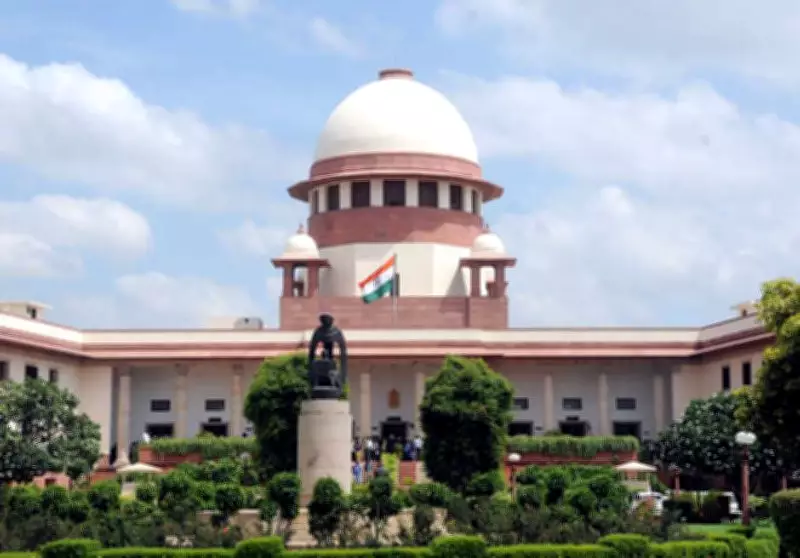
Supreme Court Affirms Loss of Scheduled Caste Status Upon Religious Conversion
In a landmark judgment, the Supreme Court of India has unequivocally stated that individuals belonging to Scheduled Caste communities forfeit their SC status immediately and completely upon conversion to religions other than Hinduism, Sikhism, or Buddhism. This ruling reinforces the constitutional framework governing caste-based reservations and protections.
Upholding the Andhra Pradesh High Court Order
A Bench comprising Justices Prashant Kumar Mishra and NV Anjaria upheld a previous order from the Andhra Pradesh High Court, which had asserted that conversion to Christianity, accompanied by active profession and practice of the faith, disqualifies a person from being recognized as a member of a Scheduled Caste. The High Court's decision, dated April 30, 2025, emphasized that the caste system is fundamentally alien to Christianity, thereby precluding converts from invoking the Scheduled Caste and Scheduled Tribe (Prevention of Atrocities) Act.
Absolute Bar on Benefits and Protections
The Supreme Court clarified that the loss of SC status is absolute and admits no exceptions. "No statutory benefit, protection, reservation, or entitlement under the Constitution or any enactment of Parliament or state legislature can be claimed by or extended to any person who, by operation of clause 3, is not deemed to be a member of the Scheduled Caste," the Bench declared. It further noted that individuals cannot simultaneously profess a religion outside the specified ones and claim SC membership, as this would contravene the Constitution (Scheduled Caste) Order, 1950.

Case Background and Judicial Reasoning
The case originated from a criminal complaint filed in 2021 by Pastor Chinthada Anand against Akkala Rami Reddy in Andhra Pradesh. Anand, who had converted to Christianity and served as a pastor for over a decade, invoked various sections of the Indian Penal Code and the SC/ST Act, alleging assault and caste-based abuse during his pastoral duties. The Andhra Pradesh High Court quashed the charges under the SC/ST Act, ruling that Anand's conversion nullified his SC status.
Upon appeal, the Supreme Court examined the evidence, which showed that Anand continued to actively practice Christianity, conducting regular Sunday prayers and pastoral activities. "In the present case, it is not the case of the petitioner that he re-converted from Christianity to his original religion or has been accepted back into the folds of the Madiga community. On the contrary, the evidence establishes that the appellant continued to profess Christianity," the court observed. This factual backdrop led the Bench to conclude that Anand remained a Christian at the time of the incident, thus barring him from SC benefits.
Constitutional and Legal Implications
The judgment underscores the strict interpretation of Clause 3 of the Constitution (Scheduled Caste) Order, 1950, which specifies that only individuals professing Hinduism, Sikhism, or Buddhism can be recognized as Scheduled Castes. The court highlighted that this provision is designed to address historical social disabilities tied to caste within these religions, and conversion to other faiths, such as Christianity or Islam, severs this linkage. Consequently, the bar on SC status is immediate and irrevocable upon conversion, regardless of an individual's birth origin.
This ruling has significant implications for:
- Legal Protections: Converts cannot avail themselves of reservations or protections under the SC/ST Act.
- Social Dynamics: It reinforces the intersection of religion and caste in Indian law.
- Judicial Precedent: Sets a clear precedent for future cases involving religious conversion and caste identity.
The Supreme Court's decision aims to maintain the integrity of caste-based affirmative action policies while respecting religious freedoms, ensuring that benefits are targeted at those facing caste-based discrimination within the specified religious frameworks.






