Supreme Court's Stray Dog Order Ignites Constitutional Controversy
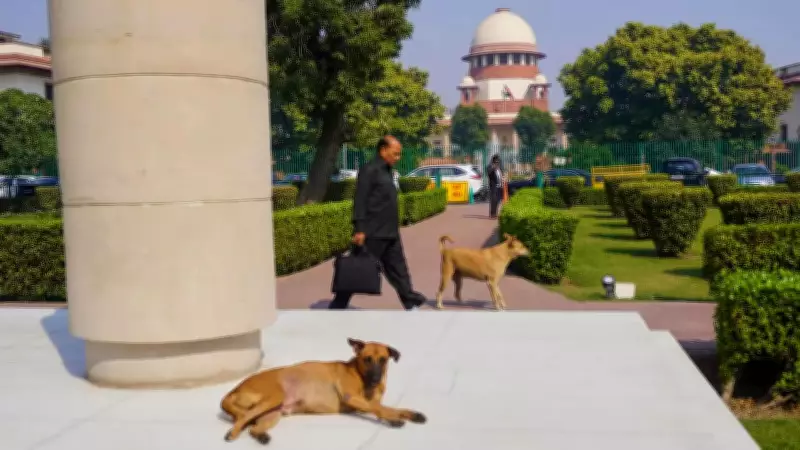
In the hallowed halls of the Supreme Court of India, every action and decision is typically grounded in the robust framework of the Constitution of India. From the arguments presented by advocates to the very establishment of the court itself, constitutional articles provide the legal bedrock. However, a recent order issued on November 7, 2025, in the Suo Moto Stray Dogs case has stirred a profound constitutional debate, challenging this foundational principle.
The Constitutional Backing of Supreme Court Operations
To understand the gravity of this issue, it is essential to recognize how deeply the Constitution permeates the Supreme Court's functioning. Advocates practicing before the court exercise their professional freedom under Article 19(1)(g), while clients seek judicial remedies through Article 32. The Supreme Court itself is established by Article 124, and its location in Delhi is mandated by Article 130. Even the name "Constitution of India" derives from Article 393, and its enforcement since January 26, 1950, is enshrined in Article 394. The repeal of British-era laws is covered under Article 395. This intricate web of provisions underscores that nearly every aspect of the court's existence is constitutionally anchored.
The November 7 Order: A Constitutional Anomaly
In stark contrast, the November 7 order, particularly paragraph 25 clause E, appears to lack clear constitutional moorings. This clause imperiously mandates the immediate removal of all stray dogs from institutional land and stipulates that, after sterilization, these animals must not be released back to their original locations. This directive directly contradicts existing parliamentary legislation, specifically the Prevention of Cruelty to Animals Act, 1960, read in conjunction with the Animal Birth Control Rules, 2023. Rule 11(19) of these rules explicitly states that "...The dogs shall be released at the same place or locality from where they were captured."

This creates a constitutional stand-off, as the order issued by three Supreme Court judges flies in the face of a clear law enacted by Parliament. Parliament, composed of democratically elected members, represents the sovereign will of the people of India, as proclaimed in the Constitution's preamble: "WE, THE PEOPLE OF INDIA." Judges, however, are not elected by the people, raising critical questions about the legitimacy of such an override.
Questioning Judicial Power and Constitutional Limits
The core issue baffling legal observers is the source of judicial authority to pass orders that override parliamentary law. If even the Constitution's name is derived from a specific article, under what constitutional provision do judges possess the power to ignore and ride roughshod over existing legislation? The Constitution was designed to curb arbitrary tendencies across all branches of government, including the judiciary.
Furthermore, the Third Schedule of the Constitution mandates an oath for Supreme Court judges, wherein they swear to "bear true faith and allegiance to the Constitution of India... and uphold the Constitution and the laws." This oath emphasizes the duty to respect both constitutional provisions and parliamentary enactments, adding another layer of complexity to the current controversy.
Broader Implications and Unanswered Questions
While the author refrains from delving into arguments about the order's unimplementability or alternatives proposed by legal luminaries such as senior advocates KK Venugopal, Kapil Sibal, and Abhishek Manu Singhvi, the fundamental question remains. If everything in the Supreme Court has a legal provision behind it, including the Constitution's name, from which article are judges deriving their power to pass orders contrary to parliamentary law?

This situation highlights a potential erosion of constitutional boundaries and calls for clarity from the judiciary. The country awaits an explanation that reconciles this order with the constitutional framework designed to prevent such conflicts. The writer, an advocate at the Supreme Court, respectfully urges the judges to edify the nation on the constitutional basis of their authority in this matter.