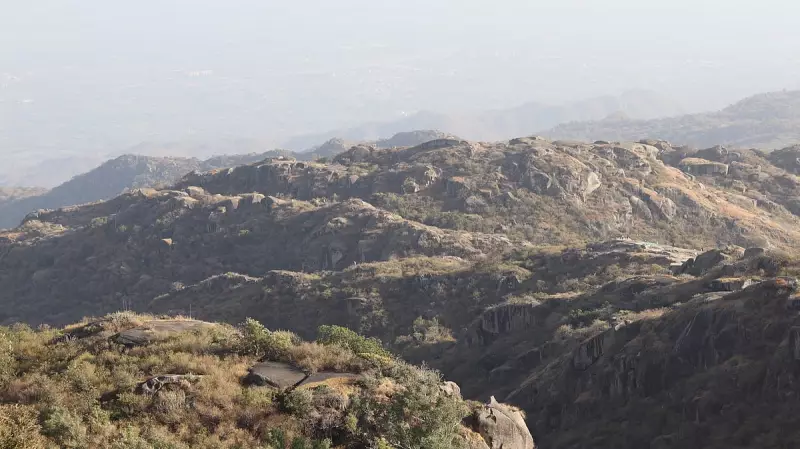
The Supreme Court of India has taken a decisive and proactive step by initiating a suo motu case concerning the severe environmental degradation of the Aravalli mountain range. This move underscores the judiciary's deep concern over the rampant destruction of this vital ecological zone, which spans several states including Haryana and Rajasthan.
A Judicial Intervention for Environmental Protection
The bench, led by Chief Justice of India D Y Chandrachud alongside Justices J B Pardiwala and Manoj Misra, registered the case titled "In Re: Destruction of Aravalli Mountain Range." The court's action was prompted by a letter dated July 26, 2024, written by a former Indian Forest Service officer, Pranab Doley. Doley's communication highlighted the systematic and large-scale destruction of the Aravallis, which he described as a "slow-motion ecological disaster."
The court noted that the issues raised in the letter are of immense public importance, touching upon the enforcement of environmental laws, the protection of forests, and the accountability of state authorities. The bench has appointed senior advocate K V Viswanathan as the amicus curiae to assist in the matter. Furthermore, the Supreme Court has issued notices to the central government, the states of Haryana and Rajasthan, and other relevant authorities, seeking their detailed responses.
The Core Allegations and Ecological Significance
The crux of the matter lies in the alleged illegal mining, deforestation, and unchecked urban encroachment that have plagued the Aravalli range for decades. The Aravallis are not just hills; they are a crucial natural barrier against desertification, a major groundwater recharge zone, and a biodiversity hotspot. Their degradation has direct consequences for air quality, water security, and climate resilience in the entire National Capital Region and beyond.
Pranab Doley's letter meticulously detailed how the destruction continues despite numerous court orders and environmental regulations. The Supreme Court's decision to treat this letter as a public interest litigation (PIL) under its suo motu powers signals a shift towards a more interventionist role in safeguarding the environment when executive action is perceived as lacking.
Broader Implications and the Path Forward
This suo motu cognisance by the apex court has far-reaching implications. It places the spotlight squarely on the implementation gap in India's environmental governance. The case will likely scrutinize the roles of various agencies, including forest departments, pollution control boards, and mining regulators, in either preventing or enabling the ecological damage.
The court's intervention is expected to:
- Compel state governments to present concrete action plans for the conservation and restoration of the Aravallis.
- Review the compliance with previous judicial directives related to the region.
- Examine the nexus between illegal activities and administrative lapses.
- Set a precedent for judicial oversight in matters of urgent environmental concern.
As the case progresses, it will be a critical test for India's commitment to balancing development with ecological sustainability. The Supreme Court's move has been hailed by environmentalists as a necessary and urgent step to halt the irreversible loss of one of the country's oldest mountain systems. The responses from the Union and state governments, due in the coming weeks, will shape the future course of this landmark environmental litigation.