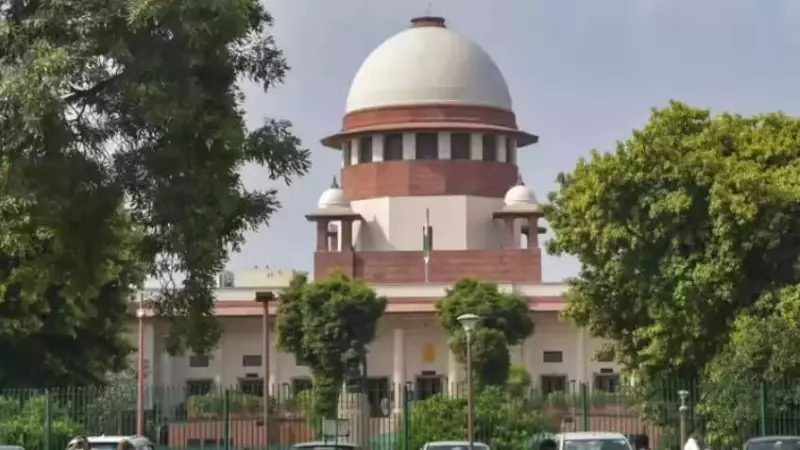
In a unique case blending spirituality, tradition, and constitutional law, the Supreme Court of India has agreed to adjudicate whether extended visiting hours for devotees at the revered Banke Bihari Temple in Vrindavan are disturbing the sleep and rest periods of the main deity. This move comes more than a decade after the apex court itself declared sleep a part of the fundamental right to life.
The Core of the Controversy: Altered Centuries-Old Timings
Appearing before a bench led by Chief Justice Surya Kant, along with Justices Joymalya Bagchi and Vipul M. Pancholi, senior advocate Shyam Divan, representing the Banke Bihariji Temple Management Committee, raised a significant grievance. He argued that a Supreme Court-appointed High Powered Committee (HPC) has unilaterally altered the strict summer and winter opening schedules of the temple, followed since time immemorial.
The traditional timings, as presented to the court, were precise. Between Holi and Diwali, the temple would open from 7:45 AM to 12:00 PM and again from 5:30 PM to 9:30 PM. The HPC has changed this to 7:00 AM to 12:30 PM and 4:15 PM to 9:30 PM. Similarly, for the period between Diwali and Holi, the original schedule of 8:45 AM to 1:00 PM and 4:30 PM to 9:30 PM has been shifted to 8:00 AM to 1:30 PM and 4:00 PM to 9:00 PM.

Sleep, Rituals, and the Rights of the Divine
Advocate Divan emphasized that this change is not merely administrative. It has directly impacted the internal rituals of the temple, specifically the timings for when the deity is awakened in the morning and put to sleep at night. The temple committee contends that the HPC's decision on September 19 has effectively tampered with the deity's centuries-old cycle of sleep and wakefulness.
"The sleep and wake-up timings are wedded to tradition and cannot be interfered with in the name of providing darshan to more devotees," Divan asserted before the bench. This argument frames the deity's rest as an inviolable tradition, positioning it against the practical need to accommodate a larger number of pilgrims.
The Court's Perspective and the Path Forward
The Supreme Court bench, however, presented a counterpoint from the devotees' perspective. It noted complaints that during the pre-sleep and post-wakeup ritual periods, temple priests (goswamis) often draw a curtain, allegedly allowing only the rich and influential to offer prayers. "What is the harm in extending the darshan time by a couple of hours daily to facilitate more devotees to get darshan?" the bench questioned.
Despite this query, the court acknowledged the legal and traditional gravity of the issue. It has agreed to examine the matter in detail. The bench has sought formal responses from several parties, including:
- The HPC, led by a retired Allahabad High Court judge, via its member secretary.
- The Mathura District Collector.
- The Mathura-Vrindavan Development Authority.
- The Government of Uttar Pradesh.
The case has been scheduled for further hearing in the first week of January, setting the stage for a landmark ruling that will balance deep-seated religious traditions against the logistical demands of modern-day worship.
This legal battle revisits the Supreme Court's own profound 2011 observation that sleep is integral to the right to life under Article 21 of the Constitution, now applying that principle in an unprecedented context to the divine.