

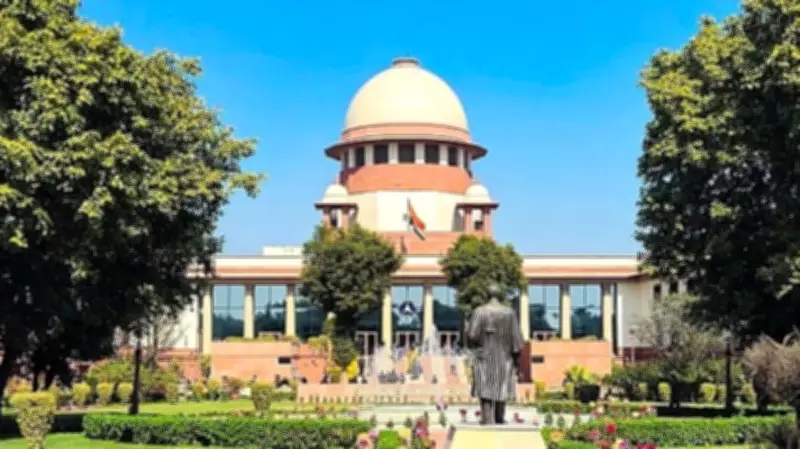
Supreme Court to Review Centre's Appeal Against Bombay High Court IT Rules Verdict
The Supreme Court of India has agreed to examine a crucial appeal filed by the Central government challenging the Bombay High Court's landmark verdict that struck down amended Information Technology Rules. These rules were specifically designed to identify and regulate fake and false content circulating on social media platforms, particularly content targeting the government.
Background of the Bombay High Court Ruling
On September 26, 2024, the Bombay High Court delivered a significant judgment that formally invalidated the amended IT Rules aimed at combating misinformation online. The court's decision came after extensive legal arguments regarding the scope and implementation of these regulations. The rules had been introduced to empower authorities to take action against social media posts deemed false or misleading, especially those directed at government entities and officials.
The High Court's ruling raised important questions about the balance between regulating harmful content and protecting freedom of expression. Legal experts noted that the judgment highlighted concerns over potential overreach and the vague definitions of "fake" content within the rules.

Centre's Legal Challenge and Supreme Court Intervention
Following the Bombay High Court's decision, the Central government filed a formal plea with the Supreme Court, seeking to overturn the verdict. The government's appeal argues that the IT Rules are essential for maintaining public order and national security in the digital age. Officials contend that unchecked spread of false information on social media can have serious consequences, including inciting violence and undermining democratic processes.
The Supreme Court has now taken up this matter, marking a pivotal moment in India's ongoing debate about online content regulation. The apex court's examination will likely consider constitutional principles, including the right to free speech under Article 19(1)(a) and reasonable restrictions permitted under Article 19(2).
Key Issues Before the Supreme Court
The Supreme Court's review will focus on several critical aspects:
- Legal Validity of IT Rules: Whether the amended Information Technology Rules fall within the government's regulatory authority or infringe upon fundamental rights.
- Definition of Fake Content: How "fake and false content" should be defined and identified without creating ambiguity that could lead to misuse.
- Social Media Accountability: The responsibilities of social media platforms in monitoring and removing content that violates established guidelines.
- Government Powers: The extent to which the government can intervene in online spaces to prevent the spread of misinformation.
Implications for Digital Governance and Free Speech
This case represents a major test for India's approach to digital governance. On one hand, there is growing concern about the rapid dissemination of false information that can manipulate public opinion and disrupt social harmony. On the other hand, there are legitimate fears that broad regulatory powers could be used to suppress dissent and criticism of the government.
The Supreme Court's eventual decision will set important precedents for how India balances these competing interests. It will influence not only future legislation but also the daily operations of social media companies and the online experiences of millions of Indian users.
Legal scholars emphasize that the court must navigate complex terrain where technological advancement, legal frameworks, and democratic values intersect. The outcome could reshape the landscape of internet freedom and government oversight in one of the world's largest digital markets.
As the Supreme Court prepares for detailed hearings, stakeholders from various sectors—including technology companies, civil society organizations, and legal experts—are expected to closely monitor developments. The case underscores the ongoing global challenge of regulating online content while preserving essential freedoms in an increasingly connected world.






