

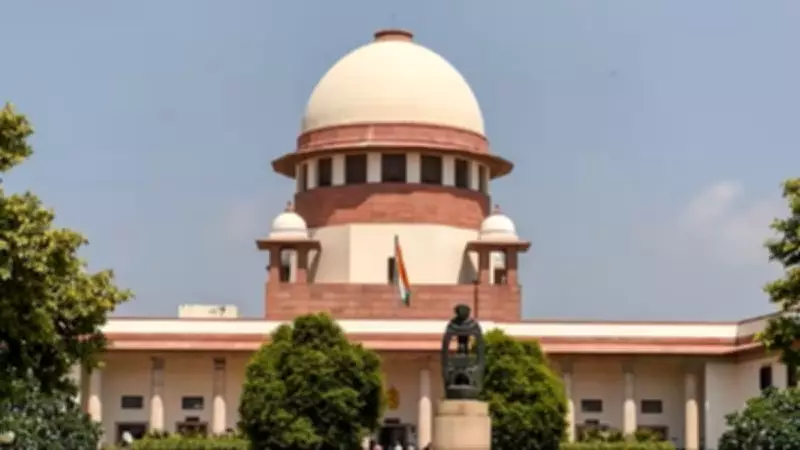
Supreme Court Upholds Landmark Ruling on Scheduled Caste Status Post-Conversion
In a significant verdict with far-reaching implications for India's social justice framework, the Supreme Court has firmly upheld a ruling by the Andhra Pradesh High Court. The decision clarifies that individuals who undergo religious conversion to faiths other than Hinduism, Sikhism, or Buddhism are not entitled to retain their Scheduled Caste (SC) status. This judgment reinforces the legal principle that SC benefits are intrinsically tied to the social disabilities and historical oppression faced within these specific religious communities in the Hindu social structure.
Details of the Andhra Pradesh High Court Ruling
The case originated from a challenge to the Andhra Pradesh High Court's earlier decision, which had been appealed to the Supreme Court. The High Court had ruled that the constitutional safeguards and reservation benefits under the Scheduled Caste category, as defined by the Constitution (Scheduled Castes) Order, 1950, do not extend to individuals who convert to religions like Christianity or Islam. The Supreme Court's bench, after thorough deliberation, found no grounds to overturn this interpretation, thereby endorsing the High Court's stance.
Legal and Social Implications of the Verdict
This ruling underscores a critical aspect of India's affirmative action policies. The Scheduled Caste status is designed to address the historical and social disadvantages faced by communities within the Hindu fold, as well as Sikhism and Buddhism, which are recognized as offshoots in this context. The court emphasized that conversion to other religions may alter an individual's social identity and the nature of the discrimination they face, potentially placing them outside the purview of the original constitutional intent.

- The Constitution (Scheduled Castes) Order, 1950, explicitly limits SC status to individuals belonging to Hinduism, Sikhism, or Buddhism.
- Conversion to religions like Christianity or Islam is seen as a shift away from the caste-based social hierarchy specific to these recognized faiths.
- The ruling aims to preserve the targeted nature of reservation policies, ensuring benefits reach those enduring caste-based oppression within the defined religious groups.
Broader Context and Reactions
This decision is set to impact numerous cases across India where claims to SC status post-conversion have been contested. It reaffirms the judiciary's role in interpreting constitutional provisions strictly, balancing social justice with legal precision. Legal experts suggest that while the verdict provides clarity, it may also spark debates on the intersection of religion, caste, and state benefits in a diverse society. Advocates for the ruling argue it prevents misuse of reservation quotas, whereas critics may view it as limiting individual religious freedom in accessing social welfare.
The Supreme Court's affirmation serves as a pivotal reference for future litigation and policy discussions regarding caste-based reservations in India. It highlights the ongoing evolution of India's approach to social equity, where legal definitions must adapt to complex societal realities while upholding constitutional mandates.






