

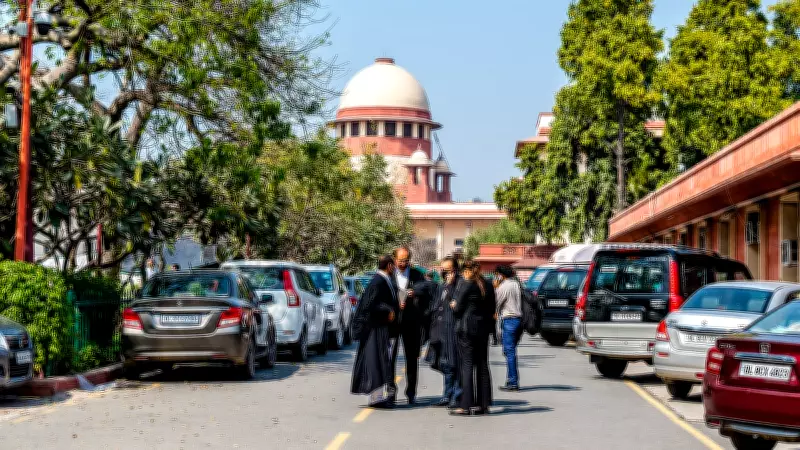
Supreme Court Urges Centre to Enact Comprehensive Legislation on Passive Euthanasia
The Supreme Court of India has made a significant call to the Central government, urging the enactment of comprehensive legislation to regulate passive euthanasia. This move highlights the court's concern over the current legal vacuum in this critical area of medical ethics and human rights.
Bench Highlights Lack of Regulation in India
A bench comprising Justices J B Pardiwala and K V Viswanathan emphasized that despite the profound constitutional, ethical, and medical dimensions involved, the field of passive euthanasia continues to remain largely unregulated by legislation in India. The justices pointed out that this gap poses serious challenges for healthcare providers, patients, and their families, who often face difficult end-of-life decisions without clear legal guidance.
The court's statement underscores the urgent need for a structured legal framework to address issues such as patient autonomy, informed consent, and the role of medical professionals in cases involving the withdrawal or withholding of life-sustaining treatment. This call for legislation comes amid growing debates on the right to die with dignity and the ethical boundaries of medical intervention.

Constitutional and Ethical Implications
The bench noted that passive euthanasia involves complex constitutional questions related to the right to life and personal liberty under Article 21 of the Indian Constitution. Ethical considerations also play a crucial role, as decisions must balance respect for individual choice with societal values and medical ethics. The lack of specific laws has led to inconsistencies in judicial rulings and medical practices across the country.
- Passive euthanasia refers to the withdrawal or withholding of medical treatment that is keeping a terminally ill patient alive.
- Active euthanasia, which involves administering substances to cause death, remains illegal in India.
- The Supreme Court's 2018 judgment in the Common Cause case allowed passive euthanasia under strict guidelines, but legislation is still pending.
This development follows previous judicial interventions where the court has attempted to fill the legislative void through guidelines. However, the bench stressed that only a well-defined law passed by Parliament can provide the necessary clarity and uniformity required for such a sensitive issue.
Medical and Practical Challenges
From a medical perspective, the absence of legislation creates practical difficulties for doctors and hospitals. They often operate in a gray area, unsure of legal repercussions when honoring patient wishes or family decisions regarding end-of-life care. This uncertainty can lead to delays or conflicts in treatment, potentially causing unnecessary suffering for patients.
- Doctors may hesitate to withdraw life support due to fear of legal action.
- Families face emotional and financial burdens without clear protocols.
- Patients' rights to refuse treatment are not uniformly protected across states.
The Supreme Court's urging is seen as a step towards aligning India's legal system with global practices, where many countries have established laws to govern passive euthanasia. This move could pave the way for more humane and dignified end-of-life care, ensuring that decisions are made transparently and with proper safeguards.
As the Centre considers this call, stakeholders from the medical community, legal experts, and civil society are expected to contribute to the discourse, aiming for a balanced approach that respects both individual autonomy and ethical standards. The outcome of this legislative push could have far-reaching implications for healthcare policy and human rights in India.






