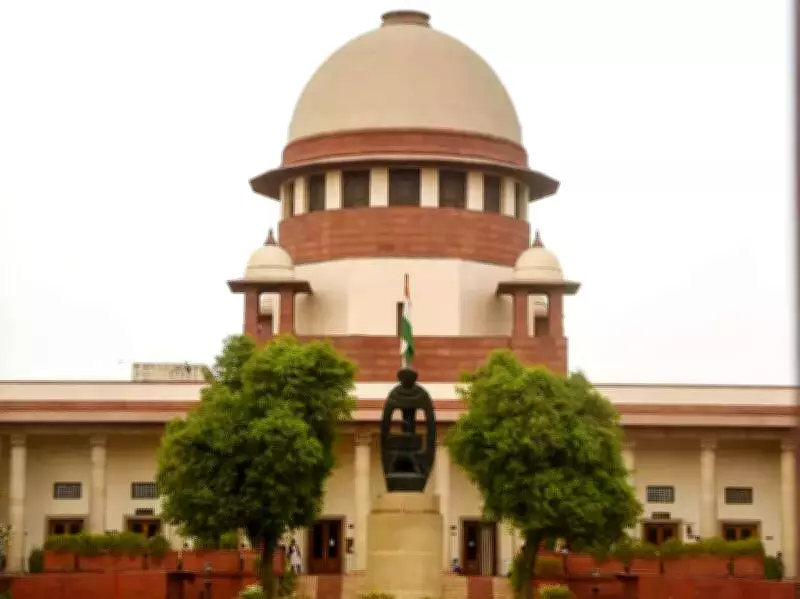
Supreme Court Issues Stern Warning to Bengal DGP Over Poll Roll Violence
The Supreme Court of India delivered a sharp rebuke to West Bengal's Director General of Police (DGP) Peeyush Pandey on Friday, cautioning him of "serious consequences" if law and order is not upheld during the Summary Revision (SIR) of electoral rolls. A three-judge bench, comprising Chief Justice of India Surya Kant and Justices Joymalya Bagchi and Vipul M Pancholi, demanded a detailed status report after allegations surfaced regarding police inaction in the face of escalating violence.
Allegations of Inaction and Provocative Speeches
During the hearing, petitioners highlighted that the DGP's own report documented 28 instances of violence linked to the poll roll process, yet no substantive measures were taken to address these incidents. Adding to the gravity of the situation, counsel for the Election Commission (EC), DS Naidu, informed the court that provocative and incendiary speeches were rampant across the state, with authorities failing to intervene. In response, Chief Justice Surya Kant expressed dismay, stating, "Unfortunately, in this country, all these irresponsible statements are being made before elections. Unless he ensures law and order is maintained, the DGP would face serious consequences."
Defense and Counterarguments in Court
Representing DGP Peeyush Pandey, counsel AM Singhvi countered the allegations, asserting that the Election Commission's claims were false and misleading. Singhvi emphasized that all reported cases were under active investigation and that the police were diligently taking action. However, the bench remained unconvinced, pressing the EC's counsel on why the commission had not held the police administration accountable. Naidu explained their reluctance, citing the ongoing nature of the case before the apex court as a primary reason for their hesitation.
Historical Context and Previous Hearings
This hearing follows a prior session on February 9, where Solicitor General Tushar Mehta raised concerns about the non-registration of FIRs against individuals accused of burning Form 7s or engaging in violent acts. The three-judge bench reiterated its January 19 order, underscoring the responsibility of the DGP and district police chiefs to maintain law and order. As part of its directives, the court issued a show-cause notice to the DGP, requiring him to file an affidavit addressing the allegations in detail.
Broader Implications and Trust Deficit
A total of seven separate matters related to the SIR process in West Bengal are currently before the Supreme Court, highlighting widespread concerns over electoral integrity. Senior advocate Shyam Diwan raised issues regarding the appointment of micro-observers and special role observers by the Election Commission, arguing that these entities were overriding the authority of Electoral Roll Officers (EROs). He submitted, "Special role observers cannot trump EROs," pointing to potential conflicts in oversight mechanisms.
Amid the heated exchanges, Chief Justice Surya Kant stressed that both the state government and the Election Commission must recognize the urgency of completing the SIR process to avoid severe repercussions. Concluding the proceedings, he remarked, "This is what happens when there is a trust deficit," underscoring the critical need for transparency and accountability in electoral procedures to restore public confidence.