

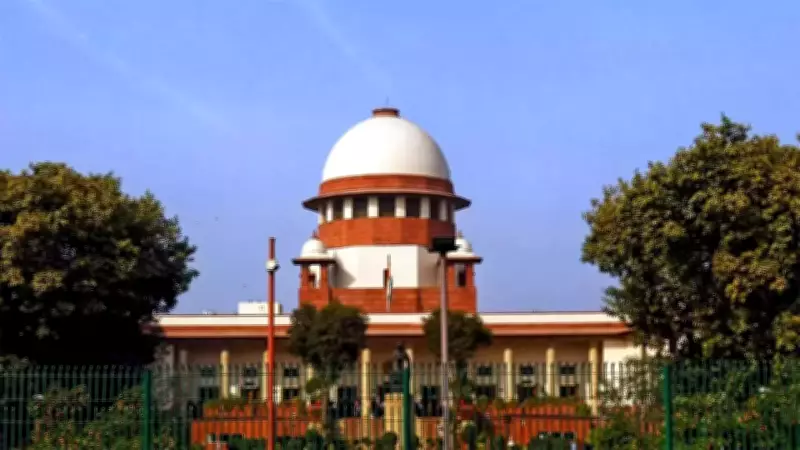
Supreme Court Issues Stern Warning to High Courts on Dowry Death Bail Grants
The Supreme Court of India delivered a powerful directive on Wednesday, urging high courts across the nation to exercise extreme caution and discretion when considering bail applications in cases involving dowry deaths. The apex court highlighted the persistent and devastating nature of this social evil, which continues to claim the lives of thousands of women every year through murder or forced suicide.
Bench Criticizes "Mechanical Approach" in Bail Decisions
A bench comprising Justices J B Pardiwala and Vijay Bishnoi expressed profound concern over what they described as a "seemingly mechanical approach being adopted by the high courts in granting bail in cases of dowry deaths." The judges made these observations while canceling a bail order previously issued by the Patna High Court.
The case involved a husband accused of murdering his wife within eighteen months of their marriage, allegedly because her parents could not fulfill dowry demands. The Supreme Court found the high court's decision to grant bail "wholly unsustainable" and lacking proper justification.

Legal Arguments and Judicial Scrutiny
Advocates Samir Ali Khan and Rajnish Kumar, representing the Bihar government and the deceased woman's mother respectively, argued that the Patna High Court had erred significantly. They pointed out that the accused had been in custody for only one and a half years and that the high court had failed to provide any special reasons for granting relief in such a heinous offense.
The Supreme Court bench emphasized that in serious crimes like dowry death, high courts must exercise their discretion with utmost care. "The high court lost sight of many important aspects of the matter," the judges noted, "more particularly the post-mortem report indicating numerous injuries on the body of the deceased, and the presumption of commission of offense as provided under Section 114 of the Bharatiya Sakshya Adhiniyam, 2023."
Dowry Deaths: A National Disgrace
Drawing from their extensive experience hearing numerous dowry harassment cases, many involving murder or suicide, the judges declared: "Dowry deaths are indeed a profound disgrace and a major social evil representing a severe violation of human rights and dignity."
The bench further elaborated: "Despite the legal prohibitions, this practice continues to result in the unnatural deaths of thousands of women, often through murder or as they are driven to suicide because of greed-driven demands for money or valuables from the groom's family. Dowry deaths are a severe blot on society."
Defense Arguments Rejected, Bail Order Overturned
When the accused husband's counsel, Santosh Kumar Mishra, argued that the deceased was of unsound mind and had died by suicide by jumping from the sixth floor of an apartment building, the bench responded that such claims would need to be proven during the trial proceedings.
The Supreme Court maintained that since the trial is currently in progress, the high court should have rejected the bail plea entirely. Consequently, the bench set aside the bail order and directed the accused to surrender before jail authorities within one week.
This landmark ruling reinforces the judiciary's commitment to addressing dowry-related violence and ensuring that bail decisions in such sensitive cases receive the careful, nuanced consideration they demand, rather than following routine procedures.






