Supreme Court Issues Caution to Judges on Overstepping into Domain Expertise
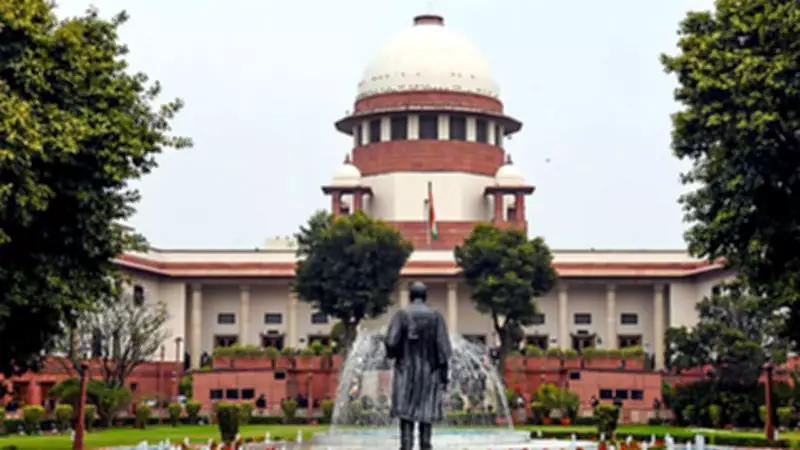
The Supreme Court of India delivered a significant admonition on Monday, warning constitutional court judges against assuming the mantle of domain experts and prescribing remedial measures in cases beyond their judicial purview. A bench comprising Chief Justice Surya Kant, Justice Joymalya Bagchi, and Justice N V Anjaria underscored that it would be perilous for judges to deviate from their fundamental role as neutral arbiters who adjudicate disputes after meticulously considering opposing arguments.
Context of the Judicial Remark
This pivotal observation emerged during the hearing of a petition lodged by the Jharkhand Public Service Commission (JPSC). The commission contested a directive from the Jharkhand High Court that mandated the deletion of two questions and the allocation of one mark to either of two options for a specific question in a preliminary examination for recruiting judicial officers.
Chief Justice Surya Kant posed a rhetorical question to highlight the issue: "Should a constitutional court assume the role of a super-examiner merely because the test was for recruiting judicial officers and the question pertained to law? It will be extremely dangerous if High Court judges start acting as domain experts."

He elaborated with a hypothetical scenario: "Suppose a judge possesses knowledge of biochemistry. Should that judge then interfere with examination question papers and answer keys for recruitment in the biochemistry field? High Court judges must refrain from such interventions and leave these matters to the appropriate domain experts."
Uniformity in Examination Review Powers
The bench further clarified that the High Court, on its administrative side, had originally formulated the examination questions in consultation with the JPSC. The justices emphasized that the authority to reappraise or reconsider answer sheets must be applied uniformly across all examinations, not exclusively for judicial service tests.
"High Courts cannot position themselves as super-examiners. These technical issues should be entrusted to domain experts," the bench asserted. It noted that if such review was necessary, the High Court should have, in exercising its judicial review power, referred the matter to its administrative side to establish an expert committee for re-evaluating the answer sheets and keys.
Directive for Expert Committee Formation
In response, the Supreme Court bench instructed the Jharkhand High Court to constitute an expert committee. This committee is to include subject matter specialists, particularly from the fields of law and English, to thoroughly reassess the answer keys and answer sheets in question.
When the counsel representing the parties urged for a swift resolution to the controversy, the bench directed the High Court to settle the matter within a fortnight and submit a report to the JPSC. The counsel highlighted that there had been no recruitment to the Jharkhand judicial service for over two and a half years, exacerbating the urgency.
Broader Concerns About Judicial Appointments
Chief Justice Kant expressed a related, broader concern during the proceedings. He stated, "I am more troubled by the fact that there has been no elevation of advocates as judges of the High Court since 2017." This remark underscores ongoing issues within the judicial appointment system, linking the specific case to wider systemic challenges in India's judiciary.
The Supreme Court's ruling reinforces the principle that judges must maintain their impartiality and limit their interventions to legal adjudication, avoiding encroachment into specialized domains best handled by experts. This decision aims to preserve the integrity of both the judicial process and competitive examinations across various fields.