

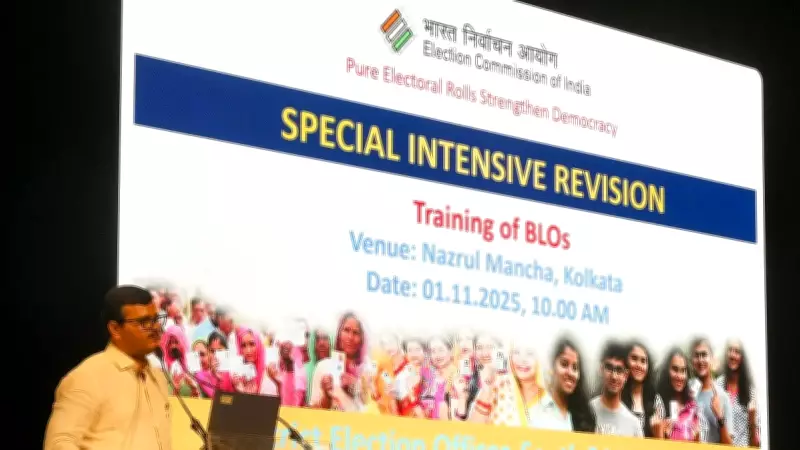
Supreme Court Takes Firm Stand on Judicial Integrity Amid Bengal Electoral Roll Petitions
The Supreme Court of India has delivered a categorical and unequivocal statement regarding the sanctity of judicial proceedings and the respect owed to judicial officers. During hearings concerning petitions related to the special intensive revision of electoral rolls in West Bengal, the apex court made it abundantly clear that it will not tolerate any attempts to question the integrity or impartiality of judicial officers involved in such processes.
Court's Stern Warning on Judicial Respect
In a significant development that underscores the judiciary's commitment to maintaining its independence and authority, the Supreme Court explicitly stated that any efforts to cast doubt on the credibility of judicial officers would be met with strict disapproval. The court emphasized that judicial officers perform their duties with utmost dedication and professionalism, and their work must be respected without unwarranted scrutiny or质疑.
The context of this firm stance involves multiple petitions filed before the Supreme Court concerning the electoral roll revision process in West Bengal. These petitions have raised various issues related to the implementation and oversight of the revision, which is a critical component of ensuring free and fair elections in the state.

Background: West Bengal Electoral Roll Revision
The special intensive revision of electoral rolls in West Bengal has been a subject of considerable attention and legal scrutiny. This process, typically overseen by the Election Commission of India with judicial involvement where necessary, aims to update voter lists to reflect current demographics and prevent electoral malpractices. However, it has sparked debates and legal challenges, leading to the Supreme Court's intervention.
Key aspects of the revision include:
- Verification of voter identities and addresses to ensure accuracy.
- Inclusion of new eligible voters and removal of deceased or ineligible individuals.
- Addressing complaints and discrepancies raised by political parties or citizens.
- Judicial oversight to resolve disputes and maintain transparency.
The Supreme Court's involvement highlights the importance of this electoral exercise in upholding democratic principles. By hearing these pleas, the court is playing a pivotal role in safeguarding the electoral process from potential irregularities.
Implications for Judicial Proceedings and Electoral Integrity
The court's strong message serves as a reminder of the broader principles at stake. Judicial officers, whether in lower courts or higher judiciary, are entrusted with the responsibility of interpreting and enforcing the law without bias. Questioning their integrity without substantial evidence can undermine public confidence in the judicial system and, by extension, the electoral process.
This stance is particularly relevant in the context of West Bengal, where political tensions often run high during election periods. The Supreme Court's warning aims to prevent any attempts to politicize judicial functions or use legal avenues to discredit officers involved in electoral oversight. It reinforces the idea that the judiciary must remain a neutral arbiter, free from external pressures or accusations.
Moreover, this development underscores the Supreme Court's role as a guardian of constitutional values. By asserting its authority to protect judicial officers, the court is also indirectly bolstering the credibility of the electoral roll revision process. This, in turn, contributes to the overall health of democracy in India, ensuring that elections are conducted fairly and with integrity.
In conclusion, the Supreme Court's firm position on not tolerating the questioning of judicial officers in the Bengal electoral roll revision pleas marks a critical moment in Indian jurisprudence. It highlights the delicate balance between legal scrutiny and respect for judicial authority, with far-reaching implications for both the judiciary and the electoral landscape in West Bengal and beyond.






