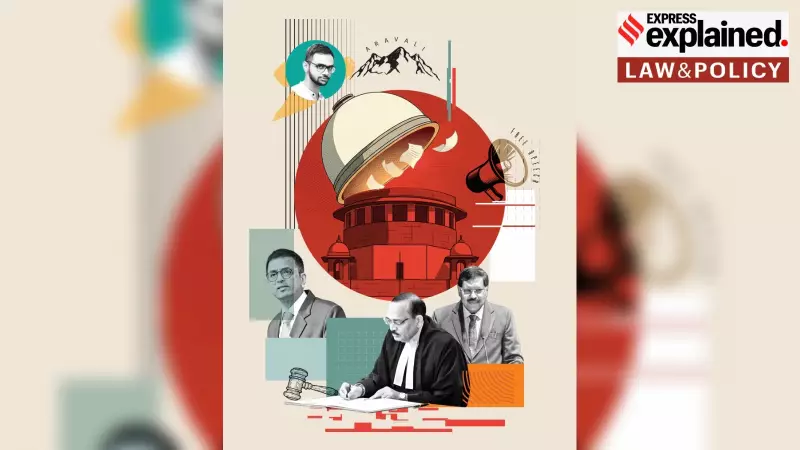
As 2025 drew to a close, dominated by intense scrutiny of judicial conduct, the legal spotlight for 2026 is set to swing firmly back inside the courtroom. The Supreme Court of India is poised to adjudicate a series of constitutionally significant cases that will define the contours of religious freedom, citizenship, and individual liberty in the coming year.
From Courtroom Controversies to Constitutional Benchmarks
The past year witnessed the judiciary itself under unprecedented public glare. Allegations concerning a Delhi High Court judge, a failed impeachment motion against an Allahabad High Court judge, and post-retirement interviews by former Chief Justies defending their rulings placed the institution in the hot seat. Internally, the Supreme Court reversed some of its own earlier verdicts, notably on environmental clearances, and delivered crucial arbitration rulings defining judicial limits in private disputes.
However, 2026 promises to be defined by substantive legal hearings rather than external controversies. The apex court's docket is brimming with matters that strike at the heart of India's constitutional fabric.
Landmark Cases on Religion and Belief
A cluster of high-profile cases concerning religion and state policy will command attention. A significant challenge to the 2025 Waqf Act is likely to be heard. The court has already stayed two key provisions in an interim order, limiting the district collector's powers and capping non-Muslim representation in Waqf Boards. A fuller hearing will examine the law's core premise of making the government the arbiter of Waqf property status.
Equally pivotal is the pending challenge to the Places of Worship Act, 1991. This law, which freezes the religious character of places of worship as of August 15, 1947, faces legal tests that could have far-reaching implications for communal harmony and historical disputes.
Further, the Karnataka hijab ban case, touching upon autonomy and state regulation of freedom, remains pending. The Supreme Court is also slated to review its own 2018 Sabarimala verdict, a move that will re-evaluate the contentious "essential religious practice" test used by courts to determine which religious customs deserve protection.
Citizenship, Electoral Rights, and Personal Liberty
The year will also see critical developments concerning the relationship between the citizen and the state. The constitutional validity of the Citizenship (Amendment) Act (CAA) is set for a decisive hearing. The Act, which fast-tracks citizenship for non-Muslim migrants from three neighbouring countries, has been a subject of intense national debate and protest since its enactment.
Closely linked to democratic rights is the issue of electoral rolls. Following the Supreme Court's monitored "Special Intensive Revision" in Bihar, a similar nationwide exercise by the Election Commission is expected to face legal challenges, especially from opposition-ruled states like West Bengal which has elections in mid-2026.
On the front of personal liberty, the court will hear the bail plea of Umar Khalid, accused in the 2020 Delhi riots. His prolonged detention has become emblematic of systemic delays impacting freedom. Alongside, the court will examine the wide interpretation of Section 15 of the UAPA (Unlawful Activities Prevention Act) that defines a terrorist act.
New Laws and Institutional Scrutiny
2026 will also see the implementation and potential legal testing of new legislation. Key provisions of the Digital Personal Data Protection (DPDP) Act, 2023 will come into force, likely sparking litigation around privacy and data fiduciary obligations.
The proposed Constitution (130th Amendment) Bill, 2025, which seeks to remove ministers facing detention on serious charges, is another potential flashpoint due to its creation of different standards for ministers and legislators.
Internally, the Supreme Court Collegium, headed by Chief Justice Surya Kant until February 2027, will face the task of making fresh appointments as at least five judges demit office in 2026. Its functioning, transparency, and the handling of internal dissent, as seen in Justice Nagarathna's note regarding a recommendation, will remain under watch.
With CJI Kant's tenure marked by stern observations in free speech cases and suggestions for social media regulation, the court's approach to fundamental rights will continue to evolve. As the new year unfolds, the Supreme Court stands at a crucial juncture, ready to shape the legal and social landscape of India through its gavel.