

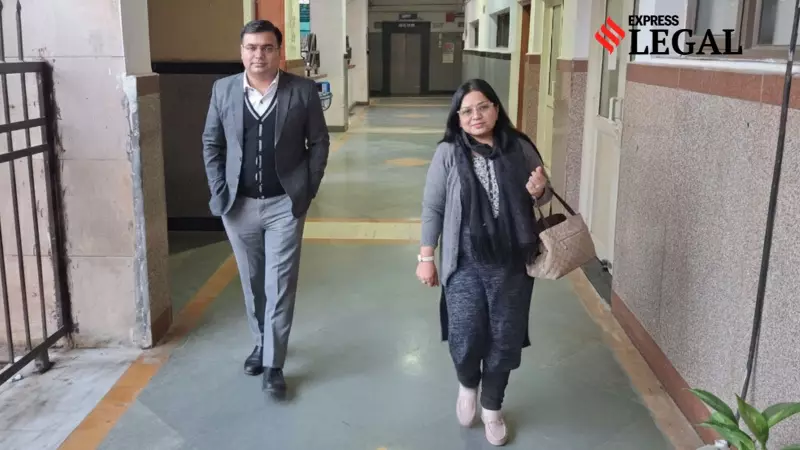
In the quiet hours before dawn, while their hometown of Sonipat sleeps, a lawyer couple is already immersed in the grim details of child sexual assault cases. For Yogita and Vineet Dahiya, justice is not merely a profession; it is a shared, symbiotic mission that defines their lives. Serving as Additional Public Prosecutors at Delhi’s Rohini Courts, they have together secured a remarkable tally of over 150 convictions, with a staggering 85 per cent of these under the stringent Protection of Children from Sexual Offences (POCSO) Act.
A Discipline Forged in Early Mornings and Shared Resolve
Their day begins at 4 am. Yogita Kaushik Dahiya mentally rehearses cross-examinations in the silence of their shared study. Her husband, Vineet Dahiya, joins her shortly after. Their breakfast is a modest, unchanging affair—poha or daliya—eaten with a focus that mirrors their professional dedication. By 7:30 am, they are side-by-side at their desk, surrounded by law books and the heavy case files that chronicle what they describe as the "rawest forms of human cruelty."
These files, filled with depositions and medico-legal reports, are not just legal briefs but records of shattered childhoods. "This is when I gather myself. You cannot enter these cases unprepared, not just legally, but mentally," says the 40-year-old Yogita. Vineet, 41, adds, "By the time we step into court, the case is already alive in our minds... From there, it’s about perseverance."

The Journey to the Courtroom: From Personal Struggles to Public Service
Their paths to prosecution were paved with determination and personal challenges. Vineet, from Nahri village in Sonipat, became a prosecutor in 2011 after clearing the UPSC exam. An early case involving a policeman who shot a businessman cemented his belief in his role. "That moment made me feel that I am in the best job where I can help people a lot," he recalls.
Yogita's journey was tougher. After finishing law in 2009, financial constraints forced her to abandon judicial services coaching. She struggled as a young defence lawyer, often broke, before joining a law firm. Her breakthrough came in 2014 when she topped her batch in the UPSC exam for prosecutors. "I cried uncontrollably," she says, celebrating with pani puri bought by Vineet.
The couple met in 2012, faced initial family resistance due to different caste backgrounds, but persevered, marrying in 2017. They made a conscious choice to continue living in Sonipat, commuting daily to Delhi, to stay close to their roots and parents.
Battling Hostility, Threats, and the Weight of Trauma
A typical day sees them leaving home by 8:20 am, reaching Rohini Courts in about 45 minutes. Their professional resolve is constantly tested. Vineet recounts a December morning where four rape survivors turned hostile. His immediate concern was whether they had been threatened. On the same day, he successfully opposed a bail plea for another rape accused, a small but significant victory for the survivor.
Yogita, in another courtroom, fiercely opposed a defence of "consensual relationship" in a sexual assault case. The pressures extend beyond the courtroom. Vineet speaks candidly about the ethical minefield: "There are offers, sometimes bordering on threats... Usually, it’s about money. I don’t entertain it."
Their philosophy on crime is deeply informed by their experiences. Yogita, who lost her brother to drug abuse, believes crime is collective in origin. "It grows out of socio-economic conditions—poverty, broken families, addiction, inequality. But punishment is individualistic," she says, advocating for addressing root causes. Vineet echoes this, noting the recurring patterns in POCSO cases: perpetrators known to the child, fractured families, and poverty.
A Symbiotic Partnership That Blurs Work and Home
For this couple, the line between personal and professional is beautifully blurred. Their partnership is their strength. "Vineet is calm, composed, and handles pressure far better than I," Yogita admits. Their evening tea conversations often revolve around cases, vowing, "Isko toh nahi jaane denge (we won’t let this one walk free)." They celebrate every conviction together, a shared triumph against the darkness they confront daily.

The journey home around 5:30 pm offers a brief respite, perhaps a stop at a local pastry shop. "This is our time away from work and home. We cherish these few minutes," says Vineet. Evenings are for family, but case discussions inevitably weave into the conversation. As the house settles, they prepare to begin again before the next dawn.
Through discipline, empathy, and an unshakable belief in the Constitution, Yogita and Vineet Dahiya stand as a formidable force in India's legal landscape. They turn chronicles of trauma into airtight legal victories, proving that justice, pursued honestly and relentlessly, can indeed make a profound difference.





