

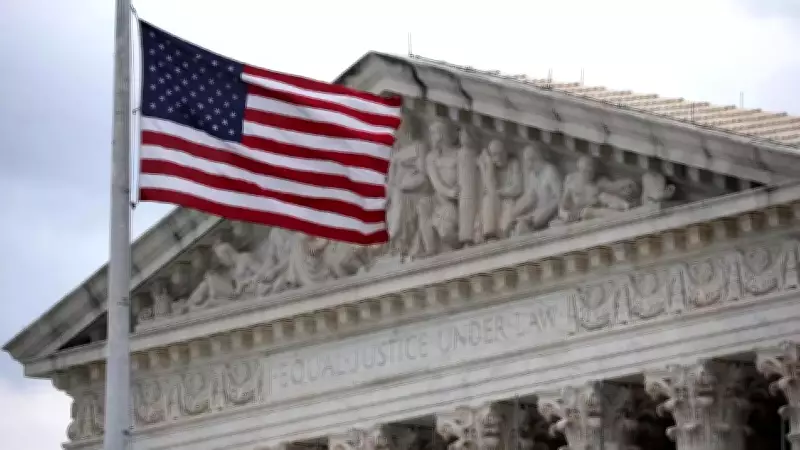
US Supreme Court Halts California's Student Gender Privacy Rule, Upholds Parental Religious Rights
The Supreme Court of the United States issued an emergency order on Monday, temporarily blocking a contentious California education policy that restricted teachers from informing parents about a student's gender expression or transition at school. This decision represents a significant victory for parents who argued that the policy violated their religious freedoms under the Constitution's Free Exercise Clause.
Constitutional Clash: Religious Liberty Versus Student Privacy
At the heart of this legal dispute lies a profound constitutional question: Do parents possess an inherent right to be informed if their child is undergoing a gender transition at school, or do schools have a fundamental duty to respect a student's privacy, especially when disclosure could potentially lead to harm? The court's unsigned order concluded that parents seeking religious exemptions are likely to succeed in their claim that California's policy burdens their sincere religious beliefs regarding sex and gender.
As reported by CNN, the majority of justices acknowledged that the involved parents hold deep-seated religious convictions about these matters and believe they have a religious obligation to raise their children in accordance with those views. The policy, according to the court, imposed an undue burden on these beliefs, tipping the scales in favor of parental rights in this preliminary stage.

Judicial Divide and Procedural Criticisms
The ruling saw a clear ideological split among the justices, with at least five conservative members supporting the outcome, while the court's three liberal justices dissented. Justice Elena Kagan, joined by Justice Ketanji Brown Jackson, strongly criticized the court's utilization of its emergency docket in this case. Kagan argued that the court acted prematurely without allowing for full briefing and oral arguments, a departure from standard judicial procedures.
"A mere decade ago, this court would never have granted relief in this posture," Kagan wrote, cautioning that bypassing normal protocols risks rendering decisions without a fully developed factual record. This dissent highlights ongoing tensions within the court regarding the appropriate use of emergency powers and the thoroughness required in adjudicating complex constitutional issues.
Lower Court Proceedings and Scope of the Order
The Supreme Court's emergency appeal followed a decision by the United States Court of Appeals for the Ninth Circuit, which had permitted the California policy to remain in effect while litigation continued. The appeals court had previously paused an earlier ruling by US District Judge Roger Benitez, who had sided with parents and teachers challenging the policy.
While the Supreme Court granted relief specifically for the parents, it declined to extend the same to teachers. However, the practical consequence is that the policy, as it was previously enforced, is now effectively blocked. The parents and teachers were represented by the Thomas More Society, which contended that California schools were systematically concealing students' transgender status from parents, including those from religious families.
California's Defense and Broader Implications
California defended its policy as a crucial safeguard against what it termed "forced outing." In 2024, the state enacted legislation explicitly prohibiting schools from requiring staff to inform parents if a student identifies as LGBTQ. State officials argued to the court that disclosure could expose vulnerable students to significant psychological, emotional, and sometimes even physical harm, emphasizing that the lower court's order allowed no exceptions, even in cases where disclosure might lead to abuse or self-harm.
This ruling signals the Supreme Court's continued willingness to prioritize religious liberty claims in education-related disputes. As noted by CNN, the broader constitutional conflict between parental rights, religious freedom, and student privacy remains unresolved and could potentially return to the court's full merits docket in the future for a more definitive adjudication.






