

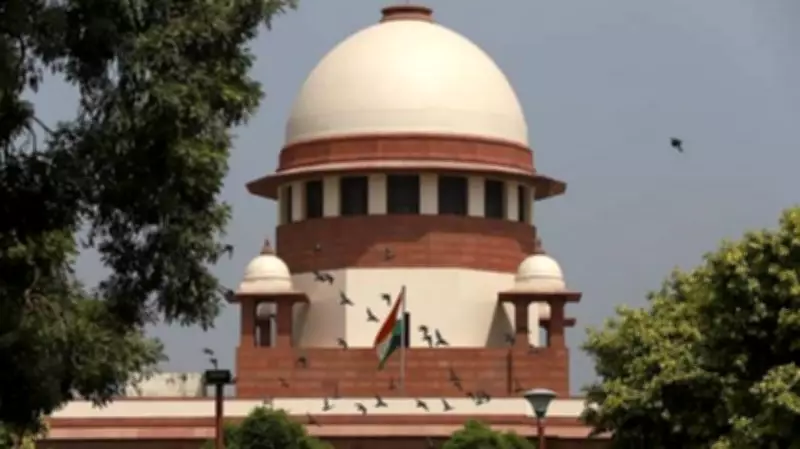
The Supreme Court has dismissed a plea challenging the institutional preference quota in postgraduate medical courses at the All India Institute of Medical Sciences (AIIMS) and similar institutions. The bench, while rejecting the petition, observed that the petitioner's inability to secure a seat was not due to any flaw in the implementation of the institutional preference policy but rather a result of the candidate's own restrictive choices.
Background of the Case
The plea had questioned the validity of the institutional preference quota, which reserves a certain percentage of seats for candidates who have completed their undergraduate studies at the same institution. The petitioner argued that this policy creates an unfair advantage and violates the principles of merit and equality. However, the Supreme Court found no merit in these arguments.
Court's Observations
In its ruling, the apex court emphasized that the institutional preference quota is a well-established policy aimed at promoting continuity and excellence in medical education. The bench noted that the petitioner had limited their choices to specific specialities and institutions, which ultimately led to their failure to secure a seat. The court stated, 'The petitioner's failure to secure a seat was purely due to restrictive choices and not a fallacy of the institutional preference implementation.'

Impact on Medical Education
The decision is expected to have significant implications for postgraduate medical admissions across India. The institutional preference quota has been a subject of debate, with supporters arguing that it helps retain talent within premier institutions and opponents claiming it undermines equal opportunity. By upholding the quota, the Supreme Court has reinforced the autonomy of institutions like AIIMS in determining their admission policies.
Reactions and Future Implications
Legal experts have noted that this judgment sets a precedent for similar cases in the future. The court's clear stance indicates that institutional preference quotas are likely to remain in place unless challenged on stronger grounds. Meanwhile, medical students and aspirants have expressed mixed reactions, with some welcoming the stability while others call for a more merit-based system.
The Supreme Court's decision comes at a time when the medical education sector is undergoing several reforms. The judgment is expected to provide clarity and reduce litigation over admission policies in the coming years.






