This week witnessed significant developments across the global political landscape, from a major judicial verdict in Bangladesh to strategic geopolitical moves involving former US President Donald Trump. These events underscore the dynamic and interconnected nature of international affairs, with implications for regional stability and global diplomacy.
Bangladesh's Political Landscape Altered by Court Verdict
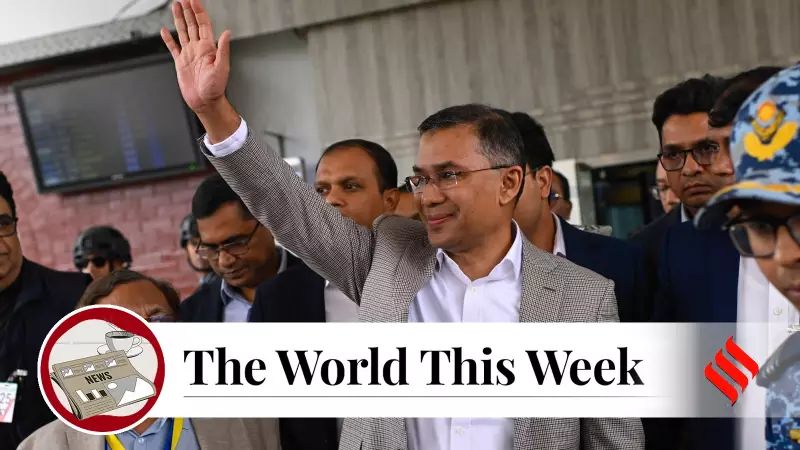
A Dhaka court delivered a pivotal verdict that has sent ripples through Bangladesh's political sphere. Tarique Rahman, the acting chairman of the Bangladesh Nationalist Party (BNP), was sentenced to nine years in prison. This ruling is connected to a high-profile corruption case involving the acquisition of a house in the capital city.
The case, officially known as the "Gulshan House Property Case," revolves around allegations that Rahman and his wife acquired property through illegal means. Alongside Rahman, his wife, Dr. Zubaida Rahman, also received a similar sentence. The court's decision is not just a legal milestone but a significant political event, given Tarique Rahman's central role as the de facto leader of the primary opposition party in Bangladesh.
This conviction adds another layer to the already tense political environment in the country. It is expected to influence the strategies and public perception of the BNP as Bangladesh navigates its complex democratic journey.
Trump's Arctic Ambitions and the Greenland Envoy
In a move highlighting continued strategic interest in the Arctic region, former US President Donald Trump announced plans to appoint a special envoy for Greenland if he wins the upcoming presidential election. This proposal resurrects a focus area from his previous administration, which had famously expressed interest in purchasing the autonomous Danish territory.
The creation of a dedicated envoy position signals a formal and sustained approach to US engagement with Greenland. This interest is largely driven by the territory's vast natural resources and its growing geopolitical importance due to climate change. As Arctic ice melts, new shipping routes and access to untapped mineral reserves are becoming feasible, drawing the attention of global powers.
Trump's plan underscores the competitive scramble for influence in the Arctic, where nations like Russia and China are also actively increasing their presence. A US special envoy would aim to solidify American partnerships and interests in this strategically vital region.
Other Notable Global Developments
Beyond these two major stories, the week was marked by other important geopolitical shifts and events. These include ongoing conflicts, diplomatic maneuvers, and economic policies that collectively shape the international order. The interconnectedness of these events demonstrates how actions in one region can have far-reaching consequences, influencing global trade, security alliances, and diplomatic relations.
For observers of international relations, these developments offer critical insights into the evolving balance of power and the key flashpoints that could define global politics in the near future. Understanding these dynamics is crucial for comprehending the broader trends affecting economic stability and international cooperation.
Implications and the Road Ahead
The sentencing of Tarique Rahman is likely to deepen political divisions within Bangladesh, potentially affecting the country's domestic stability and its international relations. The response from the BNP and its supporters will be a key factor to watch in the coming days and weeks.
Meanwhile, the proposition of a US special envoy for Greenland highlights the Arctic's transition from a remote frontier to a zone of intense strategic competition. This move, if realized, would formalize US efforts to counter the influence of rivals and secure a stake in the region's future.
Together, these stories from South Asia and the Arctic Circle remind us that geopolitics is constantly in flux. National decisions, court rulings, and diplomatic appointments are not isolated incidents but are threads in the larger tapestry of global affairs, impacting everything from local governance to international climate policy.