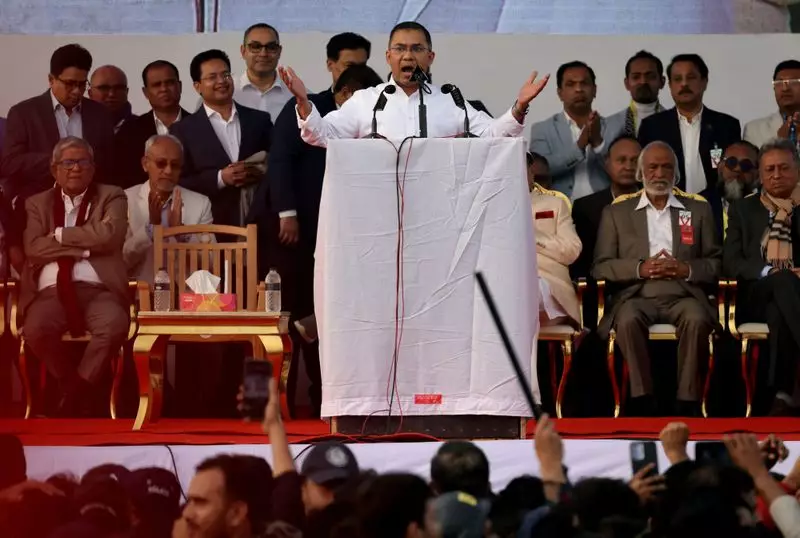
In a significant virtual address that resonated across Bangladesh, Tarique Rahman, the acting chairman of the Bangladesh Nationalist Party (BNP), declared he possesses a concrete plan for the nation's future. Speaking from London on Wednesday, Rahman framed his online appearance as a symbolic 'homecoming,' directly engaging with the Bangladeshi populace amid his prolonged exile.
A Virtual Return and a Vision for Change
The event, meticulously organized by the BNP, was broadcast live from a hotel in the capital, Dhaka. Supporters and party members gathered to watch Rahman, who has lived in the United Kingdom since 2008. In his speech, he expressed a deep, personal longing to physically return to his homeland. "I have a plan for my country, for my people," Rahman asserted, positioning himself as a leader-in-waiting with a clear agenda to address the nation's challenges.
His address was not merely a presentation of ideas but a sharp critique of the current administration led by Prime Minister Sheikh Hasina. Rahman accused the government of systemic failures, including crippling the judiciary, undermining the electoral process, and mishandling the economy. He specifically targeted what he described as rampant corruption and a bleak economic outlook under Hasina's Awami League rule.

Confrontation with the Current Government
Rahman's rhetoric was fiercely oppositional. He labeled the Hasina government as "illegal" and "usurpers of power," alleging it maintains control through coercion rather than popular mandate. A central pillar of his critique focused on the state of democracy and human rights. Rahman claimed that the government's actions have led to a situation where the people of Bangladesh are "deprived of all kinds of human rights," pointing to issues like enforced disappearances and a stifled political atmosphere.
The BNP leader also addressed the contentious January 7 general elections, which his party and several others boycotted. He dismissed the polls as a "sham election" engineered to cement the Awami League's hold on power without legitimate public consent. This, he argued, has created a profound crisis of political legitimacy in the country.
The Road Ahead and Call to Action
Looking forward, Tarique Rahman outlined the necessity of a peaceful, democratic movement to restore what he termed the people's usurped rights. He called for unity and resilience among BNP members and supporters, urging them to continue their struggle through constitutional means. His speech served as both a morale booster for the party base and a direct challenge to the political status quo in Dhaka.
The virtual homecoming event underscores the complex dynamics of Bangladeshi politics, where a major opposition leader operates from abroad while seeking to influence the domestic landscape. Rahman's pledge of a detailed plan for the country sets the stage for intensified political discourse as the BNP attempts to regroup and mobilize against a firmly entrenched government. The response from the ruling party and the impact of this digital outreach on the ground remain to be seen, but the lines for the next phase of political contention are clearly drawn.