

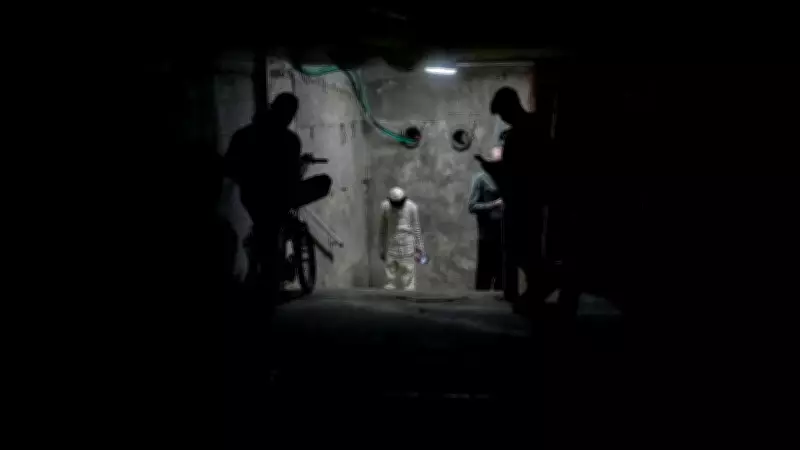
Telugu Workers in Israel Face Constant Missile Threats, Life Reduced to Bunker Sprints
HYDERABAD: For thousands of workers from Telangana and Andhra Pradesh living in Israel, life has become a harrowing cycle of missile alerts and frantic sprints to bunkers. As tensions escalate in the region, individuals like Gattu Naveen and Elle Prasad describe their existence as one of constant vigilance and disruption.
Significant Telugu Community in Israel
According to the Israel Telangana Association, approximately 7,000 people from the two Telugu states reside in Israel. This includes roughly 2,000 from Telangana and the remainder from Andhra Pradesh. Many originate from districts such as Nizamabad, Rajanna Sircilla, and Jagtial, working primarily as caregivers and builders. Their monthly earnings range from 5,000 to 6,000 shekels, equivalent to between Rs 1 lakh and Rs 1.35 lakh.
Under a bilateral framework established in 2022, more than 20,000 Indians are employed in Israel's construction sector. This includes 6,700 workers who arrived in 2025 to address labor shortages following the Gaza war. Additionally, another 18,000 to 20,000 Indians work as caregivers, supporting Israel's growing elderly population. Telangana natives are predominantly clustered in Ramat Gan and neighborhoods surrounding Tel Aviv, with a smaller community in Ashkelon.

Unprecedented Tension and Daily Disruptions
Former Israel Telangana Association president Soma Ravi, a Nizamabad native who has lived in Ramat Gan for a decade, described the recent weekend as exceptionally tense. A missile landed just a couple of kilometers from his home on Saturday evening, heightening fears.
"Earlier escalations were from groups like Hezbollah and Hamas. This time a powerful country is launching ballistic missiles, so people are more worried and extra careful," Ravi explained. His personal plans have been upended; he was scheduled to fly to the United States on Tuesday for his daughter's wedding on March 15 but is now stranded due to airspace closures.
Daily routines have tightened significantly across Israel. While supermarkets and pharmacies remain operational, offices, schools, and shopping malls are shut. Outdoor gatherings are strictly capped at 30 people, despite most bunkers having a capacity of 50 to 60 individuals.
Personal Accounts of Hardship
Gattu Naveen, from Nizamabad, has resided in Petah Tikva for six years. He detailed the immediate response required during missile launches: "As soon as a missile is launched, the siren goes off and we are asked to move to bunkers immediately. Separate local alarms also ring. For families with children, the elderly and pregnant women, repeatedly moving back and forth can be challenging."
Elle Prasad, hailing from Rajanna Sircilla and based in Ashkelon for 18 years, noted that while residents anticipated tensions, the speed and intensity of recent events have been shocking. "Vehicle movement is limited and people step out only for essential work," he stated. The Indian embassy has issued advisories urging vigilance and caution among all Indian nationals in the region.
Broader Regional Context
The situation unfolds against a backdrop of heightened regional conflict. Reports indicate Israel has bombed Hezbollah targets in Beirut, while Gulf nations have vowed to defend themselves. Iranian state media has claimed a US fighter jet was downed in Kuwait, sharing video footage showing a fighter jet engulfed in flames with pilots ejecting, though this remains unverified. Explosions have also been reported in Bahrain, Dubai, and Doha, further complicating the security landscape.
For the Telugu workers, these geopolitical developments translate directly into daily survival challenges, turning their lives into a relentless test of endurance and resilience.






