

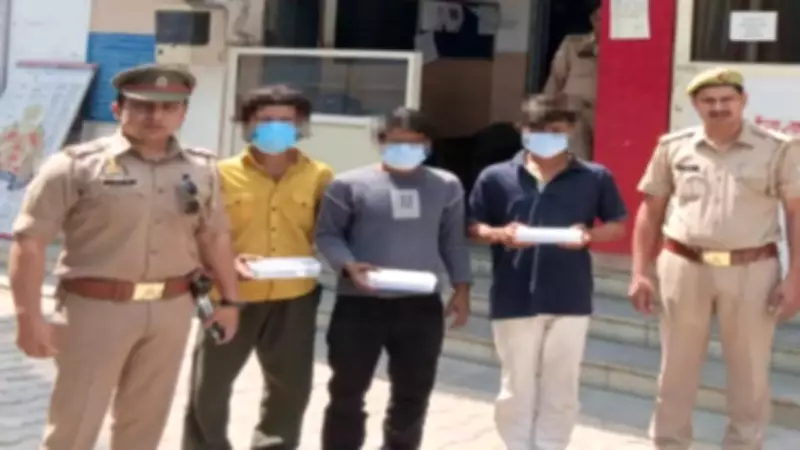
Three Arrested in Major Spying Network with Direct Links to Pakistan-Based Handlers
In a significant development in an ongoing national security investigation, three individuals were apprehended on Tuesday for their alleged involvement in a sophisticated espionage network. This network, which has been operational for several years, is accused of recruiting young operatives to conduct surveillance on sensitive locations across India and transmitting the collected intelligence to handlers based in Pakistan.
Key Recruiter from Bihar at the Heart of the Operation
The arrests include a pivotal figure known as Sameer, alias Shooter, a 20-year-old originally from Bhagalpur, Bihar, but currently residing in Delhi's Chandni Chowk area. According to police authorities, Shooter played a central role as a recruiter, specifically targeting youths from economically disadvantaged backgrounds. He allegedly enticed them with payments as low as Rs 5,000 to carry out reconnaissance missions at critical infrastructure sites.
These locations included major railway stations, offices of various security agencies, and key government departments. Shooter's initial contact with the network reportedly occurred in 2023-24 after he posted photographs and videos featuring weapons on social media platforms. This online activity caught the attention of existing gang members Naushad and Sohail Malik, who subsequently integrated him into multiple encrypted WhatsApp groups.

Methodology and Training for Espionage Activities
Dhawal Jaiswal, the Deputy Commissioner of Police (City), provided detailed insights into the operational methods. Shooter was assigned the specific task of surveying security force bases, railway hubs, and other vital establishments nationwide. He was instructed to gather and forward information, including videos, photographs, and precise GPS coordinates, to designated foreign telephone numbers.
"He downloaded a specialized application from the Play Store to capture and transmit the sensitive material," DCP Jaiswal explained. "He received online training to proficiently use this application. Furthermore, he successfully lured several young boys into the gang using monetary incentives, persuading them to perform reconnaissance duties. In just the past year, he added over 12 new youths to the network."
Investigative sources indicate that Shooter was actively identifying military and Air Force zones, sharing detailed information with a Pakistani contact number. His activities also involved multiple trips to Rajasthan and Assam over the last six months. It was during his interrogation that crucial leads emerged, enabling police to locate and arrest the two other individuals.
Additional Arrests and Network Structure
The other arrested individuals are another man named Sameer, aged 22 from Shamli, and Shivraj, an 18-year-old from Shahjahanpur currently living in Bhowapur, Kaushambi. Police described the second Sameer as another key organizer within the spy ring. He allegedly connected with Naushad via Instagram towards the end of 2024 and was later added to a WhatsApp group that included Meera, a previously arrested operative.
Shivraj, who worked professionally as a CCTV technician, is accused of joining the network through Sohail. "On Sohail's explicit instructions, he installed a CCTV camera in Sonipat, and the live footage was clandestinely routed to an undisclosed location. For this service, he was compensated Rs 50,000," the DCP stated.
Broader Network and Financial Investigation
This latest action brings the total number of individuals taken into custody in connection with this extensive spying racket to 21. The network is believed to have spread its influence across the country over recent years. Earlier investigations had identified Naushad Ali, Shooter, and Sohail as principal operatives. Along with previously arrested individuals Mehak and Meera, they were reportedly in direct communication with Sardar Jora, the Pakistan-based handler who allegedly masterminded the recruitment drives.

The financial underpinnings of the operation are also under intense scrutiny. Police revealed that Ganesh, a Nepal resident arrested earlier, disclosed that Sardar Jora sent funds to Nepal using hawala channels. The money was then funneled through a complex web involving casinos, business fronts, and mobile payment systems. Intermediaries in this chain typically took a 20% commission before the remaining funds were transferred to accounts in India or delivered directly to operatives in cash.
This case highlights a concerning trend of foreign intelligence agencies exploiting vulnerable youth through social media and encrypted messaging platforms to compromise national security. The investigation remains active as authorities work to dismantle the entire network and trace all financial and communication links.





