Transgender Man's Hard-Won Legal Victory Faces New Threat from Legislation
In Vadodara, a 32-year-old trans man from Gujarat, after shattering a 116-year-old institutional barrier at SNDT Women's University through a grueling legal fight, now confronts renewed uncertainty. This follows the Lok Sabha's approval of the Transgender Amendment Bill, 2026, on Tuesday, casting a shadow over his recent triumph.
A Landmark Court Ruling Upholds Fundamental Rights
On February 27, 2026, the Bombay High Court delivered a groundbreaking verdict, compelling SNDT Women's University to revise the petitioner's academic documents—including mark sheets and degrees—to accurately reflect his changed name and gender. The court emphasized that procedural regulations must not infringe upon fundamental rights, stating that educational institutions should focus on fostering learning rather than denying identity.
The individual, referred to as Vivaan for privacy, was assigned female at birth. He completed his Bachelor of Commerce and Master of Commerce from an SNDT-affiliated college in Gujarat before undergoing gender-affirming surgery in 2024, following years of financial hardship. Vivaan also initiated hormone replacement therapy and transitioned socially and legally, obtaining a transgender identity card under the government's social justice framework based on self-declaration, and updated key documents like Aadhaar and PAN.

Struggle Against Institutional Resistance
Despite the protections outlined in the Transgender Persons (Protection of Rights) Act, 2019, the university initially declined to amend his records, citing its designation as a women's institution. Repeated appeals, email communications, and a personal visit to the university's Mumbai office in January 2025 failed to yield a resolution.
"They made us go from one office to another. No one was willing to help," Vivaan recounted, describing the emotionally exhausting process.
With assistance from advocacy groups such as Vikalp, Humsafar Trust, and SAATHII, Vivaan filed a petition with the Bombay High Court in July 2025. The subsequent months were marked by numerous adjournments, exacerbating the stress.
"The waiting period was the worst—date after date. It affects everything—your job, your income, your life," he explained.
Real-World Consequences and a Hard-Earned Resolution
The discrepancy in his documents had tangible impacts. "Because my documents weren't updated, I couldn't change my job. It was an embarrassing situation—I had to keep explaining myself everywhere," Vivaan added.
Currently working for a multinational corporation, he noted that while his employer was supportive, limited earnings and the inability to pursue better opportunities due to document mismatches intensified his anxiety. Following the court's directive, the university issued corrected mark sheets on March 16, 2026, with degree certificates anticipated soon, concluding a struggle that activists believe could establish a precedent for transgender individuals facing similar obstacles, especially in gender-specific educational settings.
"Once my documents were corrected, everything became clear. I didn't have to justify myself anymore," Vivaan expressed, highlighting the relief.
New Legislation Sparks Community-Wide Apprehensions
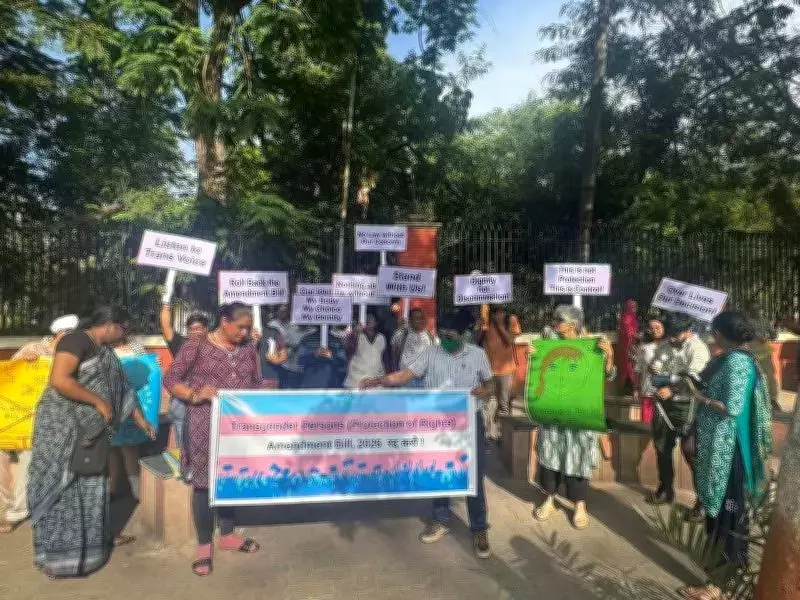
Just as his life began to stabilize—both professionally and personally, including a recent marriage—fresh concerns have emerged. The Transgender Amendment Bill, 2026, passed by the Lok Sabha, has ignited worries within the transgender community regarding provisions that might impose stricter certification procedures and medical evaluations, along with uncertainties about recognizing trans men, trans women, and intersex persons.
"I had just started feeling that everything is finally in place—and then this bill came as a shock," Vivaan admitted. "It feels like after all this struggle, our identity itself is being questioned again."
He fears the potential dilution of the recognition he fought so hard to achieve. "We know who we are. Taking away self-identity is taking away our dignity," he asserted, warning that added bureaucratic hurdles in an already intricate system could exacerbate exclusion.

Support organizations that aided his case have voiced similar alarms, cautioning that additional regulatory layers might reverse years of advancement and complicate access to fundamental rights.
A Bittersweet Conclusion to a Protracted Battle
For Vivaan, the victory now carries a tinge of bitterness. "After winning, I should be celebrating," he reflected. "But instead, I'm wondering what comes next."