

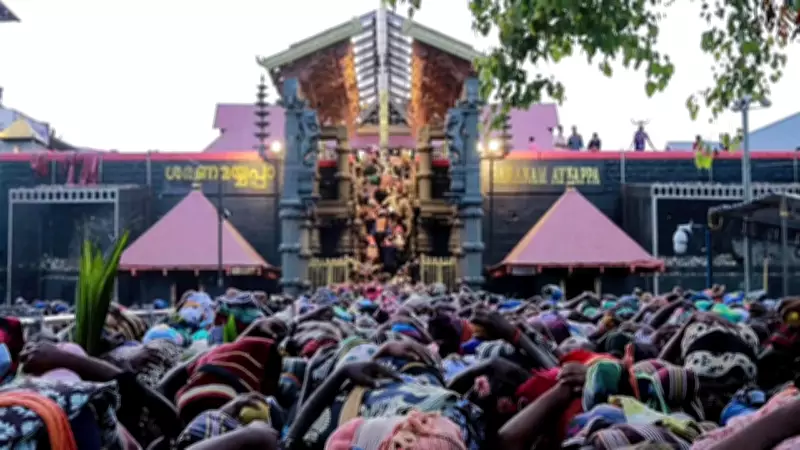
Travancore Devaswom Board to File Affidavit in Supreme Court to Preserve Sabarimala Traditions
The Travancore Devaswom Board (TDB) has announced it will file an affidavit before the Supreme Court to preserve the existing traditions at the Sabarimala temple. This move opposes the landmark 2018 ruling that opened the hill shrine to women of all ages. Board president K Jayakumar made this declaration on Monday, emphasizing the board's commitment to protecting the temple's centuries-old practices.
Board Meeting and Decision
The decision was taken during a board meeting convened as the Supreme Court considers petitions regarding the entry of women of menstruating age into the temple, located in Kerala's Pathanamthitta district. Jayakumar stated, "We will contest the Supreme Court decision. The board has no difference of opinion on this." He added that the TDB is constituted under rules that mandate the protection of the temple and its traditions, highlighting its statutory duty.
Background of the 2018 Ruling
On September 28, 2018, a five-judge Constitution bench of the Supreme Court struck down, by a 4-1 majority, the restriction at Sabarimala that barred women aged 10 to 50. The court held that this ban violated principles of equality and freedom of worship, asserting that biological factors cannot justify denial of access to a place of worship. This ruling sparked widespread debate and legal challenges, with the TDB now seeking to uphold the traditional practice.

TDB's Role and History
The Travancore Devaswom Board is an autonomous statutory body headquartered in Thiruvananthapuram, managing over 1,000 temples in Kerala. Formed in 1950, it is the largest of the state's five devaswom boards and oversees iconic shrines, most notably Sabarimala. Jayakumar addressed past actions, noting that the board's counsel had opposed a review of the 2018 verdict in 2020. He clarified that this reflected a legal view at the time and not a shift in policy, stating, "The devaswom has only one stand - that traditions should be protected and followed."
Current Legal Proceedings
The Supreme Court has asked all parties to communicate their stand by March 15, prompting the board's meeting and resolution. Jayakumar explained that the board resolved to adopt a position "aligned with the sentiments of devotees," indicating a focus on public opinion and religious customs. When questioned about whether the Kerala government would mirror the board's stand, Jayakumar deferred, saying the question should be put to the government directly.
Implications and Next Steps
This development marks a significant step in the ongoing legal battle over Sabarimala's traditions. The board's affidavit is expected to argue for the preservation of the age-old practice, setting the stage for further judicial review. As the March 15 deadline approaches, all eyes are on the Supreme Court's handling of this sensitive issue, balancing constitutional rights with religious autonomy.






