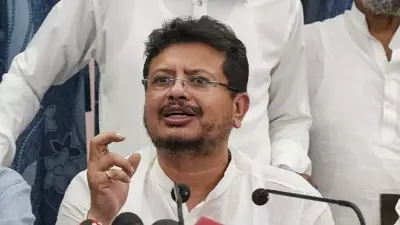
In a powerful call for legislative action, Congress Working Committee member and Tripura MLA Sudip Roy Barman has demanded that the central government introduce a comprehensive anti-racism bill in Parliament. This urgent plea follows the tragic death of a young student from Tripura, highlighting the persistent racial discrimination faced by people from India's northeastern states.
A Silent Protest for Justice
Roy Barman led a silent protest rally in Agartala seeking justice for 24-year-old MBA student Anjel Chakma. Chakma, along with his younger brother Michael, was brutally assaulted in Dehradun's Selakui area on December 9 in what is described as a racially motivated attack. Anjel succumbed to his injuries on December 26 in a Dehradun hospital, while his brother continues to recover.
The MLA underscored a disturbing national trend, pointing to a significant rise in such hate crimes, particularly in central Indian regions. He expressed deep concern that despite repeated incidents of racial violence, no substantial national-level legal measure has been enacted to protect citizens from the northeast.

Ignorance and Alienation: A National Failure
Roy Barman highlighted a profound lack of awareness about the northeastern region, even 79 years after Independence. He stated that young people from the northeast are frequently misidentified as Chinese or Bangladeshi in major metropolitan cities, a clear reflection of widespread ignorance and their consequent alienation within their own country.
To combat this, he proposed a fundamental shift in perspective. He called for the incorporation of comprehensive chapters on the northeast, its history, and its diverse cultures into school curricula across India. This initiative, he argued, would align with Prime Minister Narendra Modi's emphasis on regional development and the vision of 'Ashta Lakshmi', ensuring the integration of all regions into the national consciousness.
An Integral Part of India's Identity
Firmly labelling the attack on Anjel Chakma as a hate crime, the Tripura legislator stressed that Indians from the northeast—whether Tiprasa, Bengalis, Nagas, Sikkimese, or Arunachalis—are inseparable from the nation's identity. He asserted their equal constitutional rights to reside anywhere in India, speak their native languages, uphold their cultural practices, and resist pressures to conform solely to Hindi or stereotypical mainland norms.
Roy Barman did not mince words in his political critique, accusing the BJP and RSS of spreading animosity through divisive politics that he believes fuel such crimes. He cited instances where speakers of Bengali and other regional dialects are harassed and wrongly branded as illegal Bangladeshis. This, he criticized, is a direct attempt to erode India's cherished 'unity in diversity' by marginalizing people based on appearance, language, dietary habits, or traditions.
"This mentality has affected the younger generation, who are now targeting members of their own communities, especially young boys and girls," he added, warning of the corrosive social impact.
Call for Urgent Legislative Framework
The MLA also condemned the Uttarakhand Police for their failure to arrest the main accused in the Dehradun case, despite the BJP being in power at both the state and central levels. Emphasizing the critical need for immediate action, Roy Barman insisted that only a strong, unambiguous legal framework can prevent future tragedies.
His demand for an anti-racism law presents a direct challenge to the government, framing the safety and dignity of northeastern citizens as a urgent national issue requiring parliamentary intervention. The case of Anjel Chakma has become a grim symbol of the vulnerability faced by many, turning a personal tragedy into a rallying point for systemic change.