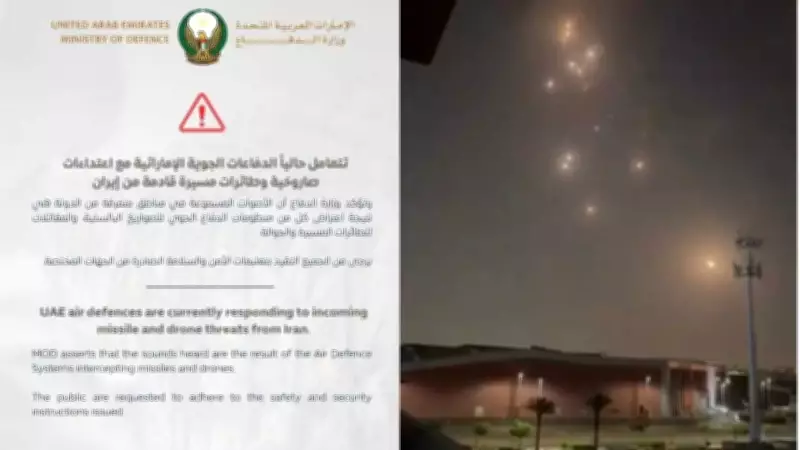
UAE Emergency Alert: Dubai Sounds Were Air Defense Interceptions, Not Missile Impacts
Residents across the United Arab Emirates were jolted by an alarming emergency notification on their mobile devices, warning of a potential missile threat and urging immediate safety measures. The alert, issued by the UAE's Ministry of Interior, advised people to stay indoors, move to secure locations, and avoid open areas. This activation of the national emergency system, rarely deployed at such a scale, created a wave of concern as loud, echoing sounds were reported across parts of Dubai shortly afterward.
Authorities Clarify: Interceptions, Not Impacts
Swiftly addressing the confusion, Dubai authorities, including the Dubai Media Office, provided clarification via official channels. They confirmed that the sounds heard were not explosions from missile impacts but resulted from successful air defense interception operations. In a statement on X (formerly Twitter), the Dubai Media Office emphasized, "Authorities in Dubai confirm that the sounds heard across parts of the city were the result of successful air defense interception operations. Please rely on official sources for updates." This aligns with defense updates indicating that multiple aerial threats were neutralized mid-air, ensuring public safety.
In modern warfare, such interceptions often produce loud sonic booms, flash-like visuals, and echoing sounds that can be mistaken for ground explosions. These phenomena occur when air defense systems engage and destroy incoming threats before they reach populated areas, typically happening in airspace above or near cities. The dense urban environment of Dubai amplified the sounds, leading to widespread reports of explosions despite no direct strikes occurring.

Scale of Threats and Defensive Operations
According to regional defense reports, the UAE's air defense systems were actively responding to a significant wave of ballistic missiles and drones (UAVs). In a single incident, the UAE reportedly intercepted 10 ballistic missiles and 45 drones. Since the onset of regional conflicts, hundreds of such threats have been neutralized, highlighting both the intensity of attacks and the robustness of defensive measures.
While interceptions prevent direct hits, they do not eliminate all risks. One serious danger is falling debris from destroyed missiles or drones, which has previously caused damage in Dubai and led to a fatality in Abu Dhabi. This underscores why authorities advise residents to stay indoors, avoid windows and open spaces, and follow only official updates during such alerts.
Airspace Closures and Regional Context
As a precautionary measure, the UAE temporarily shut down its airspace during the threat window, leading to flight delays, cancellations, and diversions. Operations resumed once authorities confirmed stabilization, reflecting standard global protocols to mitigate risks to civil aviation during missile threats.
This incident cannot be viewed in isolation; it occurs amid escalating regional tensions involving Iran, the United States, and Israel. The UAE, due to its strategic and economic importance, has increasingly found itself within the extended threat zone. Recent developments include drone strikes on energy facilities and missile interceptions across Gulf countries, with explosions reported in multiple cities. The alerts and sounds in Dubai are part of this broader escalation, bringing the conflict closer to everyday life in a global hub.
Public Response and Information Management
Within minutes of the alerts, videos, voice notes, and speculation flooded social media platforms, trending globally. Authorities were quick to stress the importance of relying only on official sources to combat misinformation. Their rapid clarification helped prevent widespread panic, reinforcing trust in official communication channels and highlighting the dangers of viral false claims about "missile hits."
The UAE's response serves as a guideline for future incidents. Key steps for residents include:

- Move indoors immediately upon receiving an alert
- Stay away from windows and glass structures
- Avoid using elevators during threat periods
- Follow updates from official government channels
- Refrain from spreading unverified information
These protocols are not merely precautionary but life-saving in active threat scenarios. In this case, all incoming threats were successfully intercepted, no direct strikes occurred in Dubai, and authorities maintained control. The clear message for residents is to stay alert, stay informed through verified updates, and prioritize safety over viral noise.