

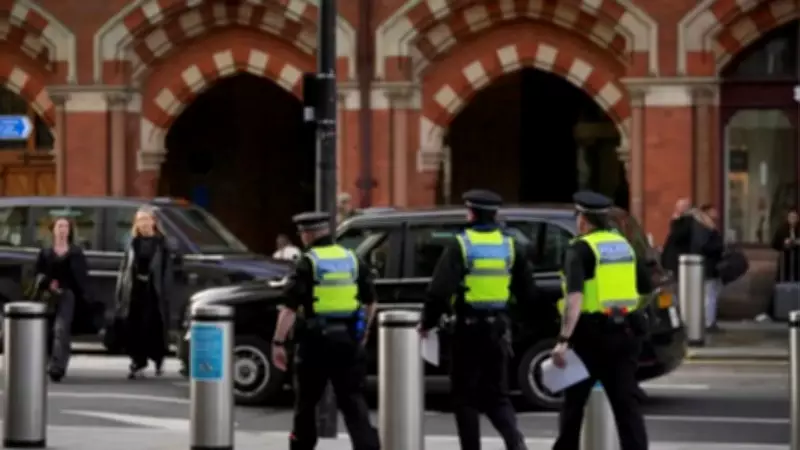
UK High Court Clears Path for Expanded Police Facial Recognition
The High Court in the United Kingdom has delivered a significant ruling that paves the way for broader deployment of live facial recognition (LFR) technology by police forces across the country. This decision comes after the court rejected a legal challenge against the Metropolitan Police's use of the controversial surveillance system.
Court Dismisses Privacy and Discrimination Claims
In a comprehensive judgment, the court determined that the Metropolitan Police's policy framework for LFR deployment provides sufficient legal safeguards and does not constitute a breach of human rights. The judges specifically addressed concerns about potential racial discrimination and privacy invasion, stating that the arguments presented by claimants did not convincingly demonstrate unlawful bias or invalidate the existing policy.
The court emphasized that fears of bias, while understandable, were not sufficient to prove the system unlawful under current legislation. This ruling represents a major victory for government plans to expand facial recognition technology as a crime-fighting tool.

How the Surveillance System Operates
The live facial recognition technology involves specialized cameras mounted on police vans strategically positioned in busy public areas such as shopping districts and high streets. As individuals pass by these locations, their facial features are scanned in real-time and instantly compared against police watchlists containing images of wanted suspects.
According to police submissions presented during the legal proceedings, the system has already contributed to more than 800 arrests over the past year. Authorities maintain that LFR enables rapid identification of suspects while reducing manpower requirements for traditional policing methods.
Police officials have emphasized that the system operates in what they describe as a "targeted and intelligence-led" manner, with non-matching images being immediately deleted from the system to address privacy concerns.
Legal Challenge and Misidentification Allegations
The court case was brought by youth worker Shaun Thompson, who was supported by Silkie Carlo, director of the privacy advocacy group Big Brother Watch. They argued that the facial recognition system creates risks of arbitrary policing and subjects ordinary citizens to constant biometric surveillance without adequate safeguards.
Thompson presented a personal account of being wrongly identified by the technology, detained by police, and threatened with arrest despite carrying valid identification documents. He described the experience as "stop and search on steroids," warning that innocent people could be treated as suspects due to algorithmic errors in the recognition system.
Legal representatives for the claimants further argued that London residents are effectively unable to move through public spaces without having their biometric data captured and processed by police surveillance systems.
Government Backs Nationwide Rollout Plans
Policing Minister Sarah Jones welcomed the court's ruling and confirmed government plans for a nationwide expansion of facial recognition technology. She stated that LFR helps authorities track down serious offenders, including violent criminals, and insisted that ordinary citizens have "nothing to fear" from the surveillance system.
Minister Jones framed the technology as a public safety necessity rather than a surveillance threat, arguing that "there can be no true liberty when people live in fear of crime." Her comments reflect the government's position that facial recognition represents a crucial tool in modern law enforcement.
Rapid Expansion and Ongoing Concerns
The facial recognition system is already operational across at least 13 police forces throughout the United Kingdom. Government plans now call for increasing the number of facial recognition vans from the current 10 to approximately 50, signaling a substantial expansion of the technology's coverage across public spaces.

Despite the court's favorable ruling, concerns persist regarding algorithmic fairness and potential racial disparities in identification accuracy. A previous police study had suggested possible racial differences in how accurately the system identifies individuals, though authorities later claimed that software updates had addressed these issues.
The Metropolitan Police has defended the technology's reliability, stating that misidentifications are extremely rare and that no wrongful arrests have resulted from LFR alerts. However, privacy advocates continue to warn about the implications of mass biometric surveillance and the potential for algorithmic bias to disproportionately affect minority communities.





