Two British Nationals Directed to Depart India Following 'Free Palestine' Sticker Incident in Pushkar
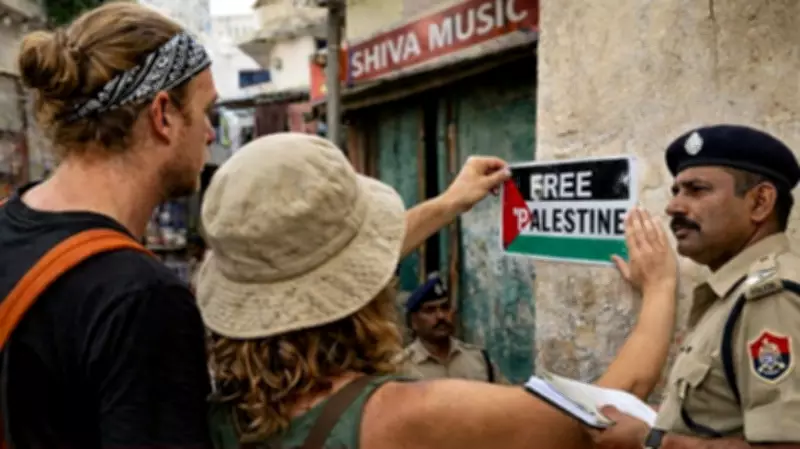
In a significant development, two British nationals have been ordered to leave India after they were reportedly involved in pasting 'Free Palestine' stickers in the holy town of Pushkar, Rajasthan. This incident has sparked a broader conversation about the permissible activities of foreign visitors within the country, especially concerning politically sensitive matters.
Details of the Pushkar Incident
The authorities in Rajasthan took swift action against the two individuals, whose identities have not been publicly disclosed, following complaints about their activities. According to local reports, the British nationals were allegedly distributing and affixing stickers bearing the 'Free Palestine' slogan in various public areas around Pushkar. This town, renowned for its sacred lake and vibrant cultural heritage, attracts thousands of tourists annually, making such actions particularly noticeable.
The stickers, which advocate for Palestinian rights, were seen as potentially inflammatory in the context of India's diplomatic stance and internal security considerations. Indian officials have emphasized that foreign nationals must adhere to local laws and regulations, which prohibit engagement in activities that could disturb public order or promote divisive political agendas.

Legal and Diplomatic Implications
The decision to instruct the British nationals to depart India underscores the government's firm stance on maintaining law and order and preventing foreign interference in domestic or international political issues. Under Indian visa regulations, visitors are expected to respect the country's sovereignty and avoid actions that might be construed as meddling in sensitive affairs.
This incident has prompted discussions about the balance between freedom of expression and national security. While the right to free speech is protected, authorities argue that foreign nationals must exercise caution to avoid actions that could incite tensions or conflict with India's foreign policy objectives. The move also highlights the ongoing complexities in India's relations with global political movements, including the Israel-Palestine conflict.
Reactions and Broader Context
Local residents and officials in Pushkar have expressed mixed reactions to the incident. Some view the stickers as a harmless expression of solidarity, while others worry about the potential for such actions to escalate into larger disputes. The case has drawn attention to how India manages foreign involvement in politically charged issues, particularly in regions with significant tourist traffic.
This is not the first time that foreign nationals have faced scrutiny in India for political activities. In recent years, there have been instances where individuals from other countries were questioned or penalized for engaging in advocacy or protests deemed inappropriate under Indian law. The Pushkar case serves as a reminder of the strict enforcement of these regulations.
Conclusion and Future Outlook
The directive for the two British nationals to leave India reflects a broader policy of safeguarding national interests and ensuring that foreign visitors comply with local norms. As India continues to navigate its role on the global stage, incidents like this may influence future visa policies and diplomatic engagements. It also raises questions about how similar cases will be handled moving forward, especially in an era of increasing global activism and digital communication.
Authorities have reiterated their commitment to monitoring such activities closely to prevent any disruptions to public harmony. For now, the focus remains on upholding the rule of law while balancing the rights of individuals with the need to maintain social and political stability.