Hundreds of skilled workers from Uttar Pradesh, who invested their life savings in hopes of high-paying jobs in Israel, now find themselves stranded and fighting a legal battle. After mortgaging family land and pawning jewellery to pay for the opportunity, they allege they have been unfairly overlooked by the implementing agency, the National Skill Development Corporation (NSDC).
Dreams Pawned for Promised Jobs
The story of Gautam Chauhan, a 28-year-old mason from Azamgarh, is a stark example. Eighteen months ago, he pawned his sister's gold jewellery and mortgaged his family's half-acre land to raise Rs 68,800 for his journey to Israel. Today, he is still waiting for his flight. Similarly, Chhedi Lal, a 45-year-old foreman from Fatehpur, pawned his wife's jewellery for the same amount. Both men were selected under a Government-to-Government (G2G) scheme advertised by the NSDC, designed to send skilled Indian labour to Israel.
"Several other workers from my district, who cleared the interview and tests after me, left in 2024-end. I still have not got my work visa," says Lal. They are part of a larger group of over 2,700 candidates selected from UP. However, Chauhan and Lal are among 376 candidates who claim they were bypassed after paying for air tickets, while others from later batches were sent to Tel Aviv.

Legal Battle Against 'Discrimination'
Frustrated by the delay and alleged injustice, 27 of these candidates, including Chauhan and Lal, have filed a petition in the Allahabad High Court against the NSDC. Their plea, filed in September 2024, challenges what they call a "discriminatory" and "arbitrary" pick-and-choose policy. The petition states, "the petitioners have been deceived by the respondents (NSDC)."
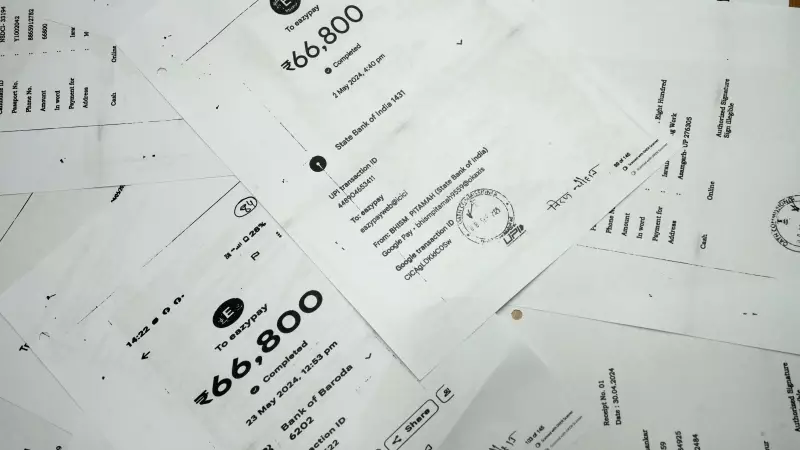
The workers have attached crucial evidence to their petition, including their application forms and receipts from the NSDC for the payment made for tickets to Israel. They have also provided lists of applicants who were flown to Israel, mostly in October 2024, after they themselves were ignored. These later-selected workers had cleared interviews, aptitude tests, medical checks, and police verification after the petitioners.
A Scheme Marred by Mismatch and Promises
The job scheme was launched after the October 2023 Hamas attack, when Israel banned Palestinian workers from construction sites. It promised lucrative opportunities, with workers drawn by an average monthly salary of over Rs 1.9 lakh after deductions. However, reports indicated the scheme faced a skill mismatch, with an assessment process that over-promised and under-delivered on workers' abilities.
Consequently, Israel took the unprecedented step of allowing these Indian workers to be re-deployed in unskilled or industrial jobs in non-construction sectors. By the end of 2024, around 5,000 workers had been sent via the G2G route and an equal number via the Business-to-Business (B2B) route. The numbers are likely to have increased this year as Israel opened up more sectors.
For the stranded workers, a recent NSDC offer of a refund is cold comfort. They complain of facing family ire and mounting interest on their loans. "We are not worried about security in Israel since the others who have gone told us they are safe and have got used to life in underground bunkers," says another petitioner, Manoj Chauhan, a mason from Azamgarh.
Their lawyer, Ashok Kumar Dwivedi, argues for a simple remedy: "If the job contract for Israel is for five years and the petitioners have already lost more than a year, they deserve to be given a full five-year contract." The NSDC did not respond to media queries, but in late December 2024, it issued a notice on its website announcing refunds for selected candidates who could not be sent—an option the workers reject.
Leading the group, Niraj Chauhan says they have met with UP Labour Minister Anil Rajbhar and visited NSDC's head office, receiving only assurances. Meanwhile, the NSDC continues with more recruitment drives. As petitioner Ravendra Singh from Fatehpur puts it, filing the petition was their last option, funded by pooling Rs 500 each. Their hope now rests solely on the court's intervention.