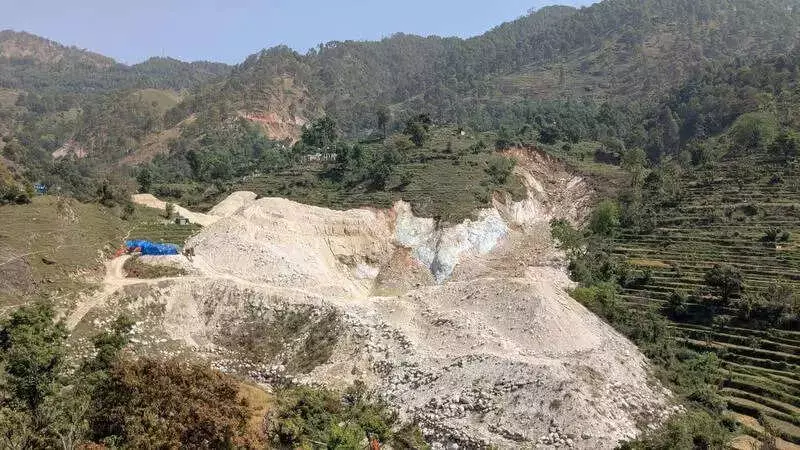
The Uttarakhand High Court has prolonged the prohibition on mechanised soapstone mining operations in Bageshwar district. It has also established a high-level expert committee to evaluate the severe environmental degradation allegedly caused by these activities.
Court Takes Action on Villagers' Plea
A division bench of Chief Justice G Narendar and Justice Subhash Upadhyay issued this order on Wednesday. The bench was hearing a Public Interest Litigation (PIL) filed by residents of the Kanda area in Bageshwar. The villagers claimed that illegal mining had led to cracks in their houses and damaged local drinking water pipelines. The court had initially taken suo motu cognisance based on a letter from these residents.
High-Powered Committee Formed for Assessment
The court has constituted a committee headed by District Mining Officer Nazia Hasan. Several premier scientific institutions have been appointed to investigate the mining's impact. These include:

- The National Environmental Engineering Research Institute (NEERI), Nagpur.
- The Wadia Institute of Himalayan Geology, Dehradun.
- The G B Pant National Himalayan Environment Institute, Almora.
- The Geological Survey of India, Dehradun.
These bodies function under the Council of Scientific and Industrial Research (CSIR). NEERI's expertise covers environmental protection, pollution control, waste management, and impact assessment.
The committee has been directed to conduct weekly inspections of the mines. The state government will initially cover the expenses, later recovering the costs from the mine operators where inspections occur. The expert panel must also examine the environmental damage in this earthquake-prone zone.
Context of the Ban and Committee's Mandate
It is important to note that these mines are distinct from those operated by 29 lease-holders. The Supreme Court, in November, allowed those specific lease-holders to resume mechanised mining after setting aside the High Court's blanket ban from January. The HC's original ban was based on a report by a court-appointed commissioner that highlighted rampant illegal mining and its devastating effect on the fragile hill ecology.
The newly formed committee has a comprehensive mandate. It must perform a detailed assessment and submit a report to the court every two weeks. This report should outline the damage from mechanised mining, recommend safe mining techniques, and advise whether mining should be stopped or allowed to continue. The court observed that despite the matter being under consideration for a year, the government had failed to complete the investigation.
Renowned environmentalist Ajay Rawat will serve as an expert member of the committee. Advocate Dushyant Mainali has been appointed as amicus curiae. The court's order also referenced a report from the Director General of Mines Safety, which alleged that mine operators concealed their use of machinery while obtaining environmental clearances.