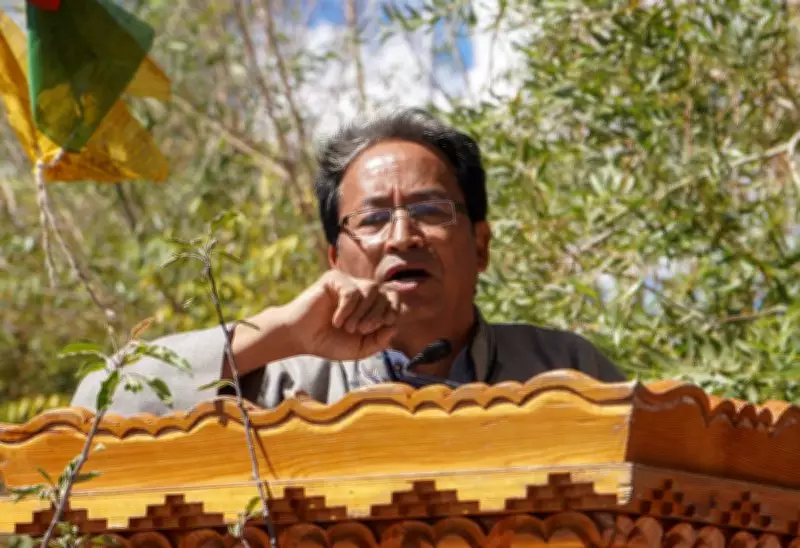
Sonam Wangchuk Denies Supreme Court Allegations of Overthrow Remarks
In a recent development, Sonam Wangchuk, a prominent environmental activist and innovator from Ladakh, has firmly denied allegations made in the Supreme Court of India regarding remarks about overthrowing the government akin to the Arab Spring. The allegations, which surfaced in legal proceedings, suggested that Wangchuk had made statements advocating for a government overthrow, drawing parallels to the Arab Spring uprisings that swept across the Middle East and North Africa in the early 2010s.
Clarification on Peaceful Activism
Wangchuk, known for his work in education and sustainable development, has clarified that his activism has always been rooted in non-violent and peaceful means. He emphasized that his efforts are focused on addressing social and environmental issues in Jammu and Kashmir, particularly in Ladakh, through dialogue and constructive engagement with authorities. Wangchuk stated that any insinuation of supporting violent or revolutionary actions is baseless and misrepresents his long-standing commitment to democratic processes.
Context of the Allegations
The allegations were reportedly part of a case in the Supreme Court, though specific details of the proceedings have not been fully disclosed. Wangchuk's denial comes amid heightened scrutiny of activists in the region, where political and social tensions have often led to legal challenges. He has called for a thorough investigation into the origins of these allegations, suggesting they may be politically motivated or based on misinformation.
Wangchuk asserted, "My life's work has been about empowering communities through education and environmental stewardship, not about inciting unrest. I categorically deny any remarks about overthrowing the government, and I urge the public to rely on facts rather than hearsay."
Impact on Jammu and Kashmir's Activist Landscape
This incident highlights the delicate balance between activism and legal oversight in Jammu and Kashmir. Wangchuk's case could set a precedent for how activists are perceived and treated in the region, especially in light of ongoing debates over governance and civil liberties. Experts note that such allegations, if proven false, could undermine trust in judicial processes and deter peaceful advocacy.
Key points from Wangchuk's response include:
- Denial of any involvement in or support for violent overthrow of the government.
- Emphasis on his dedication to peaceful and lawful activism.
- Call for transparency and accountability in the legal allegations.
- Concern over the potential chilling effect on other activists in Jammu and Kashmir.
Broader Implications for Indian Democracy
The denial raises questions about the intersection of free speech, activism, and national security in India. As the Supreme Court continues to handle cases involving activists, this situation underscores the need for clear evidence and due process to prevent the misuse of legal frameworks against legitimate dissent. Wangchuk's stance may resonate with other activists nationwide who face similar challenges.
In conclusion, Sonam Wangchuk's firm denial of the Supreme Court allegations serves as a reminder of the importance of upholding democratic values while addressing security concerns. The outcome of this case could influence future activism and legal interpretations in Jammu and Kashmir and beyond.