

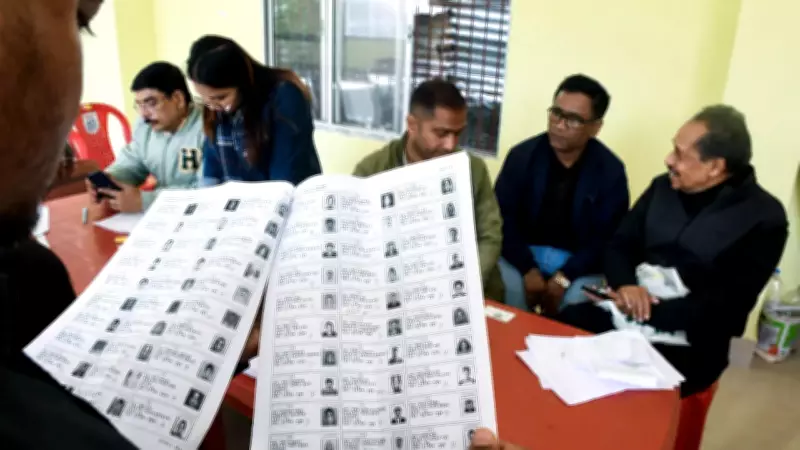
250 'Other Gender' Names Deleted from Bengal's Draft Voter List, Study Reveals Structural Barriers
A recent analysis by the Sabar Institute has uncovered that the names of approximately 250 individuals belonging to the 'other gender' category have been deleted from West Bengal's draft Special Intensive Revision (SIR) list. The primary reasons cited for these deletions are that these individuals were deemed 'untraceable' or 'absent' during the verification process.
Marginalised Group Faces Significant Setback in Voter Registration
Before the SIR exercise commenced on November 4 last year, there were 1,811 names of 'other gender' individuals on the 2025 voters' list. This marginalised group, which includes transgender people and members of other gender minority communities, has now seen a notable reduction in representation due to these deletions. Experts point to deep-rooted structural barriers as the underlying cause for this disenfranchisement.
Ashin Chakraborty, who conducted the study along with Souptik Halder and Sabir Ahamed, explained the challenges faced by this community. "'Other gender' persons are among the most marginalised communities in society. They are frequently disowned by their families at an early age, which severely limits their access to essential identity documents, stable housing, and formal records," Chakraborty stated.

Documentation Hurdles and Verification Criteria Criticised
Chakraborty further elaborated that these limitations might have prevented transgender people and gender-diverse citizens from submitting the required SIR forms or establishing their linkages with parents on the 2002 voters' list. This lack of documentation likely resulted in their names being deleted due to being classified as 'untraceable' or 'absent'.
The study criticises the documentation-heavy verification criteria followed by the Election Commission, which, while aimed at ensuring the integrity of the electoral roll, risks disproportionately disenfranchising an already excluded population. Sabir Ahamed emphasised the urgent need for a more inclusive and rights-sensitive electoral process to address these issues.
Geographical Concentration of Deletions and Local Challenges
The deletions are concentrated in a few assembly constituencies, mostly in districts and on the outskirts of Kolkata. According to the study:
- The maximum number of deletions—16—was reported from Kharagpur Sadar.
- This was followed by Katwa with 12 deletions and Uluberia South with 11 deletions.
- Panskura West saw eight deletions; Habra, Bagnan, and Jhargram recorded six each; and Baruipur West, Sonarpur North, and Entally had five each.
"These assembly constituencies account for nearly one-third of all such deletions in the state," noted Ashin Chakraborty.
In Kolkata, the numbers were lower, with Ballygunge recording three deletions and Shyampukur, Bidhannagar, Behala West, and Kasba having two each. There was one deletion each in Maniktala, Kashipur-Belgachhia, Beleghata, and Behala East.
Souptik Halder suggested a possible reason for this disparity: "Kolkata saw fewer deletions possibly because NGOs and organisations helped people with the paperwork. In districts, the paperwork is a significant challenge for people from marginalised gender groups."
Activists Highlight Personal Struggles and Systemic Issues
Trans civil rights activist Anurag Maitreyee shared insights into the personal struggles faced by individuals in this community. "In many cases, the enumeration form has gone to their natal families, from whom they have been displaced. So, they did not receive the form. Obtaining a birth certificate and domicile certificate is often impossible as families frequently destroy the papers or refuse to part with them," Maitreyee explained.
Maitreyee added, "For persons who have undergone gender affirmation surgery and social transition, their appearance and photos will not match with those from 2002, creating further complications in the verification process."

Another transgender activist, Sintu Bagui, expressed concern over the broader impact of the SIR exercise. "The document-heavy SIR exercise has created a culture of threat, fear, insecurity, and uncertainty among marginalised gender groups," Bagui stated, calling for more empathetic and accessible electoral procedures.
This study underscores the critical need for electoral reforms that consider the unique challenges faced by transgender and gender-diverse citizens, ensuring their right to vote is protected and facilitated.





