

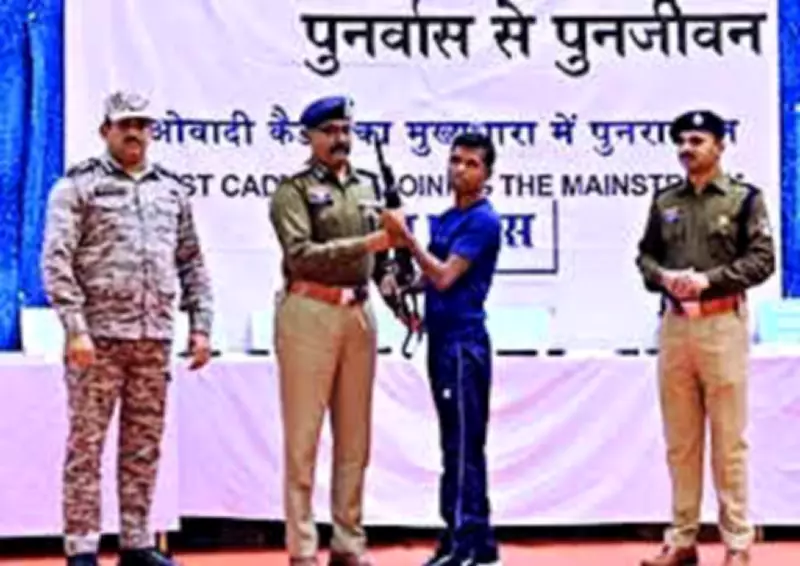
Major Maoist Surrender in Chhattisgarh: 51 Cadres Lay Down Arms in Bastar
In a significant coordinated surrender operation, 51 Maoist cadres, including senior leaders, women fighters, and armed operatives, laid down their weapons in the Bastar region of Chhattisgarh on Friday. This event occurred just hours before the scheduled arrival of Union Home Minister Amit Shah, highlighting a deepening erosion of the insurgent network in its last remaining strongholds of Bijapur and Sukma.
Surrender Details and Security Context
The surrenders coincided with a presidential visit to Bastar, adding to the symbolic importance of the event. Security officials are under immense pressure to eliminate armed Maoists by March 31, a deadline set by the central government. However, the shrinking numbers of cadres have made this task increasingly difficult, as remaining insurgents have scattered into small groups of five to six individuals in remote villages and forests.
Security personnel estimate that more than 150 armed and active Maoists are still present in Bastar, primarily in the southern region. This underscores the ongoing challenges despite recent successes.

Breakdown of Surrenders in Bijapur and Sukma
In Bijapur district, 30 Maoists, including 20 women associated with the south sub-zonal bureau, surrendered before senior police officers and central force commanders. This group carried a combined reward of ₹85 lakh, indicating their high-value status within the insurgent hierarchy.
Sukma Superintendent of Police Kiran Chavan reported that the surrendered group included four area committee members (ACMs), one PPCM, three Janatana Sarkar presidents, company members, and party members. Some of these individuals had been active in the Indravati National Park area committee, Gangloor area committee, and west Bastar division.
Since January 2024, Bijapur district has witnessed 918 Maoists returning to the mainstream, alongside 1,163 arrests and 232 Maoists killed in encounters. This data reflects a sustained and multi-pronged approach by security forces.
Weapons and Rehabilitation
The cadres voluntarily deposited cordex wire and gelatin sticks, and were immediately brought under the legal and rehabilitation framework of the state’s surrender policy. This swift action aims to facilitate their reintegration into society.
On the same day, 21 Maoists, including three divisional committee members (DVCMs) and five ACMs, surrendered in Sukma. They carried a cumulative reward of ₹76 lakh and handed over a significant cache of weapons and explosives.
Among those who surrendered were cadres active across Darbha division, south Bastar division, Odisha, and the Indravati area committee. Many had been involved in armed actions for over a decade, highlighting the long-standing nature of the conflict.
The surrendered arms included:
- Three AK-47 rifles
- Two SLRs
- One INSAS rifle
- Three BGL launchers
- Magazines, live ammunition, cordex wire, gelatin sticks, and detonators
Security Strategy and Insurgent Fatigue
Bastar Range Inspector General P Sundarraj attributed the twin surrenders to several factors:
- Expanded security camps in remote interiors
- Improved road connectivity
- Relentless operations by DRG, district force, STF, COBRA units, and CRPF battalions
- The growing reach of government welfare schemes in once-cut-off villages
Bijapur Superintendent of Police Jitendra Yadav appealed to remaining Maoists to abandon violence, emphasizing that the 'Puna Margeim' campaign guarantees safety, dignity, and a self-reliant future for those willing to return to the constitutional fold.
With Maoist mobility curtailed, leadership thinning, and recruitment drying up, security agencies believe the insurgency is now facing irreversible organisational fatigue. This assessment points to a potential turning point in the long-standing conflict in the region.






