AIMIM Severs Alliance with AJUP Ahead of West Bengal Assembly Elections
In a significant political development that has reshaped the electoral landscape in West Bengal, the All India Majlis-e-Ittehadul Muslimeen (AIMIM), led by Asaduddin Owaisi, has officially terminated its alliance with Humayun Kabir's Aam Janata Unnayan Party (AJUP). This decision comes just ahead of the crucial assembly elections, introducing fresh uncertainty into an already tightly contested race.
Controversial Sting Video Triggers Alliance Collapse
The alliance dissolution follows the release of a purported sting video by the All India Trinamool Congress. The video allegedly shows Kabir discussing a potential arrangement with BJP leaders to manipulate minority votes in the state. This revelation has intensified the battle for Muslim votes, traditionally consolidated behind Chief Minister Mamata Banerjee in previous elections.
Kabir has dismissed the video as AI-generated, while the BJP has suggested it might be an attempt to malign its leadership. However, AIMIM leaders stated that their decision followed extensive internal consultations and raised serious concerns about the implications of the video's content.

AIMIM's Independent Path Forward
Announcing its decision on social media platform X, AIMIM declared: "As of today, AIMIM has withdrawn its alliance with Kabir's party. Bengal's Muslims are one of the poorest, neglected and oppressed communities. Despite decades of secular rule, nothing has been done for them."
The party further emphasized its commitment to representing marginalized communities, stating: "AIMIM's policy in contesting elections in any state is so that the marginalised communities have an independent political voice. We will be contesting the Bengal elections independently and will have no alliance with any party going forward."
Electoral Implications and Revised Campaign Strategy
The break-up has significant potential to alter electoral equations, particularly in constituencies where Muslim voters play a decisive role. The AIMIM-AJUP alliance was expected to consolidate support among Muslims, Dalits, and other marginalized sections—an emerging voting bloc that could have influenced the prospects of the ruling Trinamool Congress.
With polling scheduled in two phases on April 23 and April 29, the collapse of this alliance adds a fresh layer of uncertainty, potentially fragmenting votes and sharpening the contest across key constituencies.
Owaisi, who was previously scheduled to campaign jointly with Kabir, has revised his plans and will now address at least half a dozen rallies independently starting from April 12.
AIMIM's Independent Candidates for Phase-I Elections
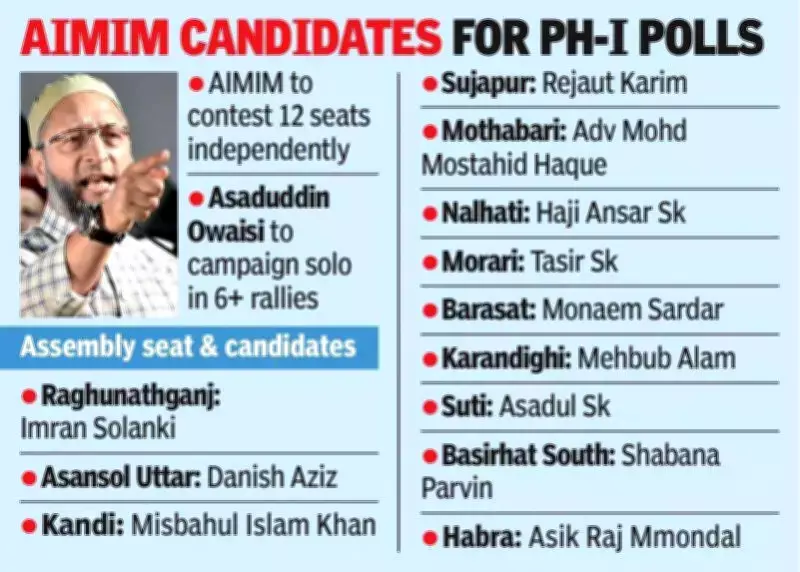
AIMIM will now contest 12 assembly seats independently in West Bengal. The party has announced its candidates for the first phase of elections:
- Raghunathganj: Imran Solanki
- Asansol Uttar: Danish Aziz
- Kandi: Misbahul Islam Khan
- Sujapur: Rejaut Karim
- Mothabari: Adv Mohd Mostahid Haque
- Nalhati: Haji Ansar Sk
- Morari: Tasir Sk
- Barasat: Monaem Sardar
- Karandighi: Mehbub Alam
- Suti: Asadul Sk
- Basirhat South: Shabana Parvin
- Habra: Asik Raj Mmondal
Internal Consultations and Official Statements
AIMIM spokesperson Adil Hussain maintained that the party would stand by its commitment to represent marginalized communities and preferred to go solo amid the controversy. "We have spoken to both Kabir and our top leaders and informed them of the decision of the AIMIM to withdraw from the alliance," he stated.
Hussain further commented on the investigation aspect, saying: "Let the ECI or any other investigation agency probe the allegations. It is being said that the sting operation video is from December."
The political fallout from this alliance dissolution continues to unfold as West Bengal prepares for a closely watched election that could significantly impact the state's political future and the representation of minority communities in the legislative assembly.