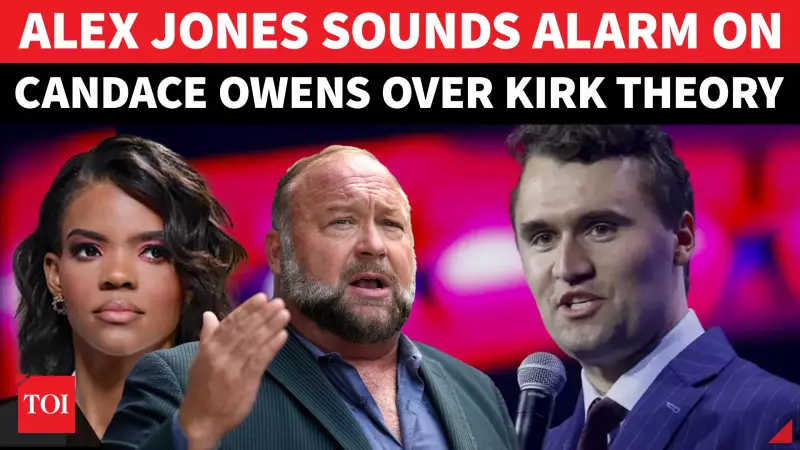
A significant and unusual public disagreement has emerged within the sphere of right-wing media, drawing intense scrutiny. The controversy centers on conspiracy theorist Alex Jones issuing a direct, on-air warning aimed at fellow conservative commentator Candace Owens.
A Rare Public Rupture
The incident, which took place on December 21, 2025, marks a notable moment of internal discord. Alex Jones, a figure infamous for amplifying highly controversial narratives, took the surprising step of publicly calling for caution. His target was claims being promoted by Candace Owens regarding the alleged assassination of activist Charlie Kirk.
Jones framed his unusual intervention not as a direct attack but as an expression of genuine concern. He explicitly stated he felt compelled to speak out and urge restraint over the specific theory Owens has been supporting.

Questioning the Evidence
At the heart of Jones's warning was a sharp critique of the evidence being used to support the claims about Charlie Kirk. He specifically questioned the reliance on what he described as disputed metadata. Jones emphasized the dangers of drawing definitive conclusions from information that lacks verifiable and solid proof.
His core argument was a warning against jumping to unsupported conclusions, a notable stance from someone often associated with fringe theories. This move highlights the extraordinary nature of the current rift, where Jones is positioning himself as a voice urging evidential caution.
Implications and Reactions
This public fissure is seen as particularly dangerous and troubling by observers, as it reveals deep divisions within a media ecosystem that typically presents a united front. The fact that Alex Jones—a polarizing icon himself—finds Owens' theory too wild and insufficiently backed underscores the extreme nature of the claims in question.
The event signals a potential shift in dynamics among influential right-wing voices. It raises questions about the limits of conspiracy promotion and the points at which even prominent figures within that space feel the need to draw a line, fearing the consequences of unverified information.
The fallout from this rare warning is still unfolding, but it has undoubtedly created a new flashpoint in the ongoing debates about media responsibility, evidence, and influence within political commentary circles.