Amit Shah Takes Swift Action Following Tribal Election Boycott in Bihar
Union Home Minister Amit Shah has responded with remarkable speed to address the concerns of tribal communities in Bihar's West Champaran district. The Tharu and Oraon communities from twenty-two villages in the Doon valley decided to boycott the recent Bihar assembly elections. Their protest highlighted long-standing issues with inadequate development and persistent hardships in their region.
Immediate Response from the Home Minister
Union Minister of State for Coal and Mines Satish Chandra Dubey revealed that Amit Shah took immediate notice of the situation. "Amit Shah ji took immediate cognizance," Dubey told this newspaper. "He asked if I could get a delegation of the aggrieved tribals to meet him in Delhi after the polls."
Dubey had originally briefed Shah about the proposed boycott during the home minister's rally in Narkatiaganj. Dubey, now a Rajya Sabha MP, previously represented this area in the Lok Sabha. His connection to the region helped facilitate communication between the tribal communities and the central government.

Surprising Boycott from Traditional Supporters
The election boycott surprised many political observers. The Tharu and Oraon communities have been considered loyal supporters of the National Democratic Alliance for years. Their support strengthened after they received scheduled tribe status during Atal Bihari Vajpayee's government in 2003.
These tribal groups live in and around the Valmiki Tiger Reserve. The region has witnessed visible development under Chief Minister Nitish Kumar's "double engine" government over the past two decades. This made their boycott decision particularly noteworthy.
Delegation Meets with Shah in Delhi
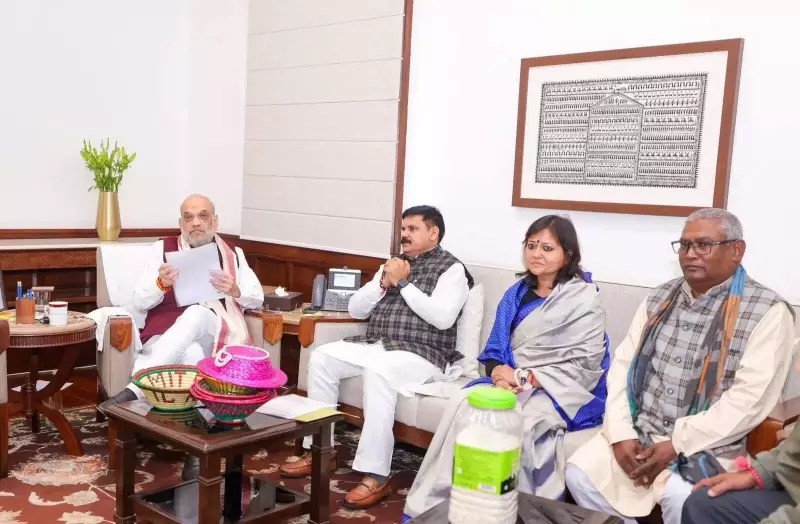
Ajeya Sharma Rai, BJP general secretary from Bagaha, accompanied a small tribal delegation to Dubey's residence in New Delhi. Rai has been active in the tribal belt for years. Shah soon granted them an audience to hear their concerns directly.
"They have been our loyal supporters," Rai explained. "Our NDA government has brought in multiple schemes in the area, but this clearly stood out as a 'dil mangey more' situation." His comment suggested that despite existing development efforts, the communities wanted additional improvements.
Historical Context of Discontent
The discontent in this region has deep historical roots. Until the late 1990s, the dense jungles of the Doon valley remained largely inaccessible by road. This isolation made the area a haven for kidnapping gangs and later Maoist insurgents.
In 1995, a tragic massacre of eighteen Tharu tribals by a gang in Narkatia Doan village prompted then Chief Minister Lalu Prasad to declare Bagaha a police district. Maoists later entrenched themselves in the area, demonstrating their presence through violent acts:
- They blew up the Gobardhana police station building in 1999
- They looted an armoury after attacking a police picket in 2000
After coming to power in 2005, Chief Minister Nitish Kumar focused on development in these forest villages. His government rolled out various schemes that gradually turned the tribal communities into reliable supporters of the NDA.
Current Grievances and Demands
During a recent visit to the area, this newspaper observed posters calling for election boycott. Residents repeatedly described poor infrastructure and inconsistent delivery of welfare schemes. Their specific complaints included:
- Absence of all-weather roads
- Lack of bridges over streams
- Inadequate electricity supply
- Poor healthcare facilities
- Limited education opportunities
- Insufficient communication facilities
One particularly tragic incident remained fresh in community memory. A pregnant woman being carried on a tractor-trolley to a distant hospital was swept away while crossing a swollen river. This story highlighted the urgent need for better infrastructure.
Specific Demands Presented to Shah
The delegation led by Dubey and Rai submitted a set of petitions outlining these demands directly to Amit Shah. Their requests included upgrading mobile connectivity through Starlink or other government-approved services.

"Our handicaps are enhanced by lack of poor network," explained Ram Krishna Kaji of Bankatwa Doan, who participated in the delegation. "Amit Shah ji assured us that our concerns will be fully addressed."
Security Concerns in the Region
Shah's prompt intervention has also eased concerns about a possible Maoist return to these jungles. Security remains a significant issue in the region. In July 2020, a joint team of the Bihar Police STF and the SSB's small action team killed four Maoists in an encounter near Chautha Nala.
Security forces seized a laptop and Maoist literature during this operation. Notably, one of those killed was a local Tharu youth. This incident highlighted the fragile balance between development, alienation, and security in this sensitive region.
The tribal communities now await concrete action following their meeting with the home minister. Their decision to boycott elections has successfully drawn national attention to their longstanding development challenges.