

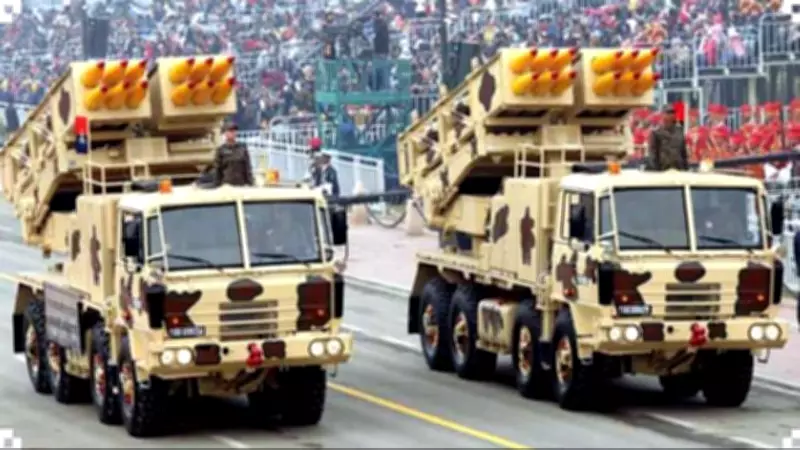
Indian Army Expands Pinaka Arsenal Amid Heightened Border Tensions
In response to escalating security threats along its western and northern frontiers, the Indian Army has significantly strengthened its artillery capabilities by adding a new Pinaka regiment to its operational forces. This move comes in the wake of recent conflicts, including last year's skirmish with Pakistan, underscoring the urgency to bolster defensive and offensive readiness.
Current Deployment and Future Plans
With the latest induction, the Army now deploys seven Pinaka rocket launcher regiments strategically positioned along the borders with Pakistan and China. A defense source revealed that the eighth regiment has already received over half of its equipment and is expected to become fully operational before the end of 2026. Looking ahead, two additional regiments are projected to be operationalized next year, which would bring the total number of active Pinaka regiments to ten.
The Army has set an ambitious long-term goal of fielding 22 Pinaka regiments. These units will be equipped with advanced, longer-range guided versions, designed to replace older artillery systems and enhance the military's deep-strike capabilities.

Historical Context and Development
The push to expand the Pinaka regiments gained momentum following the Galwan Valley clash with Chinese troops in June 2020. In August of that year, the Army entered into contracts with key defense manufacturers—Bharat Earth Movers Ltd (BEML), Tata Power Company (TPCL), and Larsen & Toubro (L&T)—for the supply of six Pinaka regiments at an approximate cost of Rs 2,580 crore.
Developed by the Defence Research and Development Organisation (DRDO), the Pinaka is India's premier indigenous multi-barrel rocket launcher system. Early versions had a range of 40 km, but newer variants like the Guided Pinaka and Long-Range Guided Rocket (LRGR) can reach targets up to 120 km away, making it a critical asset for neutralizing enemy positions in deep-strike operations.
Proven Effectiveness and International Interest
The Pinaka system has a proven track record, having demonstrated its effectiveness during the 1999 Kargil War by successfully targeting and neutralizing Pakistani positions on mountain tops. Its reputation has also attracted international attention, with Armenia becoming the first country to purchase and receive the system from India. Other nations, including France, Saudi Arabia, Vietnam, and Indonesia, have expressed interest in procuring this advanced rocket launcher.
Regimental Structure and Capabilities
A typical Pinaka regiment consists of three batteries, each equipped with six launchers, resulting in a combat configuration of 18 launchers per regiment. Additionally, two extra launchers are maintained for training and wartime replacements. A single battery of six launchers can unleash 72 rockets in approximately 44 seconds, providing rapid, high-volume firepower to saturate large areas and destroy enemy troop concentrations, logistics hubs, and infrastructure within minutes.
Named after the divine bow of Lord Shiva, the Pinaka system is mounted on high-mobility Tatra or Tata trucks, featuring a "shoot and scoot" capability. This allows the launchers to quickly relocate after firing, thereby avoiding counter-battery fire and enhancing survivability on the battlefield.
This strategic expansion of the Pinaka regiments reflects the Indian Army's commitment to modernizing its arsenal and maintaining a robust defense posture in the face of ongoing regional tensions.






