

Assam BJP's AI Video Depicting CM Sarma Targeting Men in Skullcaps Sparks Political Firestorm
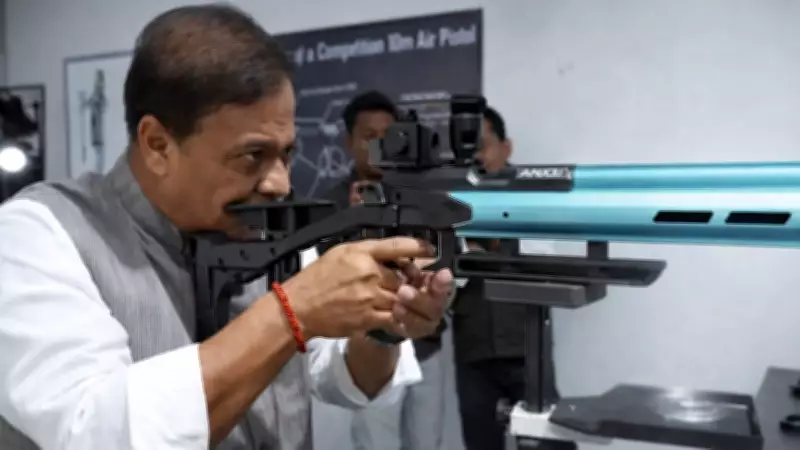
An AI-generated video posted by the official Assam Bharatiya Janata Party (BJP) social media handle has ignited a massive political controversy, drawing sharp condemnation from opposition parties and civil society. The video, which was uploaded on Saturday before being deleted on Sunday, depicted Assam Chief Minister Himanta Biswa Sarma aiming a rifle at a photograph of Congress MP Gaurav Gogoi and another Muslim man, both shown wearing skullcaps.
Video Content and Immediate Backlash
The controversial video carried the caption "Point black shot" and showed Chief Minister Sarma shooting at the photograph of the two men. It concluded with an image of Sarma dressed as a cowboy wielding a gun, superimposed with provocative phrases including "No mercy to Bangladeshis," "Why did you go to Pakistan?" and "Foreigner-free Assam."
The Indian National Congress was among the first to respond, issuing a strongly worded statement that characterized the video as "appearing to glorify the targeted, 'point-blank' murder of minorities." The party described the content as "deeply abhorrent and disturbing" and asserted that it "cannot be dismissed as random troll content."

Congress Calls for Judicial Intervention
In their official statement, the Congress party declared: "This amounts to a call to mass violence and genocide. It is a reflection of the true face of this fascist regime, which has harboured this hatred for decades and, in the last 11 years, tried to normalise it." The party emphasized the gravity of the situation, calling for "strict action against this act of spreading disharmony and poison in society" and specifically appealed to the judiciary to "step in firmly," noting they had "no hope" for condemnation from the Prime Minister.
BJP's Response and Video Removal
By Sunday, the Assam BJP had deleted the controversial post from their social media accounts. When contacted by media outlets, state BJP spokespersons declined to comment on the matter. Ranjib Kumar Sarma, a party spokesperson, stated simply: "There is no comment. It has been deleted, there is nothing to say."
Opposition Parties Unite in Condemnation
The All India Trinamool Congress (TMC) issued a scathing response, calling the video "a green signal for genocide and mass murder." The party accused the BJP of having "single-handedly dragged India's political discourse into the gutter" and claimed they had "ground the secular, pluralist ethos of our Constitution into dust."
The TMC statement further elaborated: "Himanta Biswa Sarma was portrayed as a gunman shooting down people from the minority community. If this is not a green signal for genocide and mass murder, what is? The same CM has earlier urged people to harass Muslims through everyday acts like underpaying them, but this crosses every line. This is open incitement."
The Communist Party of India (Marxist) joined the chorus of condemnation, labeling the video an "open call for ethnic cleansing and genocide." The party specifically referenced the ongoing SIR (Survey of Indigenous Residents) exercise in Assam, accusing the Chief Minister and BJP of using "the bogey of 'infiltrators' to make highly communal, provocative statements and issue calls for targeted violence against Muslims."
Historical Context of Controversial Content
This is not the first instance of controversial AI-generated content from the same Assam BJP social media handle, which boasts over 200,000 followers. In September of the previous year, the account posted another AI-generated video titled 'Assam without BJP' that showed various provocative images including a man in a skullcap cutting meat by the roadside with the text 'beef legalization,' and depictions of men in skullcaps and women in burkhas and hijabs in locations across Assam including tea gardens, airports, amusement parks, stadiums, and historical monuments.

Broader Implications for Political Discourse
The incident has raised serious questions about the use of artificial intelligence in political campaigning and the boundaries of acceptable political discourse in India. Opposition parties have called for immediate criminal action against those responsible and have urged the Election Commission to take cognizance of what they describe as "open advertisement for targeted hate crimes against a community."
The CPI(M) specifically called for Chief Minister Sarma to be "put behind bars before a catastrophe unfolds in Assam" and appealed to the Supreme Court to "immediately take strict action against him and his coterie for vitiating communal harmony, creating enmity between communities, and publicly calling for violence."
As the controversy continues to unfold, it highlights the increasingly volatile intersection of technology, politics, and communal tensions in contemporary Indian democracy, with significant implications for social harmony and electoral integrity in the crucial northeastern state of Assam.





