

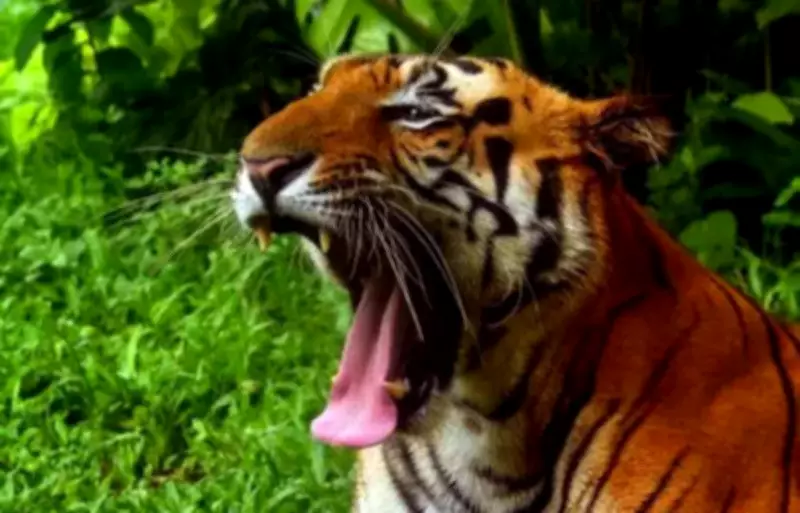
Maharashtra Assembly Erupts in Debate Over Proposed Iron Ore Mining Near Tiger Reserve Corridor
The Maharashtra Legislative Assembly witnessed a sharp and contentious exchange on Wednesday as lawmakers clashed over a proposed iron ore mining project that environmentalists warn could severely impact a crucial wildlife corridor connected to the Tadoba-Andhari Tiger Reserve. The debate centered on the state government's decision to refer the controversial proposal to the National Board for Wildlife, drawing fierce criticism from opposition members.
Congress MLA Nitin Raut Launches Scathing Attack
Congress MLA Nitin Raut spearheaded the opposition's concerns, passionately arguing that the Tadoba-Andhari Tiger Reserve represents not just Maharashtra's pride but a national treasure. He emphasized that the wildlife corridor spanning the districts of Chandrapur, Gondia, and Bhandara serves as an essential lifeline for tigers and numerous other wildlife species, facilitating genetic diversity and seasonal migration.
"What has changed within one year that the state is now recommending this destructive project to the national board?" Raut demanded, referencing the standing committee's decision of January 24, 2024, which had previously raised environmental red flags. He systematically dismantled the project's purported economic benefits, revealing that only 32 permanent jobs were expected to be created.

"How can we justify extensive tree felling and irreversible habitat destruction for such minimal employment gains?" Raut questioned, challenging the fundamental rationale behind the mining proposal.
Forest Minister's Response and Judicial Intervention
Forest Minister Ganesh Naik acknowledged the environmental concerns, stating that destroying a substantial forest area for a limited number of jobs would indeed be inappropriate. He clarified that the proposal had not received state-level approval and was being forwarded to the central government with specific conditions.
"While forwarding our recommendation, we have explicitly conveyed that due care must be taken to ensure there is absolutely no environmental damage," Naik assured the Assembly. He further revealed that the Nagpur bench of the Bombay High Court had taken suo motu cognizance of the matter, placing it under active judicial scrutiny.
The minister explained that the proposal is prepared for submission to the Centre, and the state government would act appropriately, carefully considering any directions issued by the court. This judicial oversight adds a significant layer of complexity to the already contentious issue.
Shiv Sena (UBT) MLA Aaditya Thackeray's Intervention
Adding to the pressure, Shiv Sena (UBT) MLA Aaditya Thackeray urged the government to immediately halt the project, highlighting that the terms of reference for the environmental assessment had expired in December. He pressed for a fresh and comprehensive Environmental Impact Assessment (EIA) before any further action could be considered.
Thackeray posed a critical question to the government: "Will the administration commit to stopping this project even after it has been sent to the national board, if environmental concerns are validated?" This query underscored the ongoing uncertainty surrounding the project's future despite the referral process.
Key Environmental and Political Implications
The debate highlighted several crucial issues:
- The conflict between industrial development and wildlife conservation in ecologically sensitive regions
- The adequacy of environmental safeguards in mining projects near protected areas
- The role of state versus central authorities in wildlife and forest clearance matters
- The increasing judicial oversight of environmental decisions in India
As the matter now involves multiple stakeholders—state government, central authorities, judiciary, and environmental advocates—the future of the iron ore mining project remains uncertain. The Assembly discussion has amplified concerns about balancing economic development with ecological preservation, particularly in regions hosting India's iconic tiger populations.






