

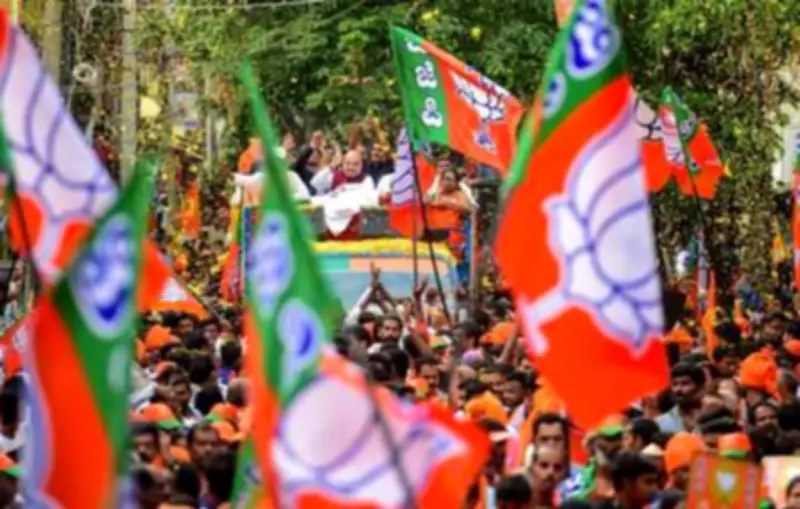
Assembly Elections 2026: Comprehensive Polling Schedule and Key Political Developments
The Election Commission of India has officially unveiled the schedule for the highly anticipated assembly elections in five regions: Kerala, West Bengal, Tamil Nadu, Assam, and the Union Territory of Puducherry. Polling is set to occur between April 9 and April 23, 2026, with vote counting scheduled for May 4, 2026. This electoral process is expected to feature intense competition among various political parties, shaping the future governance of these states.
Election Commission's Preparatory Measures and Security Deployments
In preparation for the elections, Chief Election Commissioner Gyanesh Kumar, along with Election Commissioners Sukhbir Singh Sandhu and Vivek Joshi, conducted visits to the poll-bound states to assess readiness. The Commission has invoked its plenary powers under Article 324 of the Constitution and Section 20B of the Representation of the People Act, 1951, deploying Central Observers to oversee election conduct and enhance on-ground management. Additionally, over 1.4 lakh Central Armed Police Forces (CAPF) personnel and state police have been mobilized across the regions to ensure security and maintain law and order during the polling process.
State-Wise Polling Details and Political Contests
The elections will unfold with distinct phases and key battles in each state:

- West Bengal: Two-phase polling commencing on April 23, featuring a major contest between the Trinamool Congress (TMC) and the Bharatiya Janata Party (BJP). Approximately 60 lakh doubtful voter cases are under judicial review, adding complexity to the electoral landscape.
- Assam: Single-phase polling on April 9 across 126 seats, with the BJP facing challenges from the Congress and regional parties. Heavy CAPF deployment aims to facilitate smooth and secure voting.
- Tamil Nadu: Single-phase polling on April 23, shaping up as a three-way contest involving the DMK-led alliance, the AIADMK-BJP combine, and the Tamilaga Vettri Kazhagam (TVK). In Thoothukudi district, Flying Squads and Static Surveillance Teams have been deployed to monitor election violations and intercept unaccounted cash or materials.
- Kerala: Polling on April 9 for 140 seats, primarily contested between the Left Democratic Front (LDF) and the United Democratic Front (UDF), with the BJP striving to expand its influence.
- Puducherry: Also voting on April 9, expected to witness a tight race between the Congress-DMK-CPI alliance and opposition parties including the All India NR Congress and BJP.
Recent Political Updates and Candidate Announcements
Several significant developments have emerged as parties finalize their strategies:

- BJP's Kerala Candidate List: The BJP has released its third list for Kerala, fielding advocate S Smitha from the Varkala constituency. This move is part of the party's efforts to strengthen its presence in the state.
- PDP's Support for LDF in Kerala: The People’s Democratic Party (PDP) has announced its support for the Left Democratic Front (LDF) in Kerala. PDP chairman Abdul Nasar Madani stated that this decision aims to safeguard Kerala's secular fabric against what he termed "communal and fascist forces," while accusing the Congress of indirectly aiding such elements.
- Congress Candidates in Assam: The Congress party has released a list of seven candidates for the upcoming assembly elections in Assam, signaling its preparedness for the electoral battle.
- Political Shifts in Puducherry: Independent MLA Shiv Shankar from the Oulgaret constituency in Puducherry has joined the Congress party, potentially influencing local dynamics.
Internal Party Dynamics and Security Measures
Beyond candidate announcements, internal contestations have surfaced, such as in Kerala where CPM rebel G Sudhakaran declared he would campaign against Agriculture Minister P Prasad in Cherthala, citing unwarranted remarks. Security arrangements are robust, with Central Observers, judicial officers, and returning officers appointed to monitor polling logistics and ensure transparent voting. The Model Code of Conduct (MCC) is in immediate effect across all poll-bound states, guiding conduct during the election period.
As the 2026 Assembly Elections approach, these developments highlight the high-stakes nature of the political spectacle, with outcomes poised to impact regional and national politics significantly.





