Bangladesh President Levels Explosive Allegations Against Nobel Laureate
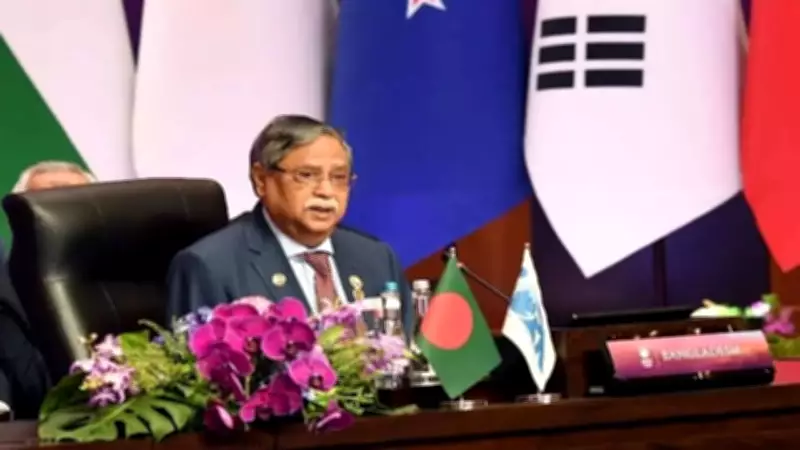
In a stunning development, Bangladesh President Mohammed Shahabuddin has launched a blistering attack against former interim government chief Muhammad Yunus, accusing him of orchestrating elaborate conspiracies to overthrow the presidency and plunge the country into instability. The president's revelations provide unprecedented insight into what he describes as Yunus' hidden authoritarian tendencies behind his public image as a peace-loving academic.
"They Tried to Keep Me in the Dark"
President Shahabuddin detailed systematic efforts to marginalize his office during Yunus' tenure as interim administrator. "They tried to keep me in the dark. They did not want the people to recognise me. They did not allow me to attend functions abroad or within the country," the president revealed in an exclusive interview with Bangla daily Kaler Kantho.
These allegations paint a dramatically different picture of the Nobel Peace Prize laureate, suggesting that while Yunus cultivated influential global connections by presenting himself as an academic peacemaker, his actual governance was characterized by manipulation, semi-authoritarian practices, and troubling accommodation of violent fundamentalist elements.

Secretive US Trade Agreement Revealed
In one of the most significant disclosures, President Shahabuddin alleged that the Bangladesh-US trade agreement was executed with extraordinary secrecy. "Even the President's Office was not informed about it," he stated, a revelation that lends credence to longstanding claims that foreign influences played a role in protests against former Prime Minister Sheikh Hasina.
This disclosure about the clandestine trade pact strengthens arguments from those who have maintained that external forces inspired the political unrest targeting Hasina's administration, adding a new dimension to Bangladesh's complex geopolitical relationships.
Military and BNP Support During "Challenging" Period
The interview confirmed widespread speculation about military and political unease with Yunus' governing style. President Shahabuddin acknowledged he might not have survived politically without crucial backing during what he called the "challenging" 18-month period of Yunus' interim government.
"I would not have remained President if it wasn't for the 'highest-level' of support of the armed forces and BNP leadership," Shahabuddin disclosed, highlighting how Yunus' authoritarian approach created unusual alliances between Bangladesh's military establishment and the Bangladesh Nationalist Party leadership.
Prosecutor Replacement Signals Political Shift
In a related development demonstrating ongoing political repercussions, the Tarique Rahman-led BNP government has removed Jamaat-aligned Bangladesh International Crimes Tribunal chief prosecutor Tajul Islam. According to reports from Ahsan Tasnim, Tajul Islam—who represented the Muhammad Yunus interim government in the controversial "2024 crimes against humanity" case that resulted in former PM Sheikh Hasina receiving a death sentence in absentia—has been replaced with Supreme Court lawyer Md Aminul Islam.
Aminul Islam, previously a key member of former Prime Minister and BNP matriarch Khaleda Zia's legal team, signaled a new approach to justice proceedings. "My clear message is that those who did not commit any crimes will not face any harassment, but the real offenders will have to face punishment," he told reporters, suggesting a recalibration of Bangladesh's contentious war crimes tribunal process.
These interconnected developments reveal deepening political fractures in Bangladesh, with President Shahabuddin's allegations against Yunus exposing previously hidden dimensions of the country's power struggles while ongoing personnel changes in key legal positions indicate shifting political alignments with potentially significant implications for Bangladesh's judicial and political future.