

Political Showdown in West Bengal: TMC and BJP Unveil Candidate Lists
The electoral battle for West Bengal has officially commenced with both the Trinamool Congress (TMC) and the Bharatiya Janata Party (BJP) announcing their candidate lists for the upcoming assembly elections. This development marks the beginning of what promises to be a fiercely contested political duel in India's second-largest state.
Complete Versus Partial Lists: Strategic Positioning
The TMC has taken an aggressive stance by declaring candidates for all 294 assembly seats, demonstrating confidence and organizational preparedness. In contrast, the BJP has adopted a more measured approach, revealing candidates for 144 seats so far, covering approximately half of the total constituencies. This strategic difference in candidate announcement timing reveals distinct campaign philosophies as both parties prepare for the electoral showdown.
Direct Confrontation: Mamata Banerjee Versus Narendra Modi
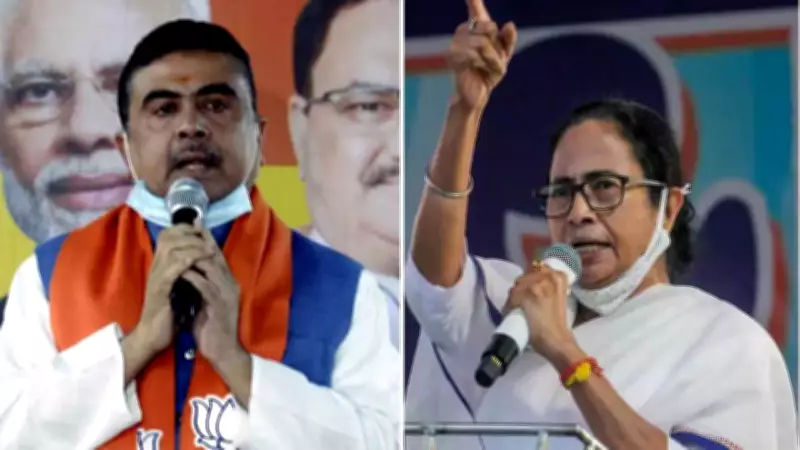
The contest is widely perceived as a direct confrontation between Mamata Banerjee's TMC, which has ruled West Bengal for over a decade, and the BJP led by Prime Minister Narendra Modi. The BJP's remarkable transformation in Bengal politics represents one of the most significant political developments in recent Indian history. From having minimal presence in the state, the saffron party has emerged as the principal opposition and a serious contender for power.

The Modi-led campaign has consistently centered its political attacks on Mamata Banerjee, targeting what remains an elusive prize for the BJP—the politically crucial state of West Bengal. The BJP now aims to challenge Banerjee's longstanding rule, making this election particularly significant for both national and regional politics.
The 2021 Turning Point: BJP's Dramatic Surge
The 2021 assembly election marked a watershed moment in Bengal's political landscape. Despite projecting a landslide victory, the BJP secured 77 seats—falling short of power but registering a dramatic surge from just 3 seats in previous elections. This performance firmly established the BJP as a formidable opposition force in the state.
In many respects, the 2021 election told a more compelling story than Mamata Banerjee's victory. It signaled the BJP's remarkable rise to prominence in Bengal politics, fundamentally altering the state's political dynamics that had been dominated by the Left and Congress for decades.
Missed Targets and Strategic Calculations
Often called the BJP's 'Chanakya', Home Minister Amit Shah had confidently declared during the campaign that the party would cross the 200-mark in the 294-member assembly, coining the slogan "abki baar, 200 paar." The actual results, however, told a different story. The BJP fell well short, not just of 200 seats, but even of the halfway mark of 147 seats.
The outcome brought personal setbacks for several prominent BJP figures. Union minister Babul Supriyo, former Rajya Sabha MP Swapan Dasgupta, and Lok Sabha MP Locket Chatterjee were among those who lost their assembly seats despite the party's overall gains.
Voting Patterns and Strategic Miscalculations
Much of the BJP's electoral strategy had rested on consolidating Hindu votes and gaining support from Scheduled Caste (SC) communities, while closely monitoring whether Muslim voters would continue backing the TMC. The final results suggested that Muslim voters largely remained with Mamata Banerjee's party, while SC votes did not consolidate in the BJP's favor as anticipated.
Compared to its strong performance in the 2019 Lok Sabha elections, the 2021 assembly results represented a setback. In 2019, the BJP had won 18 out of 42 parliamentary seats and led in 121 assembly segments with a vote share of 40.2%. In 2021, it secured 77 seats—44 fewer than the segments it had led in earlier—and its vote share dipped slightly to 38.13%.
A Decade of Remarkable Growth
Beneath the disappointment of falling short of expectations lies an extraordinary story of political growth. Just a decade ago, in the 2011 Assembly elections, the BJP had failed to win a single seat and managed only 4% of the vote. The transformation began with winning two Lok Sabha seats in 2014 with an 18% vote share, followed by securing three Assembly seats in 2016 with around 10% votes.

The jump to 77 seats and over 38% vote share in 2021 represents a dramatic political ascent. In the process, the BJP has replaced the Left and Congress—who had dominated Bengal politics for decades—as the principal opposition force. While both the Left parties and Congress drew a blank in an unprecedented outcome, smaller players like the Rashtriya Secular Majlis Party and an independent candidate managed to win one seat each.
Organizational Building and Future Strategy
The BJP has not merely gained seats; it has systematically built an organizational base, developed a dedicated cadre, and established a leadership structure in the state. This political machinery, now firmly in place, is likely to shape the party's strategy for future electoral battles, both in upcoming Lok Sabha elections and the next assembly contest.
The Symbolic Nandigram Battle
Another significant development for the BJP was the victory of its "giant killer" Suvendu Adhikari, who defeated Chief Minister and TMC supremo Mamata Banerjee in Nandigram by a narrow margin of 1,956 votes after a fiercely contested battle. The contest had transformed into a prestige fight after Mamata herself chose to challenge Adhikari on his home turf.
Adhikari had gone a step further, declaring he would quit politics if he failed to defeat Banerjee by 50,000 votes. While he fell short of that ambitious claim, his eventual win—even by a slender margin—proved politically significant. The defeat dealt a symbolic blow to the TMC's larger victory and meant Mamata Banerjee would have to seek re-election to the Assembly within six months to continue as chief minister.
As both parties finalize their strategies and candidate lists, the political landscape of West Bengal stands transformed. The BJP's dramatic rise from political irrelevance to becoming the principal opposition represents one of the most significant political narratives in contemporary India. Meanwhile, the TMC faces its most serious challenge since coming to power, setting the stage for what promises to be one of India's most closely watched and fiercely contested state elections.





