Bengal's 60 Lakh Voters in Limbo as Final Electoral Roll Deadline Looms
With merely four days remaining until the publication of the final electoral roll, the fate of approximately 60 lakh electors in West Bengal hangs precariously in the balance. Judicial officers have commenced the critical scrutiny of documents and final disposal of pending cases, but the process is marred by software glitches and technical hurdles.
Massive Backlog and Judicial Scrutiny
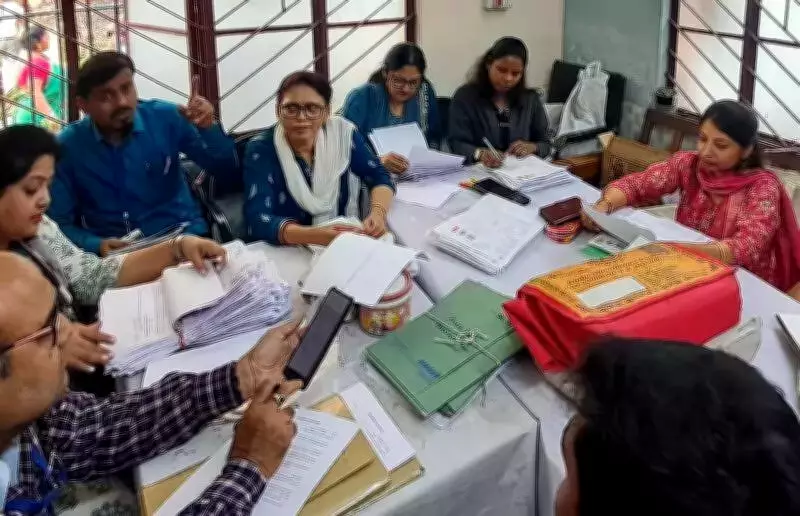
According to sources, the total number of pending cases stands at a staggering 60,60,075. To dispose of all these cases within 20 days, a minimum of 1,000 judges would be required. On Tuesday, around 200 judicial officers began their work, yet it remains undecided how many officers will be brought in from outside the state, despite a recent Supreme Court order. This uncertainty also clouds the timeline for their training, adding to the administrative chaos.
The Supreme Court, in its order issued on Tuesday, stated, "However, that being said, if the verification exercise undertaken in respect of ‘logical discrepancy/unmapped category' remains incomplete as on 28.02.2026, the ECI may publish the final list followed by supplements to the final list..." This provision offers a potential lifeline, but the execution is fraught with complexities.

EC's Unprecedented Challenge
A senior Election Commission official highlighted that the law permits the publication of a supplementary list until the last day of nomination for the forthcoming polls. "But the question is when the EC will announce poll schedule. If it is a multi-phase election, then the deadline to publish the supplementary list of a phase which will go to poll is the last day of nomination for that respective phase. This kind of situation has never arisen before," the official explained, underscoring the unprecedented nature of this electoral dilemma.
The foremost challenge lies in the scrutiny and disposal of close to 60 lakh cases that were flagged as disputed by micro observers and electoral roll observers. The EC had generated about 1.5 crore hearing notices under the ‘unmapped' or ‘logical discrepancies' categories and deputed approximately 8,000 Electoral Registration Officers (EROs) and Assistant Electoral Registration Officers (AEROs) to conduct hearings, upload documents, and ensure final disposal.
Technical Glitches and Document Disputes
"Technically, all cases were disposed of by the EROs/AEROs. However, the micro observers and electoral roll observers found anomalies in about 60 lakh of a little less than 1.5 crore cases and sent them back to EROs/AEROs with the comment ‘need to review'," another official revealed. This massive review process has been hampered by minor software glitches and other technical issues, slowing down the already tight timeline.
Adding to the complexity, the Supreme Court directed that only documents notified by the EC on October 27, along with Aadhaar Card as proof of identity and Madhyamik admit card—whether electronically updated or submitted physically with proof of submission by the cut-off date of February 14—will be considered. "One of the bones of contention between the state and EC is the document. Many people submitted several documents, including 1 notified document. However, the ERO/AERO didn't upload the notified document, and so the person's form was rejected. Now, every document, whether updated online or submitted physically, will have to be considered for final disposal," the official added, highlighting a critical procedural shift aimed at ensuring fairness.
As the clock ticks down to the February 28 deadline, the electoral machinery in West Bengal is racing against time to resolve these disputes, with the integrity of the voter list and the upcoming elections at stake.