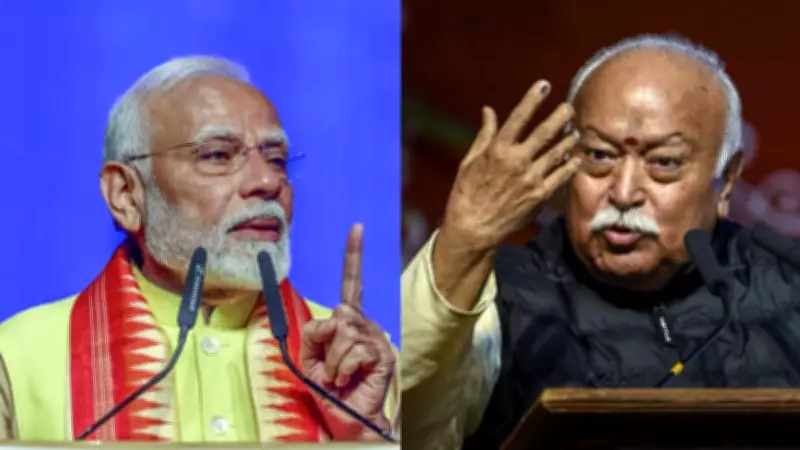
RSS Chief Mohan Bhagwat Clarifies: BJP Not 'Remote Controlled' by RSS
In a significant statement addressing long-standing perceptions, Rashtriya Swayamsevak Sangh (RSS) chief Mohan Bhagwat has asserted that the Bharatiya Janata Party (BJP) is not "remote controlled" by the RSS. This clarification comes amid ongoing discussions about the relationship between the ideological parent organization and the ruling political party in India.
Bhagwat's Key Assertions on RSS-BJP Dynamics
Mohan Bhagwat emphasized that while it is true that Sangh swayamsevaks (volunteers) do join the BJP and often occupy important positions within the party, it is incorrect to characterize this as the RSS "controlling" the BJP. He highlighted the independent functioning and decision-making processes of the BJP, suggesting that the party operates with its own political strategies and governance frameworks.
The RSS chief's remarks aim to dispel the notion of direct oversight or command from the Sangh over BJP's political activities. This statement is particularly relevant given the historical and ideological ties between the two organizations, which have often led to speculation about influence and coordination.

Context and Implications of the Statement
Bhagwat's comments were made in a context where the RSS-BJP relationship is frequently scrutinized in Indian politics. The RSS, founded in 1925, is a right-wing, Hindu nationalist volunteer organization that has played a pivotal role in shaping the BJP's ideology and cadre base. Over the years, many BJP leaders, including Prime Minister Narendra Modi, have roots in the RSS, leading to perceptions of close alignment.
However, Bhagwat's assertion underscores a nuanced perspective: while there is ideological synergy and personnel overlap, the BJP maintains its autonomy as a political entity. This distinction is crucial for understanding the operational dynamics between the two bodies, especially in matters of policy formulation and electoral strategies.
Broader Political Reactions and Analysis
Political analysts have noted that Bhagwat's statement could be aimed at addressing criticisms from opposition parties and commentators who often accuse the BJP of being a "front" for RSS agendas. By clarifying that the BJP is not under direct control, the RSS chief might be seeking to reinforce the party's independent identity while acknowledging their shared values.
Key points from Bhagwat's address include:
- Recognition of Sangh volunteers' involvement in BJP roles.
- Rejection of the "remote control" analogy as inaccurate.
- Emphasis on BJP's self-governance in political decisions.
This development is expected to spark further debate within political circles, as it touches upon the core of India's contemporary political landscape, where the interplay between ideology and governance remains a topic of intense discussion.