

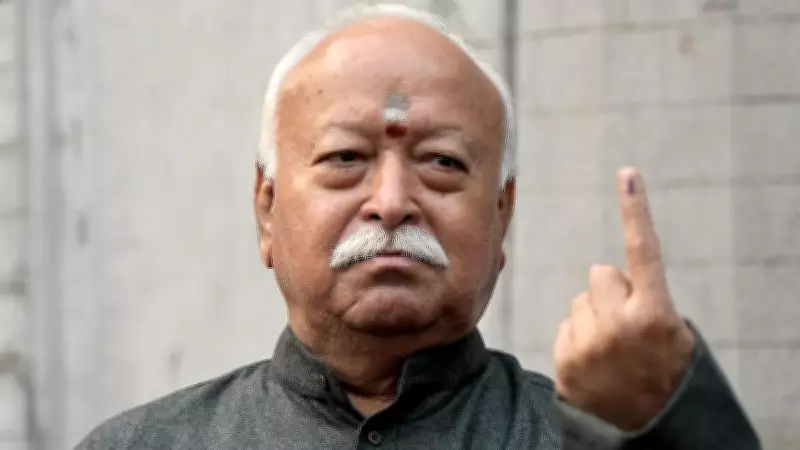
RSS Chief Advocates for Independent Global Engagement Strategy
In a significant address, Rashtriya Swayamsevak Sangh (RSS) chief Mohan Bhagwat articulated a nuanced perspective on India's role in the international arena. He emphasized that while global engagement is an inevitable necessity for the nation, it must not be dictated or driven by external pressure or punitive tariffs imposed by other countries.
Clarifying the RSS-PM Modi Dynamic
Bhagwat took the opportunity to address a common perception held by many people regarding the relationship between the RSS and Prime Minister Narendra Modi. He acknowledged that a widespread belief exists suggesting that Narendra Modi holds the position of Prime Minister primarily due to the support and influence of the RSS.
However, Bhagwat provided a clear delineation: He stated that while Prime Minister Modi leads a political party and it is true that numerous RSS volunteers are actively engaged in various facets of public life, the political party itself operates as a separate and distinct entity. He explicitly clarified that the political party is not an organ or a direct extension of the RSS organization.

This statement serves to underscore the organizational independence between the ideological body and the political machinery, even as they share overlapping membership and broad ideological alignments.
The Imperative of Sovereign Engagement
Returning to the theme of international relations, Bhagwat's comments highlight a strategic vision for India's foreign policy and economic interactions. The call for engagement that is "inevitable" recognizes the interconnected nature of the modern global economy and geopolitics.
Yet, the crucial caveat he added—that this engagement should not be "driven by pressure, tariffs"—points towards a desire for sovereign agency. It suggests a model where India engages with the world on its own terms, based on mutual benefit and national interest, rather than reacting defensively to external coercive measures like trade tariffs or diplomatic ultimatums.
This perspective aligns with broader discussions about strategic autonomy in Indian foreign policy, advocating for partnerships that are constructive and equitable rather than being forced or disadvantageous.
Bhagwat's remarks, made and reported on February 7, 2026, provide insight into the ideological underpinnings that may influence public discourse on India's place in the world and the nature of its domestic political relationships.






