BJP and AIADMK Forge New Alliance for Tamil Nadu 2026 Assembly Elections
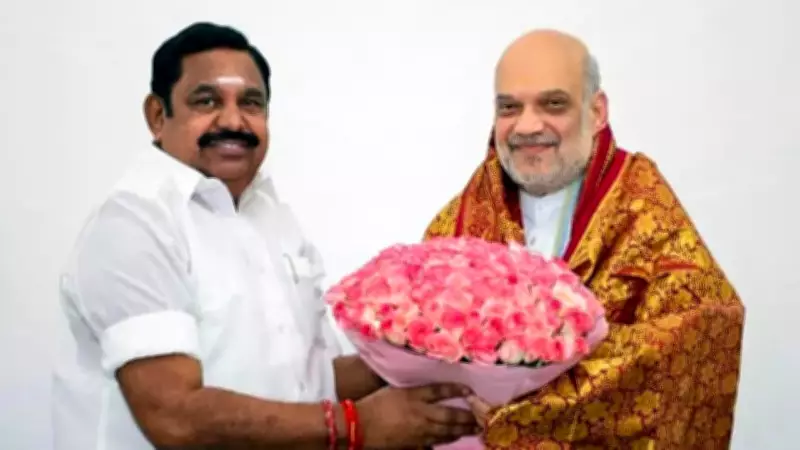
In a striking political development, the Bharatiya Janata Party (BJP) and the All India Anna Dravida Munnetra Kazhagam (AIADMK) have officially sealed an alliance ahead of the upcoming Tamil Nadu Assembly elections in 2026. This reunion echoes a dramatic past episode from 1999, when the AIADMK, then led by Jayalalithaa, withdrew support from the Atal Bihari Vajpayee-led National Democratic Alliance (NDA) government, triggering its collapse after a no-confidence motion and forcing midterm Lok Sabha elections.
A Cycle of Alliance, Rupture, and Reunion
The relationship between the BJP and AIADMK has followed a predictable pattern over nearly three decades: alliance, rupture, and reunion. Despite repeated breakups, political compulsions have consistently driven the two parties back together. The most notable rupture occurred in 1999, when Jayalalithaa's withdrawal of support led to the fall of the Vajpayee government by a single vote. Yet, within years, they reunited, a cycle that has repeated multiple times, including after the 2024 Lok Sabha elections when they fought separately, only to return to negotiations for the 2026 polls.
Timeline of BJP-AIADMK Ties and Tensions
1998–1999: The First Alliance and Collapse

In the 1998 Lok Sabha elections, the BJP extended a conciliatory hand to the Jayalalithaa-led AIADMK, helping Vajpayee become prime minister. However, the partnership proved short-lived. Within a year, the AIADMK withdrew support, citing judicial setbacks in corruption cases against Jayalalithaa and her fraught relationship with the DMK. The rival DMK, led by M Karunanidhi, then stepped in to support the Vajpayee government, which completed a full term.
2004: Reunion and Electoral Setback
Ahead of the 2004 Lok Sabha elections, the DMK severed ties with the NDA, prompting the BJP to forge a fresh alliance with the AIADMK. This tactical move yielded little electoral dividend, with the BJP failing to win a single seat in Tamil Nadu, and the NDA's "India Shining" campaign faltered nationally, leading to a Congress-led UPA government under Manmohan Singh.
2016–2019: Post-Jayalalithaa Era and Alliance
Following Jayalalithaa's death in 2016, the AIADMK plunged into factionalism, with Edappadi K Palaniswami (EPS) eventually consolidating leadership. During this period, the AIADMK extended policy-based support to the Narendra Modi-led government, culminating in an electoral alliance for the 2019 Lok Sabha elections. However, the combine suffered a rout, losing 39 of 40 seats in Tamil Nadu and Puducherry.
2021–2023: Continued Alliance and Split
Despite the 2019 debacle, the alliance continued into the 2021 Assembly polls, resulting in another defeat: AIADMK won 66 seats, BJP managed four, and the DMK-Congress alliance returned to power under M K Stalin. By 2022, the BJP contested local body polls alone, and ties snapped in 2023 after BJP state chief K Annamalai made controversial remarks about Jayalalithaa.
2026: Another Comeback
In 2025, the BJP and AIADMK formally reunited, announcing that the NDA would contest the 2026 Assembly elections under EPS's leadership. Political necessity once again trumped past bitterness, with both parties aiming to unseat the incumbent DMK government.
Why They Need Each Other in 2026
For the BJP, Tamil Nadu remains a weak link where national dominance has not translated into local relevance. The party's renewed push for an alliance reflects a hard reality: the Dravidian voter base is anchored in grassroots Tamil parties like the DMK and AIADMK. By aligning with the AIADMK, the BJP aims to prevent vote fragmentation that could benefit the DMK-Congress alliance and gain a foothold in the state.
Amit Shah has sharpened attacks on the Stalin government, accusing it of corruption and undermining Hindu values, while positioning the AIADMK as a "natural ally" that balances secular Dravidian politics with softer Hindu assertion. The BJP's strategy is not to dominate but to leverage the AIADMK's local strength.

For the AIADMK, led by EPS, the alliance offers a chance to challenge the DMK's entrenched power. However, EPS harbors doubts, given the BJP's history of entering alliances as a junior partner only to eventually upend the balance, as seen in Bihar with Nitish Kumar's JD(U). Despite this, political compulsion drives the reunion, with EPS calling the alliance "essential" to unseat what he terms an "anti-people" DMK government.
Caste Arithmetic and Electoral Strategy
The AIADMK's strategy focuses on Dalits and Thevars, communities that account for about one-third of Tamil Nadu's electorate. The BJP pursues a broader Hindu consolidation, often cutting across complex caste equations. The NDA could also benefit from Vanniyar support, represented by the Pattali Makkal Katchi (PMK), and EPS's Gounder community, which constitutes around 7% of the population in the Kongu Nadu belt.
What Next?
With Prime Minister Narendra Modi scheduled to visit Madurai in late February 2026, sharing the stage with EPS in a symbolic show of unity, both parties appear determined to challenge the Stalin government. Amit Shah has declared that the NDA will remove the DMK "at all cost," while EPS predicts an AIADMK majority in 2026. Whether this latest reunion becomes a durable partnership or another short-lived truce will ultimately be decided by Tamil Nadu's voters.