BJP Unveils Bengal Manifesto with Strong Hindutva and National Security Focus
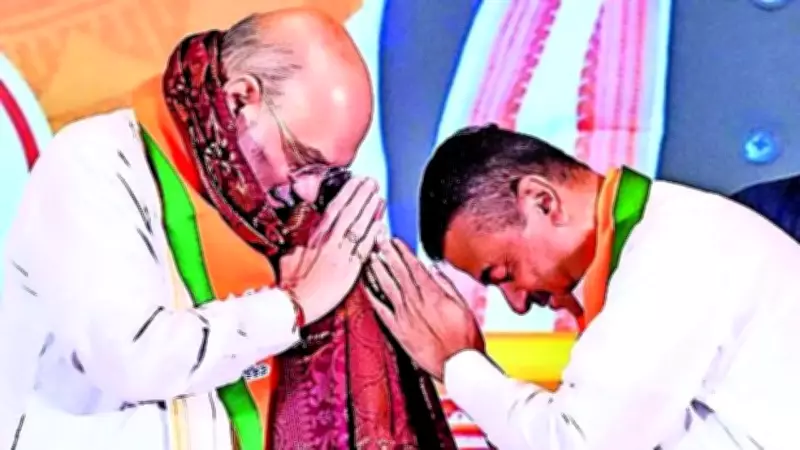
In a strategic move to mobilize voters around its core ideological agenda, the Bharatiya Janata Party (BJP) has released its election manifesto for West Bengal, sharpening its cultural nationalism plank while countering the Trinamool Congress (TMC) government led by Chief Minister Mamata Banerjee. The document, unveiled by Home Minister Amit Shah in Kolkata, pairs hardline Hindutva promises with an extensive welfare pitch, particularly targeting women and youth, as the party seeks to end Banerjee's 15-year rule in the state.
Cultural Nationalism and Countering Alleged Appeasement
Despite running a relatively low-key campaign initially, the BJP has significantly raised the pitch through intensified Hindutva outreach. The manifesto commits to implementing a Uniform Civil Code (UCC), a longstanding part of the party's national agenda, alongside a law to ensure freedom of religious practices. This move directly addresses BJP's frequent accusations that the TMC government discriminates against Hindu traditions, such as religious processions.
Additionally, the party promises to establish a Vande Mataram museum, further emphasizing its cultural nationalism stance. While this strategy carries electoral risks in a state where Muslims constitute approximately 27% of the population and may consolidate further behind Mamata Banerjee, the BJP appears to be banking on a stronger consolidation of Hindu votes to offset this challenge.

National Security and Border Concerns
Echoing commitments made in Assam, another state bordering Bangladesh, the BJP's manifesto stresses national security as a critical issue. The party has pledged to provide land for completing the fencing of the India-Bangladesh border, alleging that gaps were deliberately left by previous Left and TMC governments to allow infiltration.
This promise taps into long-standing anxieties over alleged infiltration of Bangladeshis, a theme the BJP has successfully leveraged in Assam, where the Muslim population is higher. Over the past decade, a crackdown on illegal immigration has become a central part of the party's political and governance agenda, and it now aims to replicate this focus in West Bengal.
The manifesto also includes commitments to end cattle smuggling and curb syndicates and the culture of "cut money," issues aimed at addressing concerns over women's safety, law and order, and what the BJP describes as a nexus of local strongmen and cross-border criminal networks.
Welfare Promises Targeting Key Demographics
In an effort to outdo the TMC government on welfare, the BJP has made significant promises aimed at women and youth. The manifesto pledges Rs 3,000 per month for both youth and women, with pro-women schemes often proving decisive in elections. Additional commitments include women-only police battalions and 33% reservation for women in government jobs.
The inclusion of cash assistance for youth, which is not a feature in several other state campaigns, underlines BJP's attempt to position itself as a more attractive option for younger voters, despite facing criticism for offering freebies. This calibrated approach reflects the party's strategy to broaden its base by appealing to key constituencies.
Targeted Outreach and Electoral Strategy
The manifesto also includes targeted outreach to influential social groups such as Kurmis, Rajbongshis, and tea garden workers, as well as government employees. This reflects a nuanced effort to expand BJP's support beyond its traditional base in West Bengal's unique political landscape, which is marked by a direct contest with the TMC and a largely polarized minority vote.
While the Uniform Civil Code is part of BJP's broader national agenda, it has not been included in every election manifesto, with Kerala being a recent example. Uttarakhand has become the first state to implement UCC, Gujarat has set up a committee to explore its rollout, and Goa continues to follow a version dating back to its pre-independence legal framework.

BJP believes that West Bengal's political dynamics make its Hindutva and national security plank more electorally effective, hoping to replicate the success seen in Assam, where similar promises were made. However, Mamata Banerjee and the Trinamool Congress are viewed as far more entrenched and formidable rivals, setting the stage for a high-stakes electoral battle.