

BJP Continues Push for Women's Reservation Through Delimitation Amid Southern States Debate
In Bengaluru, the Bharatiya Janata Party (BJP) maintained its stance on Sunday, echoing Prime Minister Narendra Modi's narrative that the party is committed to securing justice for women through a 33% reservation by increasing parliamentary seats via delimitation. Simultaneously, the BJP accused the Congress party of misleading the public on this critical issue.
BJP Leaders Defend Delimitation as Fair and Equitable
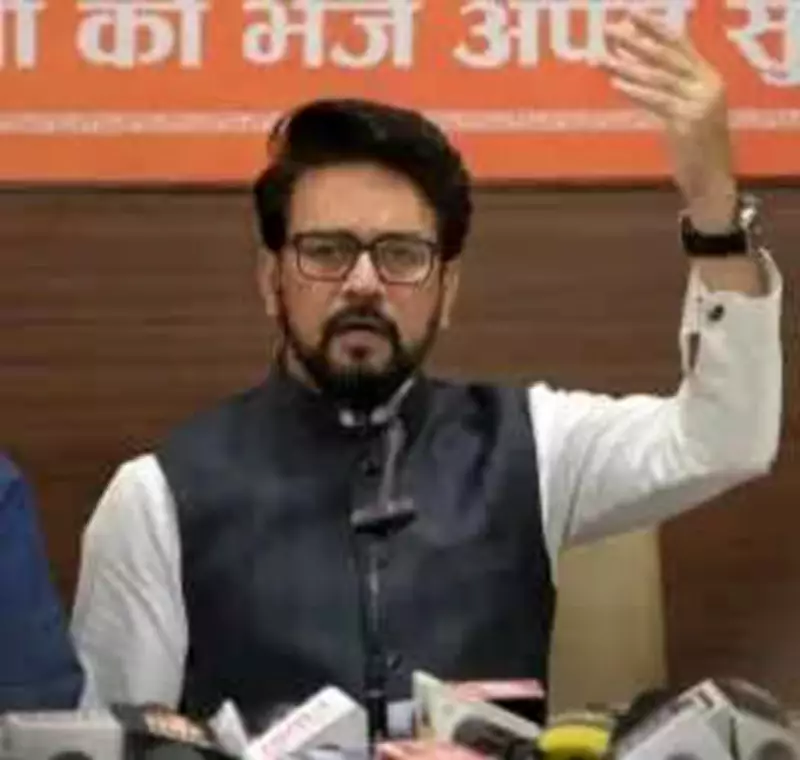
Addressing the media, BJP functionary Anurag Thakur strongly dismissed allegations that the delimitation exercise would reduce political representation for southern states. "The southern states currently have 24% representation despite comprising only 20% of India's population, while northern India holds 27% representation for 30% of its population," Thakur explained. He emphasized that the BJP's approach ensures pro-rata political representation without taking away from any region. "We are not depriving anyone; in fact, southern states stand to gain higher representation if the delimitation bill is passed," Thakur asserted, highlighting what he sees as a balanced and progressive move.
Adding to this, Bengaluru South MP Tejasvi Surya targeted opposition leaders, alleging that figures like Karnataka Chief Minister Siddaramaiah and Tamil Nadu CM MK Stalin, who oppose delimitation by citing potential losses for southern states, would bear responsibility if census-based seat allocation leads to reduced representation. "It was a practical proposal by the prime minister to increase seats by 50% across all states, but the opposition rejected it. Siddaramaiah and Stalin will be accountable if southern states lose out when the delimitation commission determines seats solely on census data," Surya warned, framing the issue as one of accountability and foresight.

Congress Leaders Reject BJP Claims, Warn of Northern Bias
However, Chief Minister Siddaramaiah and his deputy DK Shivakumar firmly rejected the BJP's assertions, accusing the party of attempting to undermine southern representation through what they perceive as a flawed delimitation process. Speaking at Ranebennur, Siddaramaiah clarified that the Congress does not oppose women's reservation in principle but objects to what it views as an imbalance in constituency reorganisation.
"Delimitation could disproportionately benefit northern states, particularly Uttar Pradesh, which may see a significant increase in Lok Sabha seats, while states like Karnataka would experience only marginal gains," Siddaramaiah cautioned, expressing concerns over regional equity. Responding to criticism from Prime Minister Modi, he suggested that such remarks were politically motivated, especially with upcoming elections in Tamil Nadu and West Bengal. "If the bill has overwhelming support in Parliament, why has the Centre not implemented it yet?" Siddaramaiah questioned, casting doubt on the BJP's intentions and timing.
Echoing similar concerns, Deputy Chief Minister DK Shivakumar labeled the move a "conspiracy" to reduce southern representation. "We have defeated their bill. This is just the beginning," Shivakumar declared, signaling ongoing resistance and political contention over the delimitation issue.
Broader Implications and Political Ramifications
The debate over delimitation and women's reservation has ignited a fierce political clash, with implications for regional representation and gender equality in India's parliamentary system. Key points from the exchange include:
- BJP's defense of delimitation as a means to ensure pro-rata representation and advance women's rights.
- Congress's opposition based on fears of biased outcomes favoring northern states over southern ones.
- Accusations of political maneuvering ahead of state elections, adding layers of complexity to the discourse.
- The unresolved tension between national unity and regional interests in India's democratic framework.
As the discussion unfolds, it underscores deeper issues of federalism, electoral fairness, and the pursuit of social justice, with both parties positioning themselves as champions of different aspects of India's democratic ideals.






