

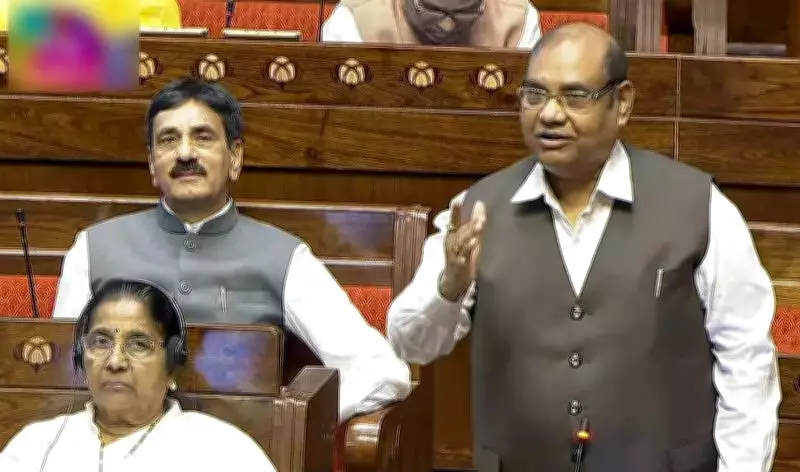
BJP MP Brij Lal Raises SC Certificate Denial for Kori Community in UP Rajya Sabha
In a significant intervention in the Rajya Sabha on Monday, BJP MP Brij Lal brought to light the alleged denial of Scheduled Caste (SC) certificates to the 'Hindu Julaha Kori' community in western Uttar Pradesh, specifically targeting the Meerut and Saharanpur divisions. Lal, who served as the Uttar Pradesh Director General of Police during the Mayawati government, framed this as a critical issue of social justice and administrative inconsistency that demands immediate governmental action.
Historical and Administrative Background of the Kori Community
Lal elaborated that the Kori or Koli community, traditionally engaged in weaving, traces its lineage to the ancient Koliyan clan. He emphasized that 'Hindu Julaha' is not a caste but a profession, arguing that eligible individuals should not be excluded from SC benefits on this basis. Historically, prior to July 24, 1977, the Kori community was recognized as SC in most parts of Uttar Pradesh, except in regions such as Rohilkhand, Agra, and Meerut divisions, where it was categorized under the Other Backward Classes (OBC).
A pivotal Government of India decision in 1977 granted SC status to the Kori community across the entire state. Despite this nationwide recognition, Lal asserted that administrative anomalies persist, depriving the community of its rightful SC status in the Meerut and Saharanpur divisions. He urged the government to take immediate and corrective steps to address this disparity, ensuring that the community receives the social and economic benefits entitled to them under the law.

Deep-Rooted Historical Connections and Cultural Significance
Delving into the community's rich history, Lal highlighted that the Koliyan clan has historical links dating back to the Buddha era. He noted that King Anjan of the Koliyan lineage, considered Buddha's maternal grandfather, played a key role in promoting weaving as a traditional occupation. This historical context underscores the community's long-standing cultural and occupational heritage.
Referring to accounts from the Mughal period, Lal claimed that during Aurangzeb's reign, members of the Kori community were allegedly compelled to convert to Islam to continue their weaving profession. Those who converted came to be known as 'Julahas' or 'Ansaris', while those who remained Hindu gradually lost their traditional occupation and economic base. This historical narrative adds depth to the current socio-economic challenges faced by the community.
Gratitude for Support on Related Cultural Issues
In a related note, Lal expressed his gratitude to Rajya Sabha MP Sudha Murty for raising the issue of Lord Buddha's relics. He recalled that these relics, excavated in 1898 from Piprahwa by British landowner William C. Peppe, were proposed to be auctioned in Hong Kong in May 2025. Lal mentioned that he wrote to the Prime Minister urging intervention to halt the auction and received a positive response.
He credited the Prime Minister's efforts for ensuring that the sacred relics were brought back to India, adding that his own involvement in the matter was reported twice by The Times of India. This acknowledgment highlights the broader cultural and historical preservation efforts that complement the social justice issues raised in his speech.
The MP's comprehensive address in the Rajya Sabha not only spotlighted a pressing administrative issue but also wove in the community's historical significance, calling for a holistic approach to rectify long-standing injustices.






