

BJP MP Calls for Parliamentary Inquiry Into Rahul Gandhi's Conduct
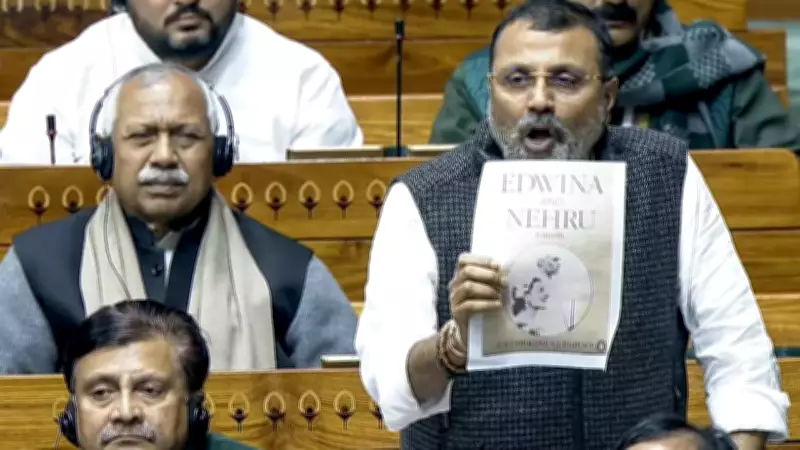
BJP MP Nishikant Dubey has launched a sharp attack on Congress leader Rahul Gandhi, urging Lok Sabha Speaker Om Birla to conduct an inquiry into what he terms the "unethical conduct" of the leader of opposition. This comes just a day after Gandhi accused the government of compromising India's interests in a trade agreement with the US.
Formal Request for Investigation
In a letter submitted to Speaker Om Birla, Dubey has formally requested the constitution of a Parliamentary Inquiry Committee. The subject of the letter is explicitly titled: "Unethical Conduct of Shri Rahul Gandhi, MP – Constituting a Parliamentary Inquiry Committee to investigate his continual misdeeds for destabilizing the country and rescinding his ‘MP status’." This move represents a significant escalation in political tensions within Parliament.
Allegations Regarding Foreign Travel
Among the primary issues flagged by Dubey is Rahul Gandhi's frequent trips abroad, with specific mention of visits to countries such as Cambodia, Vietnam, Thailand, and Bahrain. Dubey alleges that Gandhi neither requests the government to extend his security cover to these visiting countries nor informs the Indian embassy when he travels overseas. "His tours are invariably shrouded in mystery," Dubey stated, directly linking this secrecy to Gandhi's alleged association with the Ford Foundation.

"We all know that ‘Ford Foundation’ is a notorious entity for destabilizing various states with ‘regime change’," Dubey asserted, pushing for a thorough probe into the funding sources of Gandhi's international visits. He further accused Gandhi of being part of a gang working to destabilize India from within, citing his "relentless and well-choreographed actions" both inside and outside Parliament as detrimental to national interests.
Broader Accusations of Destabilization
Dubey, a known critic of the Nehru-Gandhi family, expanded his allegations beyond foreign travel. He claimed that while public representatives typically avoid dragging armed forces into political disputes, Rahul Gandhi referenced former army chief General (retd) M M Naravane and quoted from his unpublished book. Dubey accused Gandhi of having an "ulterior motive of defaming the Indian Army, the Ministry of Defence along with shamefully involving our Prime Minister."
The BJP MP argued that this incident is not isolated, alleging a pattern of behavior where Gandhi creates controversies to defame various government departments, including Defence, Finance, Commerce, and External Affairs. "He has the uncanny knack of fomenting public sentiments by raising unsubstantiated and unethical aspects in Parliament as well as other public fora," Dubey wrote in his letter.
Connections to External Entities
Dubey linked Gandhi's actions to his association with billionaire investor George Soros, whom the BJP has previously accused of funding activism against the Indian government. Additionally, Dubey referenced Gandhi's comments suggesting the Indian banking system has collapsed due to connivance with big business houses, characterizing this as another attempt to destabilize the country from within.
Institutional Allegations
The MP asserted that these issues are merely "the tip of the iceberg," accusing Gandhi of using his position as Leader of Opposition to foment public sentiment by leveling unsubstantiated allegations against key institutions. Dubey specifically mentioned the Election Commission and the Supreme Court, alleging that Gandhi has lowered the dignity of the government without substantive evidence and put various institutions in a bad light.
In his concluding remarks to Speaker Birla, Dubey emphasized his constitutional duty, stating: "If I, as a responsible public representative – even with a small zone of influence and a humble background – fail to bring this to your kind notice, I would not be doing justice to my constitutional duty of upholding the unity, integrity and sovereignty of our country." This formal request sets the stage for a potentially heated parliamentary discussion on the conduct of opposition leadership.






