BJP Gears Up for Rajya Sabha Elections in Odisha with Ambitious Three-Candidate Strategy
The Bharatiya Janata Party (BJP) in Odisha is strategically positioning itself for the upcoming Rajya Sabha elections, with plans to field three candidates for the four seats that will become vacant on April 2. This move sets the stage for a significant political contest, reminiscent of the intense battle witnessed in 2014, as the party leverages its numerical strength and political alliances.
Party Meeting Sets the Stage for Nomination Process
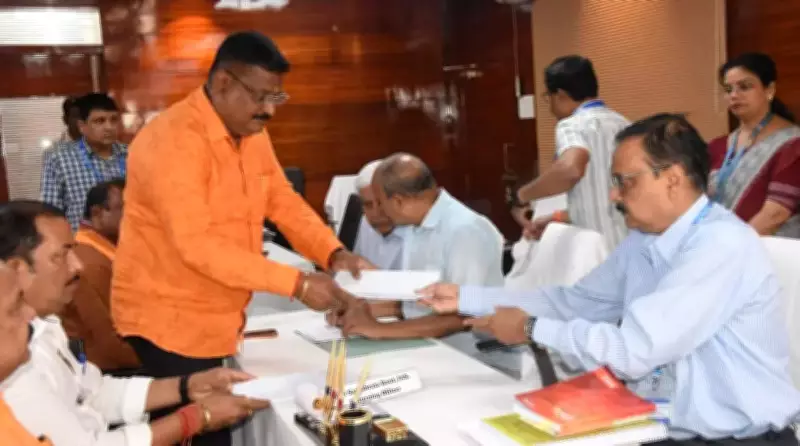
In a crucial meeting chaired by Chief Minister Mohan Charan Majhi at his residence on Monday, BJP legislators signed papers for three prospective nominees. State BJP president Manmohan Samal was also present, underscoring the importance of this strategic gathering. The meeting was convened to solidify the party's Rajya Sabha approach ahead of the March 5 nomination deadline.
Party MLA Santosh Khatua confirmed the three-candidate plan to the media after the meeting, stating, "There will be three candidates." This declaration signals the BJP's intent to maximize its representation in the Upper House, potentially triggering a contest for the fourth seat.

Numerical Dynamics and Political Calculations
With 79 MLAs and the support of three independents, the BJP has the numbers to comfortably secure two Rajya Sabha seats, each requiring 30 first-preference votes. After winning these two seats, which would consume 60 votes, the party will have 22 surplus votes. However, this falls short by eight votes for a third candidate, necessitating strategic cross-voting or alliances.
The Biju Janata Dal (BJD), with 48 MLAs excluding two suspended members, is positioned to win one seat. After securing this, the BJD will have 18 surplus votes. The Congress, with 14 MLAs, has already extended support to Dr. Datteswar Hota, a "politically neutral" candidate floated by the BJD as a "common candidate." With Congress backing, Hota could garner 32 votes, making him a contender if there is no cross-voting.
Rejected Alliances and Confidence in Cross-Voting
Sources indicate that the BJP rejected the idea of supporting Dr. Datteswar Hota, despite the BJD's proposal for a common candidate. Instead, BJP leaders are expressing confidence in their ability to muster the required numbers for a third seat. They claim that many BJD and Congress MLAs are dissatisfied with the BJD-Congress understanding and may defect.
Additionally, the two suspended BJD MLAs might not follow the party's line and could vote in favor of the BJP, further boosting its prospects. It is important to note that in Rajya Sabha elections, voting against the party whip is considered a valid vote, adding a layer of unpredictability to the process.
Historical Context and Future Implications
The upcoming contest echoes the 2014 Rajya Sabha election in Odisha, where Congress nominee Ranjib Biswal defeated BJD-backed independent Raghunath Mohapatra, who had BJP support. This historical precedent adds intrigue to the current scenario, as parties navigate complex alliances and voter loyalties.
As the March 5 nomination deadline approaches, all MLAs have been instructed to remain present in Bhubaneswar for the nomination process. The BJP's parliamentary board will finalize the names of the three candidates prior to this date, setting the tone for a high-stakes political battle that could reshape Odisha's representation in the Rajya Sabha.