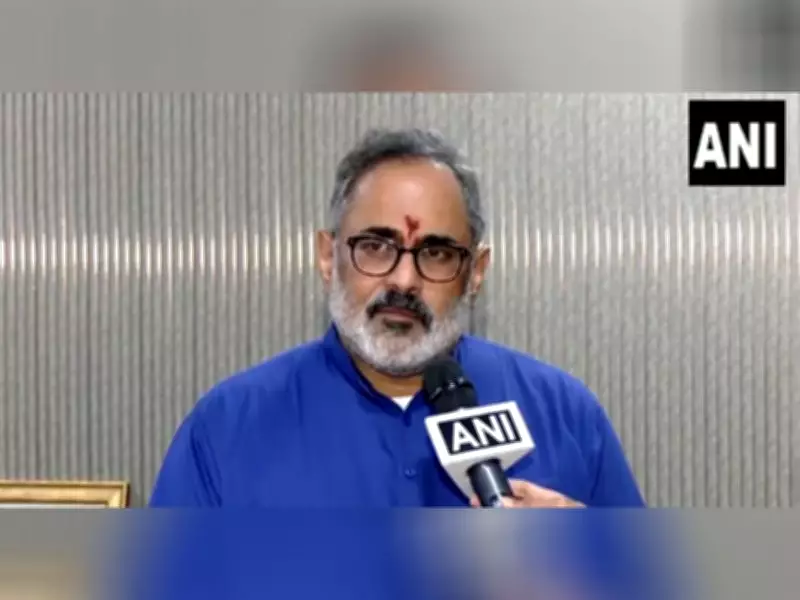
BJP Leader Rajeev Chandrasekhar Fires Back at Kerala CM's Criticism of 'The Kerala Story 2'
In a sharp political exchange, Bharatiya Janata Party (BJP) leader and Union Minister Rajeev Chandrasekhar has strongly rebuked Kerala Chief Minister Pinarayi Vijayan for his recent remarks labeling the upcoming film 'The Kerala Story 2' as a hate-mongering production. The controversy erupted after Vijayan, in a public statement, accused the film of promoting divisive narratives and spreading misinformation about the state.
Chandrasekhar's Fiery Response to Vijayan's Allegations
Rajeev Chandrasekhar, known for his vocal stance on national issues, did not hold back in his response. He asserted that the Kerala Chief Minister's comments were an attempt to suppress artistic freedom and stifle dissenting voices in the cinematic realm. Chandrasekhar emphasized that films, as a form of expression, should be allowed to explore diverse perspectives without political interference.
He further argued that Vijayan's criticism was politically motivated, aimed at diverting attention from the state government's own challenges. "Instead of addressing real issues facing Kerala, the CM is resorting to baseless attacks on a film that hasn't even been released yet," Chandrasekhar stated, highlighting what he sees as a pattern of deflection by the ruling Left Democratic Front (LDF) government.

The Context of 'The Kerala Story 2' and Its Predecessor
The original 'The Kerala Story', released earlier, had already stirred significant controversy for its portrayal of religious conversions and alleged links to extremist activities in Kerala. It faced backlash from various quarters, including political groups and civil society organizations, who accused it of distorting facts and fueling communal tensions.
The sequel, 'The Kerala Story 2', is anticipated to continue exploring similar themes, though specific plot details remain under wraps. The film's producers have maintained that it is a work of fiction inspired by real events, intended to spark dialogue rather than incite hatred.
Political Ramifications and Broader Implications
This clash underscores the ongoing political tussle between the BJP and the CPI(M)-led government in Kerala, where cultural and ideological battles often play out in the public sphere. Key points of contention include:
- Freedom of Expression: Chandrasekhar's defense of the film frames it as a matter of creative liberty, while Vijayan's stance raises questions about the responsibility of filmmakers in sensitive contexts.
- Electoral Dynamics: With Kerala being a key state in Indian politics, such controversies are seen as efforts to influence public opinion ahead of future elections.
- National vs. Regional Narratives: The debate reflects broader tensions between central BJP policies and regional governance models in states like Kerala.
Observers note that film-related controversies have increasingly become a tool for political messaging in India, with parties leveraging them to rally support or criticize opponents. In this case, Chandrasekhar's rebuttal aims to position the BJP as a champion of free speech, contrasting it with what he describes as the LDF's "authoritarian tendencies."
Public and Industry Reactions
Reactions to the spat have been mixed. Supporters of the BJP have echoed Chandrasekhar's views, praising his stand against what they call political censorship. On the other hand, allies of the Kerala government have backed Vijayan, arguing that films with potential to incite violence should be scrutinized.
Within the film industry, some voices have called for a balanced approach, urging both sides to avoid politicizing art. "Films should be judged on their merit after release, not preemptively condemned based on political biases," remarked a prominent filmmaker, who wished to remain anonymous.

As the debate rages on, all eyes are on the release of 'The Kerala Story 2', which is expected to further ignite discussions on cinema, politics, and societal values in Kerala and beyond. The outcome of this controversy could set precedents for how artistic works are perceived and contested in India's vibrant democratic landscape.