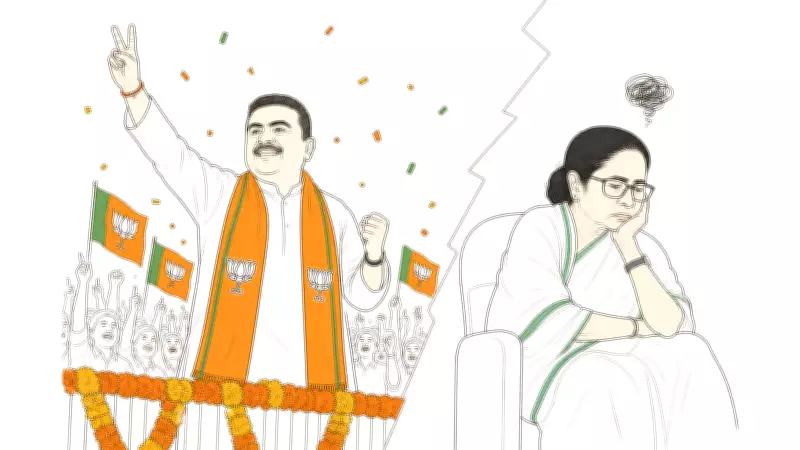
The Bharatiya Janata Party's (BJP) electoral journey in West Bengal has been nothing short of remarkable. From a mere 3 seats in the 2014 Lok Sabha elections, the party surged to 77 seats in 2019, and now aims for 200 in the upcoming assembly polls. This dramatic rise underscores a fundamental shift in the state's political landscape, long dominated by the Trinamool Congress (TMC) under Mamata Banerjee.
The 2014 Breakthrough
In 2014, the BJP managed to win only 3 seats in West Bengal, a state where it had been a marginal player. The party's vote share was a meager 17%, far behind the TMC's 39% and the Left Front's 29%. However, this election marked the beginning of a steady rise, fueled by a combination of factors including the Modi wave and organizational strengthening.
The 2019 Surge
By 2019, the BJP's fortunes had changed dramatically. The party won 77 seats, capturing 40% of the vote share, while the TMC's share dropped to 43%. This surge was attributed to a strong anti-incumbency sentiment against Mamata Banerjee's government, coupled with the BJP's aggressive campaigning and alliance with the Gorkha Janmukti Morcha (GJM) in the Darjeeling hills. The party also made significant inroads in the tribal belts of Jangalmahal and the minority-dominated districts of Murshidabad and Malda.

The 2021 Assembly Elections
The 2021 West Bengal assembly elections saw the BJP further consolidate its position. The party won 77 seats, up from 3 in 2016, and increased its vote share to 38%. The TMC, however, managed to retain power with 213 seats, but its vote share dropped to 48%. The BJP's performance was particularly strong in the northern and western parts of the state, where it won a majority of seats. The party also made gains in the urban centers, including Kolkata's suburbs.
Key Factors Behind BJP's Rise
Several factors have contributed to the BJP's rise in West Bengal:
- Organizational Strengthening: The BJP has built a robust grassroots organization, with a strong cadre of workers and leaders, including many former TMC and Left supporters.
- Leadership: The party has been led by national leaders like Prime Minister Narendra Modi and Home Minister Amit Shah, who have campaigned extensively in the state.
- Social Engineering: The BJP has successfully courted the Hindu majority, particularly the upper castes and OBCs, while also making inroads among Dalits and tribal communities.
- Anti-Incumbency: The TMC government, in power since 2011, has faced allegations of corruption, nepotism, and misgovernance, which the BJP has capitalized on.
- Alliances: The BJP has forged strategic alliances with regional parties like the GJM and the All India Secular Front (AISF) to expand its reach.
Challenges Ahead
Despite its impressive growth, the BJP faces significant challenges in West Bengal. The TMC remains a formidable opponent, with a strong organizational network and a charismatic leader in Mamata Banerjee. The BJP also faces internal factionalism, with several senior leaders often at odds with each other. Additionally, the party's aggressive Hindutva agenda has alienated some minority communities, particularly Muslims, who constitute about 27% of the state's population.
The Road to 200
The BJP's target of winning 200 seats in the 294-member West Bengal assembly may seem ambitious, but the party believes it is achievable. With the Modi government at the center and a strong organizational machinery in place, the BJP is confident of repeating its 2019 Lok Sabha performance in the assembly elections. However, the TMC is not expected to cede ground easily, and the battle for Bengal promises to be intense and closely watched.